A Year of Changing Priorities

As a freelancer, every year is a trek across unknown terrain. You enter a new country each January 1, hoping that the city below with sparkling lights is welcoming, that you can earn your keep as you travel towards what might be low foothills or forbidding mountains in the distance on your route to December 31, and that you don’t get lost on the journey.
Every year for me since I became a freelancer some time ago is such a trip. I’ve often remarked—sometimes hoping I was exaggerating—that at the beginning and end of any 18-month period of my adult working life, I’m deriving most of my income from different sources. At the end of 2019, this has once again turned out to be true!
In mid-2018, I started a daily contract writing gig for Fortune magazine, then in the middle of a major transition, between a sale by its founding publishing company and before it had been purchased by its current billionaire owner. It was a terrific discipline, writing breaking news across a broad remit for three hours every weekday. One of my stories had a vast number of page views—I’m not authorized to share—because it was retweeted by Bernie Sanders and Alexandria Ocasio-Cortez.
By early 2019, however, it was clear that the assignment didn’t have much longer to go and the grind the work had gotten to me. I gave my editor word that I’d be departing (the gig lasted several more weeks for those who remained), as I’d already found a passion that I needed to pour my time and effort into.
A Museum for Ants?!

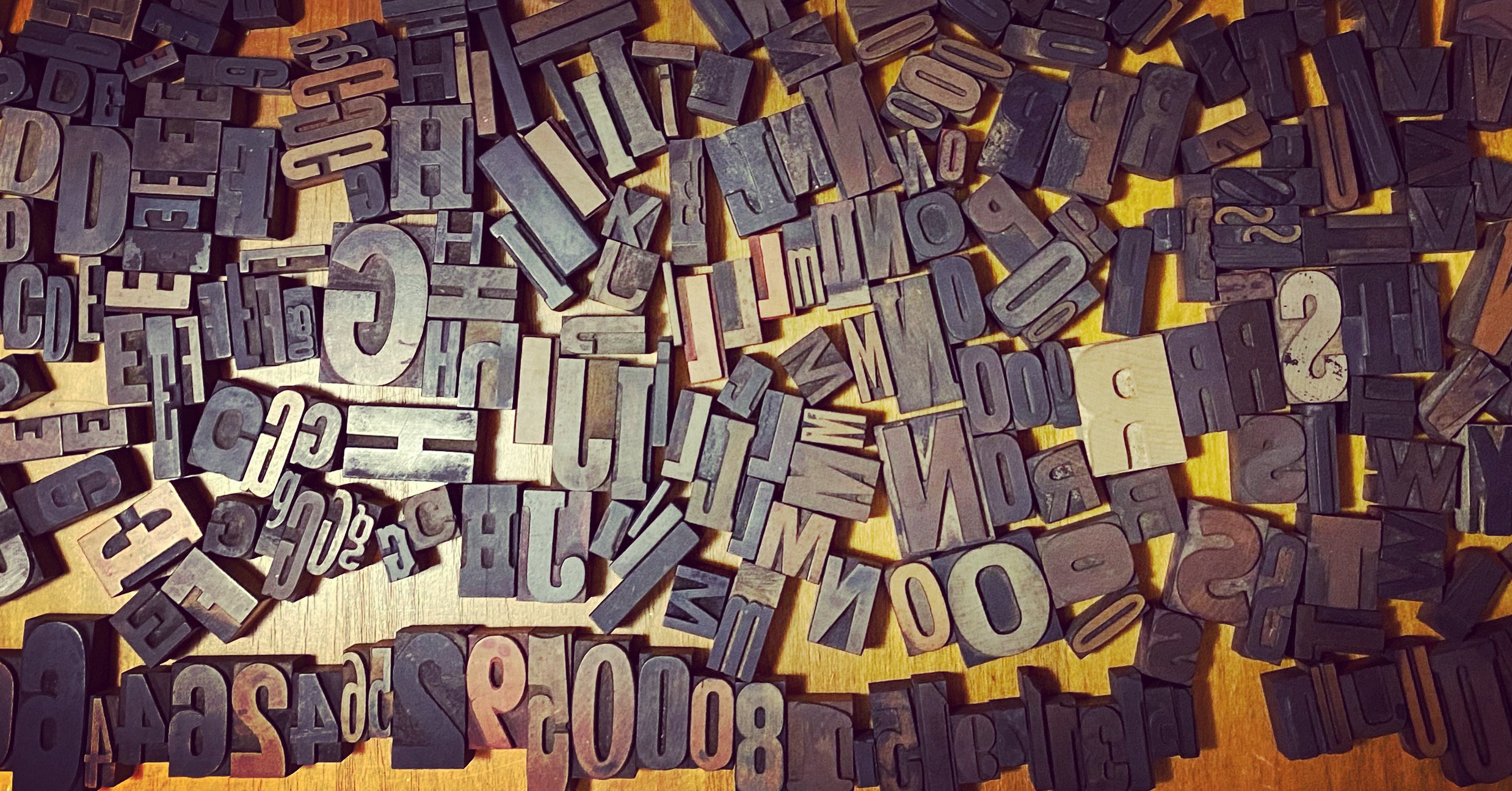
I conceived of the Tiny Type Museum & Time Capsule with my friend Anna Robinson. She had worked at Glowforge and was starting a certificate program in cabinetmaking and architectural woodworking, and we idly talked about a project we could collaborate on. With her insight and my realization that she could provide the skills I didn’t have, we embarked on making around 100 sets of type and printing artifacts—a sort of teaching collection, designed to last the ages (thus the “type capsule”) part of the name. I hired Anna to build the cases, though she’s been a close consultant and sounding board on other details.
A successful crowdfunding campaign across February 2019 allowed me to spend a large hunk of 2019 talking to letterpress printers, people who collect gear, type founders (those who cast type in metal), and a breed of journeying resellers, largely in the UK, but also one in Long Island. (These folks are constantly finding shops and individuals clearing out old type and letterpress printing equipment, and then use Instagram or word of mouth to find buyers. See Urbanfox Letterpress and Jeremy Winkworth Letterpress, for instance.)
Our poor postal carriers, who have delivered probably a literal ton of lead, cast iron, brass, and bronze to our front door due to the USPS’s excellent flat-rate Priority Mail service, the preferred method for shipping for letterpress folks. Across 2019, dozens of packages—thousands of items—have arrived for me to examine and catalog towards making 100-odd sets. I’ve posted pictures of many items I’ve acquired for the museums and larger pieces of type history I hope to use in a live presentation or pop-up museum in 2020 at this Flickr album.

The case includes a book (also available separately) that I wrote over the summer: Six Centuries of Type & Printing, which covers the history of printing types and presses from Gutenberg’s European invention of them through phototype, offset, and digital technologies. (I note in the book the important fact that Gutenberg didn’t invent printing: many examples pre-date him across Asia. But he appears to be the first person to create a method of consistent mass production of type that let to an explosion of printing.)
The book was set in hot-metal Monotype composition in the north of England by Nick Gill at Effra Press, and is about to be printed in London by Phil Abel, a partner in Social Enterprise Printing. Unbound pages will find their way to Spinner Bookbinderei in Germany, where it will be bound, then airfreighted to Seattle. Shockingly, this is the most sensible and affordable way to print this book! (I document part of why at the Tiny Type Blog that goes along with the museum progress.)
The museum costs roughly $1,000 plus shipping, and it’s been an incredible and rewarding surprise to see how many people find it compelling, even at that price. I didn’t set the cost arbitrarily—it’s been a hard but well fought budget battle to bring the handmade case and all the components in at a price that lets me pay myself for my labor at an okay hourly rate for the hundred of hours put into the project. I’ve sold 80 of the expected edition of about 100, I expect to sell out the edition by spring at the current pace and level of interest.
Journalism, Writing, and Books
Several publications I’d hoped to write more than one piece for had editors change after that first piece was submitted or after it ran. Other periodicals and sites I’ve written for across many years have changed editorial submission policies (typically focusing more on full-time staff) or reduced budgets. I am not pointing any fingers, as this is just the necessity of the still-changing advertising and subscription marketplace. My editors always look out for me and other freelancers.

However, I still filed somewhere in the multi-hundred story range in 2019, between the end of the Fortune stint, my ongoing work as the Q&A columnist for Macworld, and regular contributions to many other publications, like Fast Company and TidBITS. This year I also contributed to Smithsonian (technically in 2018, but it appeared in the issue with a January/February 2019 cover date), Increment, Atlas Obscura, the Economist, American History, and the KCET public-television web site. I also wrote quite a bit at Medium and my Patreon site about the history of printing, including a lot of forgotten events and unsung pieces of technology, like flong and stereotypes, technology used to speed up printing, and the wildcat magazine typesetter and printer strike of October 1919 in New York City that delayed or canceled issues of hundreds of magazines. (Support at Patreon has underwritten travel to events, research materials, and allowed me to focus on writing about type and printing history outside of main projects and paid assignments.)
You can see links to everything I’ve written at my Authory web site, which automatically collects articles as they are published, including my Best of 2019 list. In particular, my three favorite pieces in 2019 were:
- A story for Fast Company about the irresponsible sale of laser cutters and engravers with improper safeguards. Many online sites offer devices that could burn, blind, or even kill a user or someone standing nearby, and retailers aren’t taking heed. When I contacted several major retailers, they removed every item I sent them as examples. But thousands of similar models remain, even after that.
- A look at the Grabhorn Institute for Atlas Obscura. Grabhorn is a San Francisco nonprofit that preserves the working M&H Type foundry and the fine-art Arion Press, both founded in slightly different forms a century ago in that city. The foundry, in particular, went through multiple owners before the final one, who in the early 2000s put it and the press into the hands of the nonprofit to ensure their future.
- How representation of the scripts that make up languages help perpetuate their existence for Increment. This story had his genesis in a piece I wrote in 2016 that didn’t run in the publication it was intended to appear in, because a certain president won the election that week. It was bumped and ultimately never appeared. It ran in a different form in my letterpress-printed Not To Put Too Fine a Point on It collection in 2017 (still available in limited quantities as a letterpress book and in unlimited quantities as an ebook). I took a fresh look at it and revamped it for Increment, refocused on more of the technical aspects, but not disregarding the hegemony of dominant cultures and conquering peoples killing the languages of those who “lost.”
An increasing part of my livelihood in 2019 interleaved with all the rest of this was an element that was significant in years past, and which ebbs and flows: Take Control Books. This 15-year-old e-publishing firm, founded by Adam and Tonya Engst of TidBITS, has been owned by Joe Kissell for a couple of years now. Joe was the best-selling Take Control author, so it was logical for the Engsts to sell to him when they were ready to move on. Joe needed since his purchase to migrate the back-end content system since it was becoming superannuated, and then the long-time (but very creaky) transaction-processing partner gave notice it was shutting down the service Take Control relied on (with plenty of notice). Joe did several yeomen’s worth of work particularly through the summer. The success of which I can testify about based on the number of copies of books I sold this year.
This year was one of revision, in which I updated several titles: Take Control of Your Apple ID (full of troubleshooting advice!), Take Control of Slack, Take Control of Wi-Fi Networking and Security, and my self-published Connect & Secure Your iPhone & iPad, which Take Control sells on my behalf. I also edited a couple of Take Control titles.
I’m currently working on a new book, tentatively titled Take Control of Your Home Security Cameras, a tome that is both a buyer’s guide and advice on securing your systems and considering your privacy, the privacy of others, and the impact of the surveillance state.
Podcasts
I had rebooted The New Disruptors podcast in 2018 after a modest Kickstarter helped me raise the fees necessary to cover equipment, hiring editing help, and other costs, and produced 13 episodes. I wasn’t able to rebuild the same scale of audience as in 2012–2014, even with many more people listening to podcasts, for a variety of reasons. I think a big one is that New Disruptors focused on how creators could chart their own independent course to make a partial or full-time living by working directly for their audience, subscribers, buyers, and patrons.
Since 2014, options have matured, and many people I spoke to in that time range now rely almost entirely on Kickstarter, Patreon, their own mailing lists, their own podcasts, Instagram-based sales (where you post pictures and people contact you!), and the emergence of very robust self-operated commerce sites. I use several of those methods to support my projects and independent writing. Squarespace’s ecommerce features have in particular been invaluable as part of that! A lot of podcasts now also occupy the mind space I did, making it harder to find guests who were willing to appear or that hadn’t appeared on numerous shows.
As a result, I wound down the podcast again in mid-2019, though may produce new episodes from time to time when I see new models or unique approaches emerge.
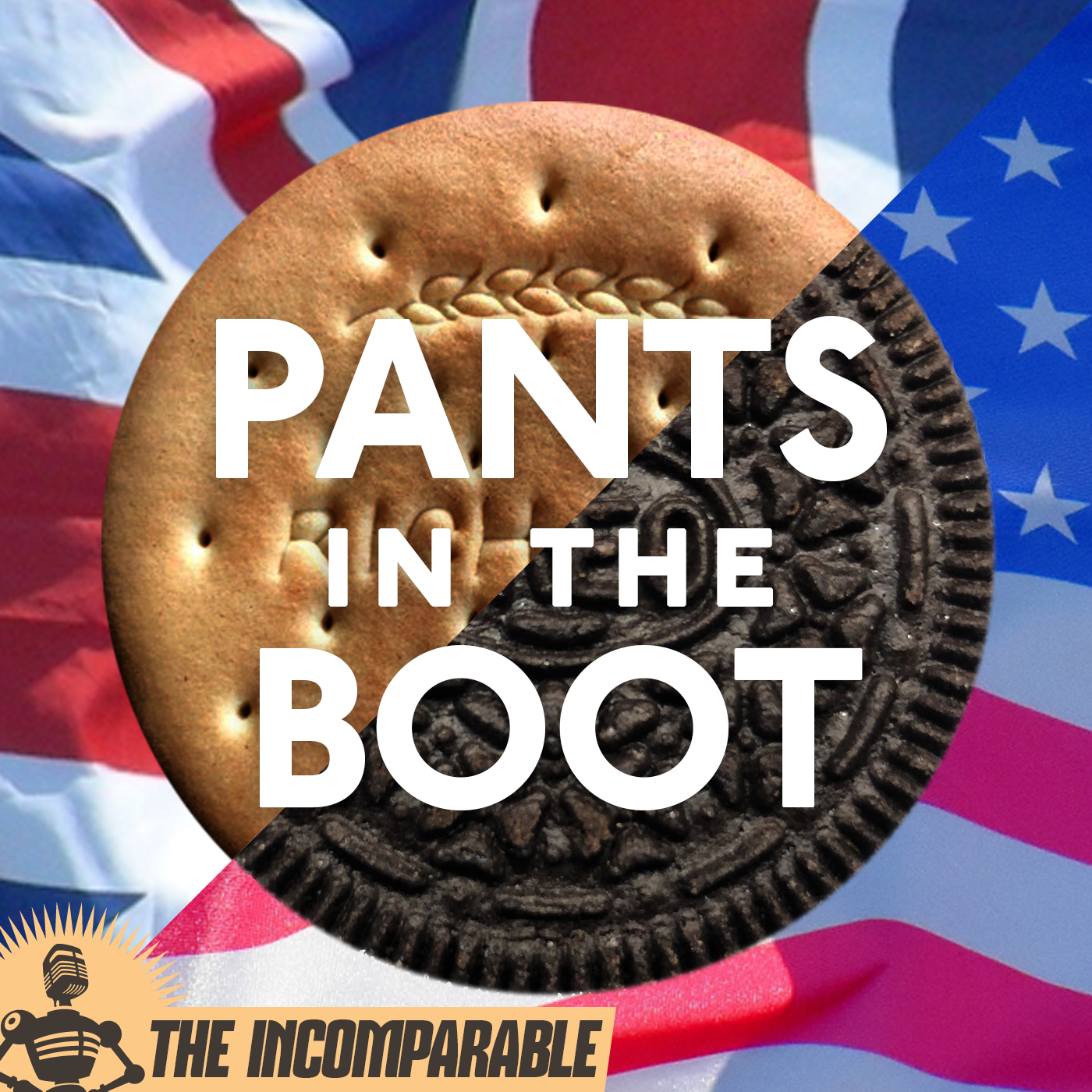
In 2019, I produced a new podcast for the Incomparable network of geeky podcasts with geeky podcast pals called Pants in the Boot. After traveling twice to England in the last couple of years, I enjoyed learning even more of the differences in language and culture. I decided to turn it into a thing, and each episode taps panelists from the US, Canada, and UK—and on the latest run, also from Australia. (I hope to expand in the future to other countries in which English is spoken widely.)
Each episode, we talk about a set of terms or concepts, like lemonade (surprisingly complicated), “public” school, or—yes—pants and underwear. It’s all in good fun, and I try to keep episodes short, typically 5 to 15 minutes, though some topics run longer.
I’ve got four episodes of another podcast recorded that I plan to call the Tiny Typecast, which will focus on the way in which the history of type, printing, and books informs us about the past and continues to shape us in the present. As soon as those are edited, I’ll get them posted, promote them, and start recording more.
I also was a substitute host and script-writer on a few occasions for Brian McCullough’s Techmeme Ride Home, a daily tech podcast that summarizes the news into about 15 minutes in time for everyone’s nightly commute. It’s a good challenge, and I appreciate someone giving me the helm of their ship and trusting I won’t smash it into the reefs! (Some episodes I wrote, recorded, and editing; for a couple, I wrote a chunk of the script while Brian was at a tech event that he was covering for the same day’s podcast.)
I did a one-off Jeopardy!-related podcast with Tom Nissley (an all-time winner) and Matthew Amster-Burton (a friend who was a fantastic contestant but an early victim of James Holzhauer) in which we discussed how James might change the game.
I expect to get back into more podcasting in 2019—I barely appeared on other people’s podcasts and turned down requests due to a lack of time. With my focus on the Tiny Type Museum project and Take Control Books writing, it was hard to find the time necessary to create anything on a regular basis.
The Uncertain Future of Freelance Writing
California passed a new employment law that was intended to be smart in intent, but is disastrous in effect. It was an attempt to make sure gig workers weren’t misclassified. That is, people who work for Uber, Amazon delivery, Grubhub, Instacart, and many others where the company doesn’t allow negotiation of fees, imposes strict conditions that must be met, and otherwise acts almost exactly like an employer—but doesn’t pay unemployment insurance and workers have none of the protections of employment. This is an issue that dates back decades, as companies tried to shift employees to independent contracting status in a lot of fields in which it was inappropriate; the gig economy accelerated it.
However, the California law also effectively outlaws independent professionals who provide services, though it carves out so many exemptions that it’s clearly serving special interests. It doesn’t accept that people who have a high degree of training and experience, who set fees or negotiate them, who “hire and fire” clients, who work at their own equipment in their own manner, and who have typically many clients aren’t really employees—they’re actually contractors. Writers, photographers, and illustrators in California are limited to 35 “submission” a year for any given company, which means that many publishers are severing relationships with all their California freelancers in the interest of not violating that law. In some cases, this reveals how firms are truly exploiting people—paying an effective pittance per hour and demanding employee-like conditions! But for most folks like me, we run our own businesses, and this would be unwarranted.
California was the first to pass this restrictive a law. It’s potentially unconstitutional, but certainly has emerged to be disruptive and unfair. A similar, worse law is under consideration in New Jersey and passed out of a NJ senate committee. My friend and colleague Jen A. Miller, who lives in New Jersey, has been helping to lead a fight against the bill there. New York is looking at such regulations, and other states, too.
If Washington state adopted such a law, it would be bad for me, worse for many others. That’s another reason why I’m trying to chart a different course forward.
My Particular Future
I confess that I head into 2020 invigorated and happy with what I accomplished in 2019, but also quite concerned about the future of freelance journalism and my career in it. I know that I’ll be writing, where I’m producing prose intended for people to read, until I expire on some far-off future date (apparently, this happens to everyone), but the ability for me to pursue reporting in the areas that I am knowledgeable about for fees that make sense given what I need to earn and my level of experience? That feels like a big unknown.
I will certainly be writing more books, maybe even some with a more mainstream appeal. I have an idea for a subscription-based “thing” service I’ll be talking more about by around February 2020. I have recurring gigs and relationships I’ll continue to work on. And I’ve enjoyed the heck out of my creative work in 2019.
I am trying and so far succeeding in approaching the end of 2019 with hope for 2020. That wasn’t true at the end of 2017 or 2018, when everything felt much more uncertain about my work, the economy—even my health! Contracting the flu Christmas Eve 2017 and a difficult aftermath through the first four months of 2018 took a chunk of my energy and earnings. Fortunately, 2019 hasn’t been like that at all.
I want to thank everyone who has been so supportive this year and every other. My goal with my writing is to cast some light on interesting dark areas, and I appreciate every opportunity to share my thrill in everything I learn.