Glog

Design

In the Works for a Flong Time

Books

In the Works for a Flong Time

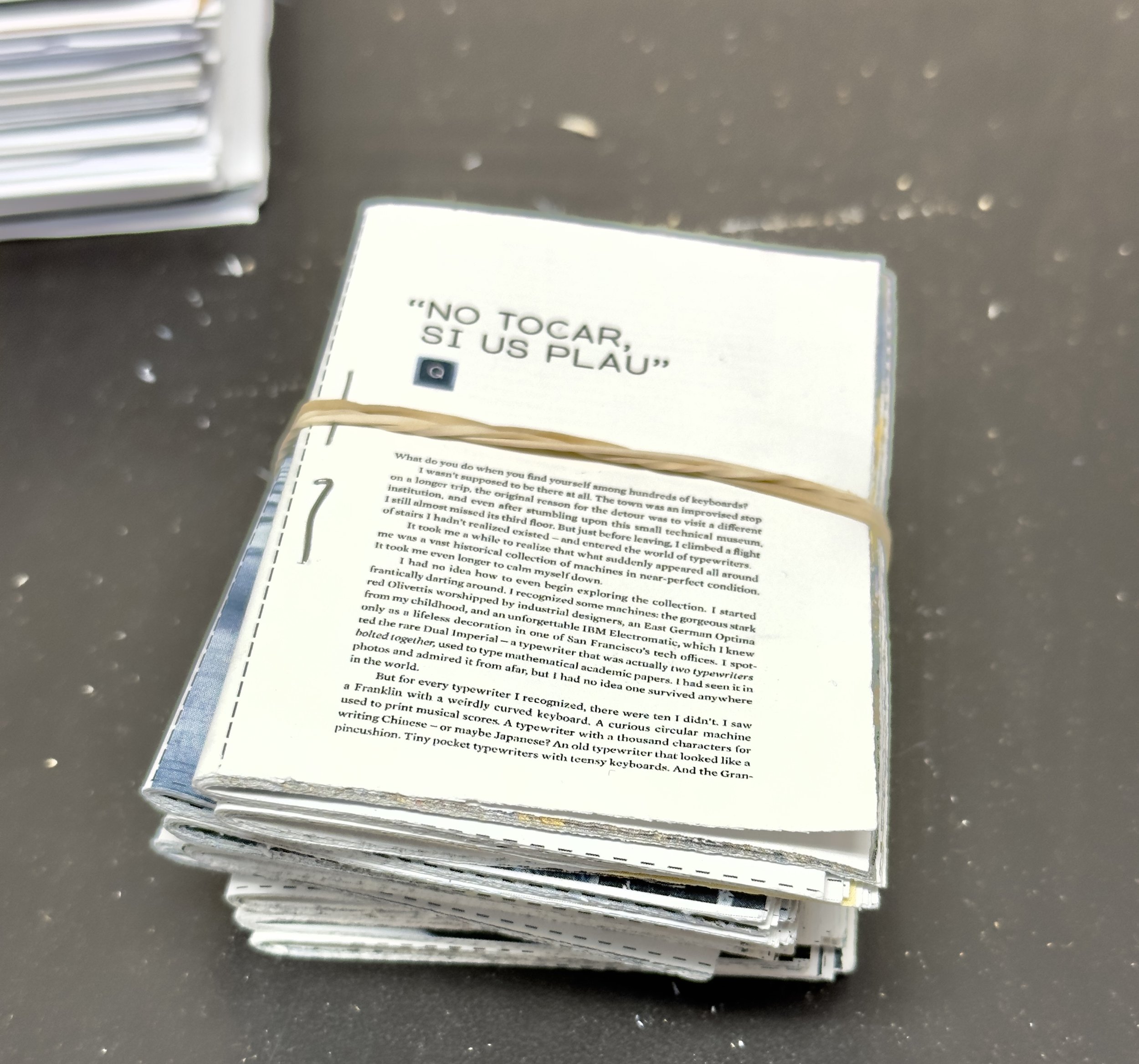
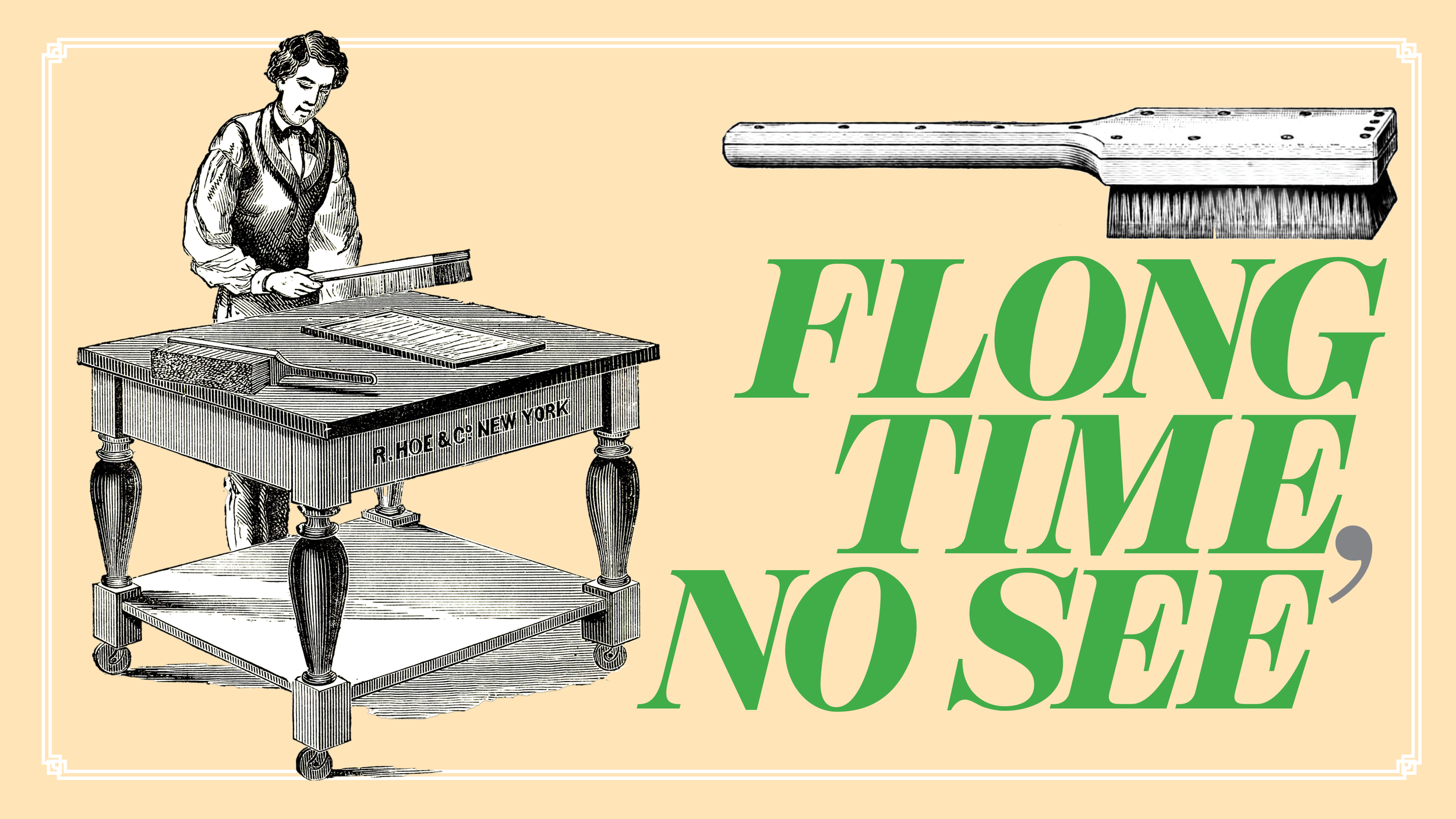
I’m happy to announce the launch of my latest book, Flong Time, No See! This book is a collection of reported work and essays I’ve written over the last seven years about topics as disparate as how a New York Times printer had a job for life for over 50 years, when magazine publishers thought they could replace typesetting with typewriters, how to find and eradicate type lice, and how boilerplate transformed from a literal piece of metal into a metaphor.
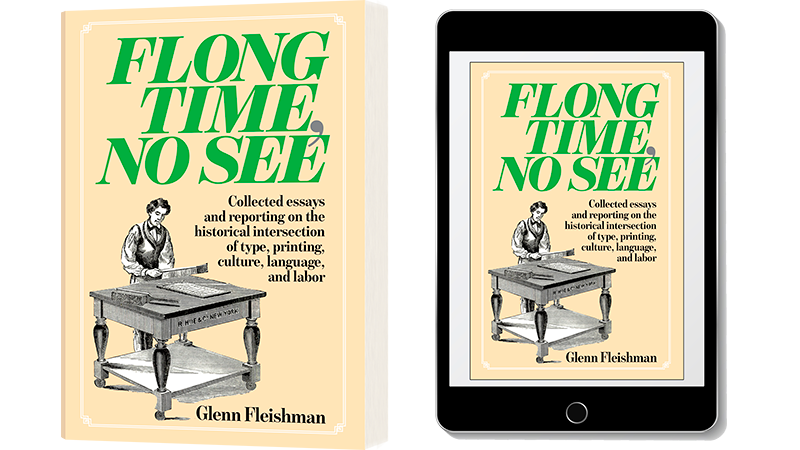
 The book comes in print and ebook editions (simulated previews)
The book comes in print and ebook editions (simulated previews)

There are over 12 stories in all, including the flagship essay on flong, a printing mold used to cast metal plates that helped speed up print production, leading to newspapers with more pages and more editions, and which was a driving force in comic strip syndication.

For more information, take a look at the campaign page, which
Podcasting

The Talk Show: Episode 420

I appear on the latest episode of John “Daring Fireball” Gruber’s The Talk Show podcast. John and I talked tariffs, hegemony and colonialism, and mother loving iPhones on mother loving cargo planes. Also about typesetting, printing, and crowdfunding.

Books

How Comics Were Made Ships!

It seems like I only started talking about How Comics Were Made a few months ago, but I’ve been thinking about it for years. It coalesced in 2023. I almost leaped into the project then, but was committed to a client’s massive effort, Shift Happens, which needed full attention for months. Crowdfunded in March 2024, How Comics Were Made started shipping today! The huge batch of Kickstarter pledges and pre-orders since then will head out in the world over the next week. You can order a copy right now while they last!

Copies ordered starting today will ship in about a week, and after that will ship within a day or so of order.

I’ve also made available for purchase a special letterpress print that incorporates a Zippy the Pinhead comic in re-created mold (mat or flong) format. This limited-edition item, printed in a quantity of no

Books

How Comics Were Made: Foreword and Forward!

My book How Comics Were Made is off to the printers! I uploaded about five gigabytes of files today and should have proofs shortly. Then it’s off to the races—the press! I chose a nearby printer so that I could go “on press”: being at the printing plant while the book is underway, viewing pages as they come off the press, and approving them when they’re tweaked to perfection. Update, Sept. 22: It goes on press on Sept. 26! Nearly done!

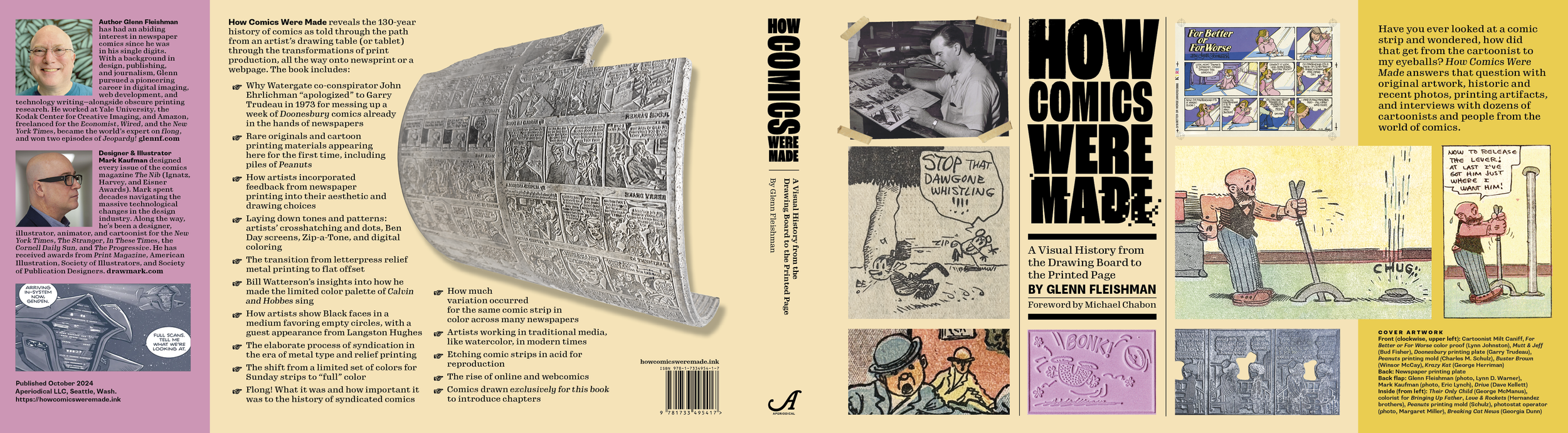
 The full cover: french flaps (left and right), back cover (left of center), spine, front cover (right of center)
The full cover: french flaps (left and right), back cover (left of center), spine, front cover (right of center)

I’m also happy to share that Michael Chabon wrote the foreword to my book! He is lifelong lover of comics and comic books, his grandfather was a typesetter, and he enjoys design, typography, and industrial history. A perfect choice! His book The Amazing Adventures of Kavalier

Design

Panel from the Museum of Printing

It was my distinct pleasure in July to meet in person with Doug Wilson (Linotype: The Film), Jeff Jarvis (media critic, professor, This Week in Google, too many credits to list), and my friend and author-client Marcin Wichary (Shift Happens). We took the occasion of Marcin and I flying through Boston to head up to two weeks on press in Maine to meet at the Museum of Printing in Haverhill, Mass. (say HAYvrill, please!), and Frank Romano, the founder and an incredibly important figure in modern printing history, teaching, and research, was so kind as to invite us to do a panel and interview us.

The video from that is up, split into three 20-minutes pieces. Links are part 1, part 2, and part 3, or you can use the embeds below.

Cartooning

An Upcoming Book: How Comics Were Made!

I’ve just launched a website for How Comics Were Made: A Visual History from the Drawing Board to the Printed Page, a book that I’ve been cooking up writing for a few years. On the heels of editing and projecting managing Shift Happens for Marcin Wichary (thus part of raising over $750,000 in that campaign), I am excited to get back into print and share the comics and printing history I’ve been assembling for the last six years.

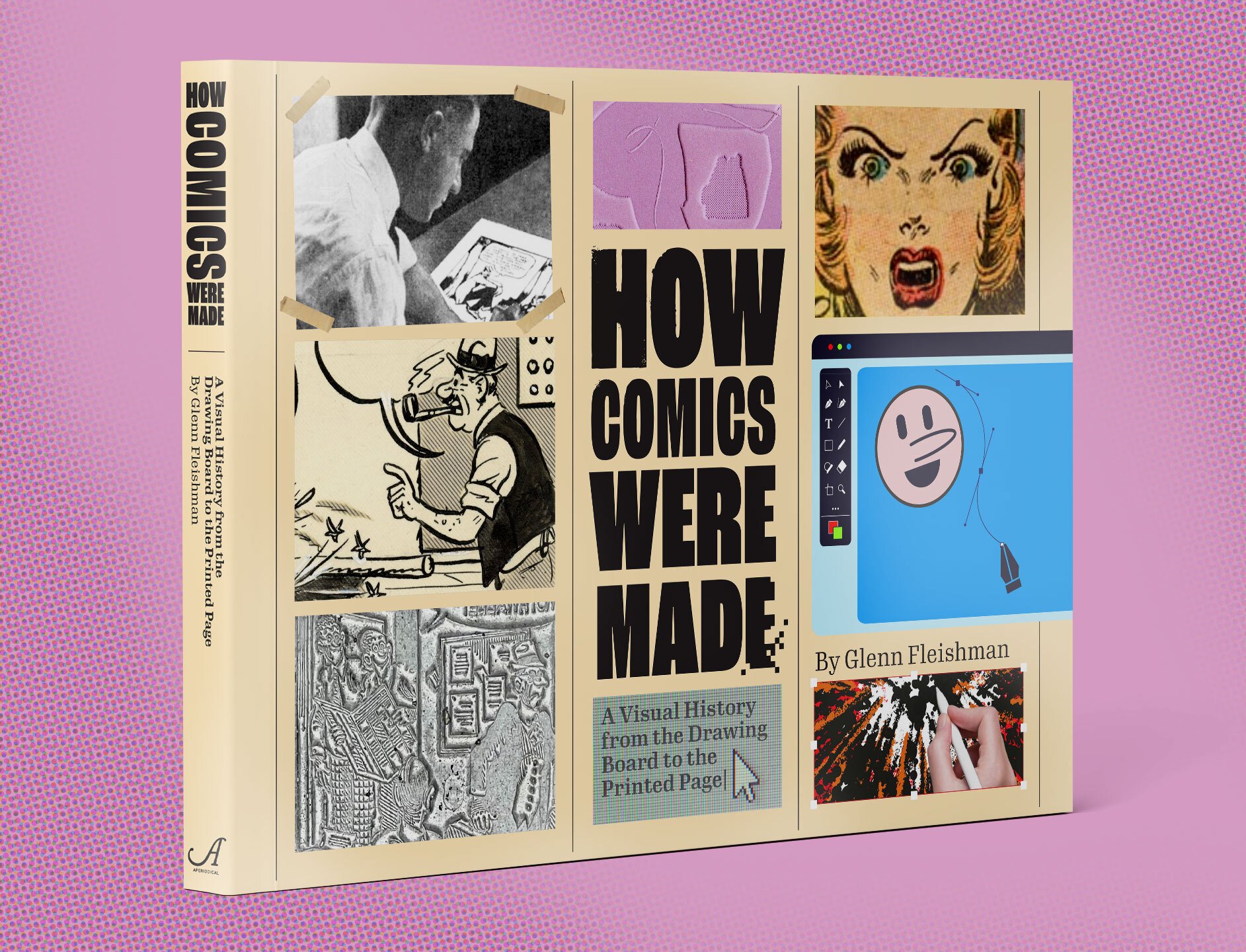
 Preliminary cover of  How Comics Were Made , designed by Mark Kaufman
Preliminary cover of How Comics Were Made , designed by Mark Kaufman

I’ve already started prep, and hired Mark Kaufman (of the recently late and forever-to-be-lamented The Nib) to design and illustrate the book. He’s created a preliminary cover that we’ll be refining as we move towards a Kickstarter campaign in February 2024. The book’s expected publication date: October 2024. I’ve done a far

A Press with Paper Sails Traverses the Sea of Ink

Books

A Press with Paper Sails Traverses the Sea of Ink

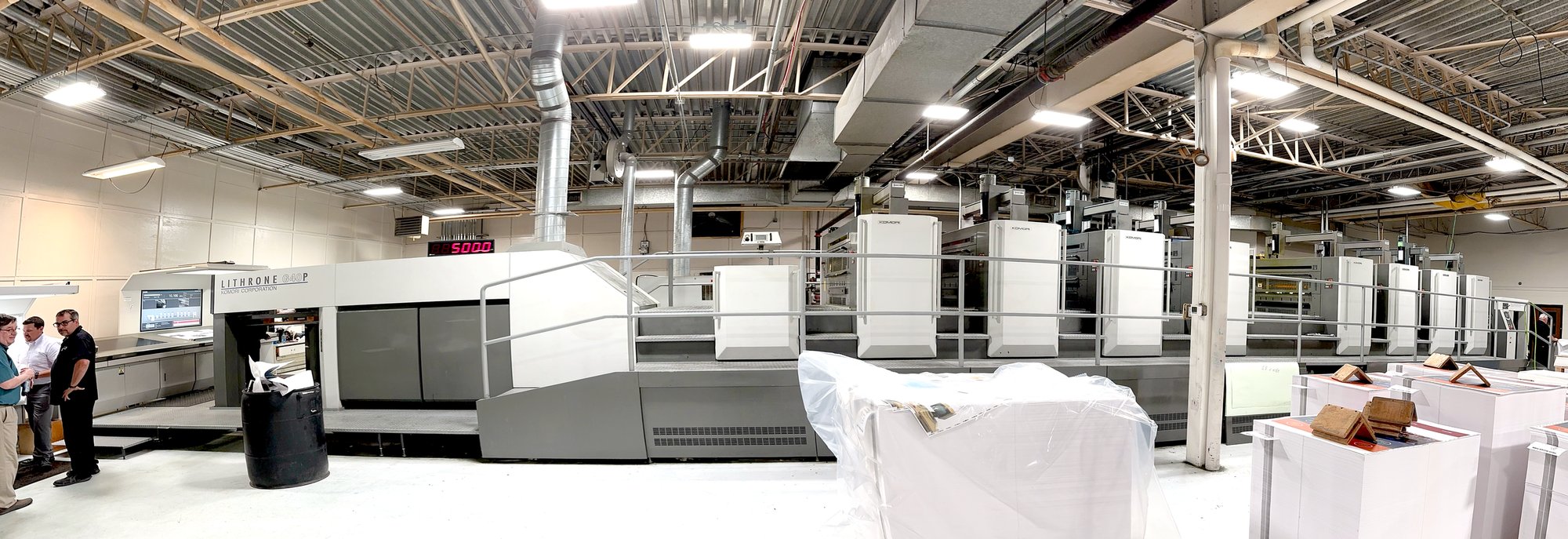
 Eight-unit Komori press at Penmor Lithographers in Lewiston, Maine
Eight-unit Komori press at Penmor Lithographers in Lewiston, Maine

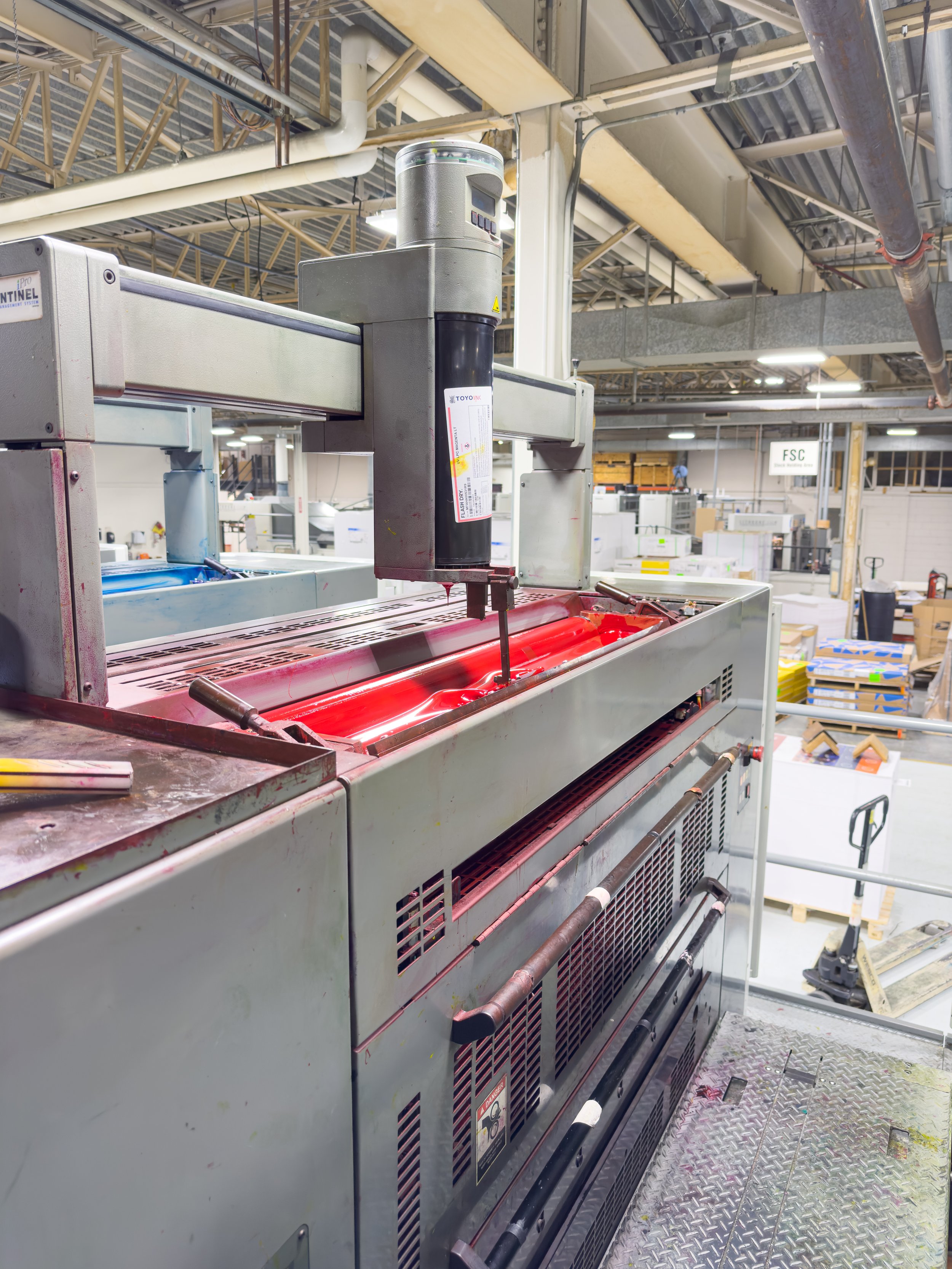
A modern printing press is a thing of wonder. It’s highly automated. It has cameras inside it. There are digital controls for making fine-grained adjustments. A scanner checks color bars as pages are pulled during a print run to make sure the density (amount of ink laid down) remains consistent. A press makes constant course adjustments, and the helmsperson—the press operator—is in constant motion to keep it trim.

 It takes a crew to staff a press and print a book.
It takes a crew to staff a press and print a book.

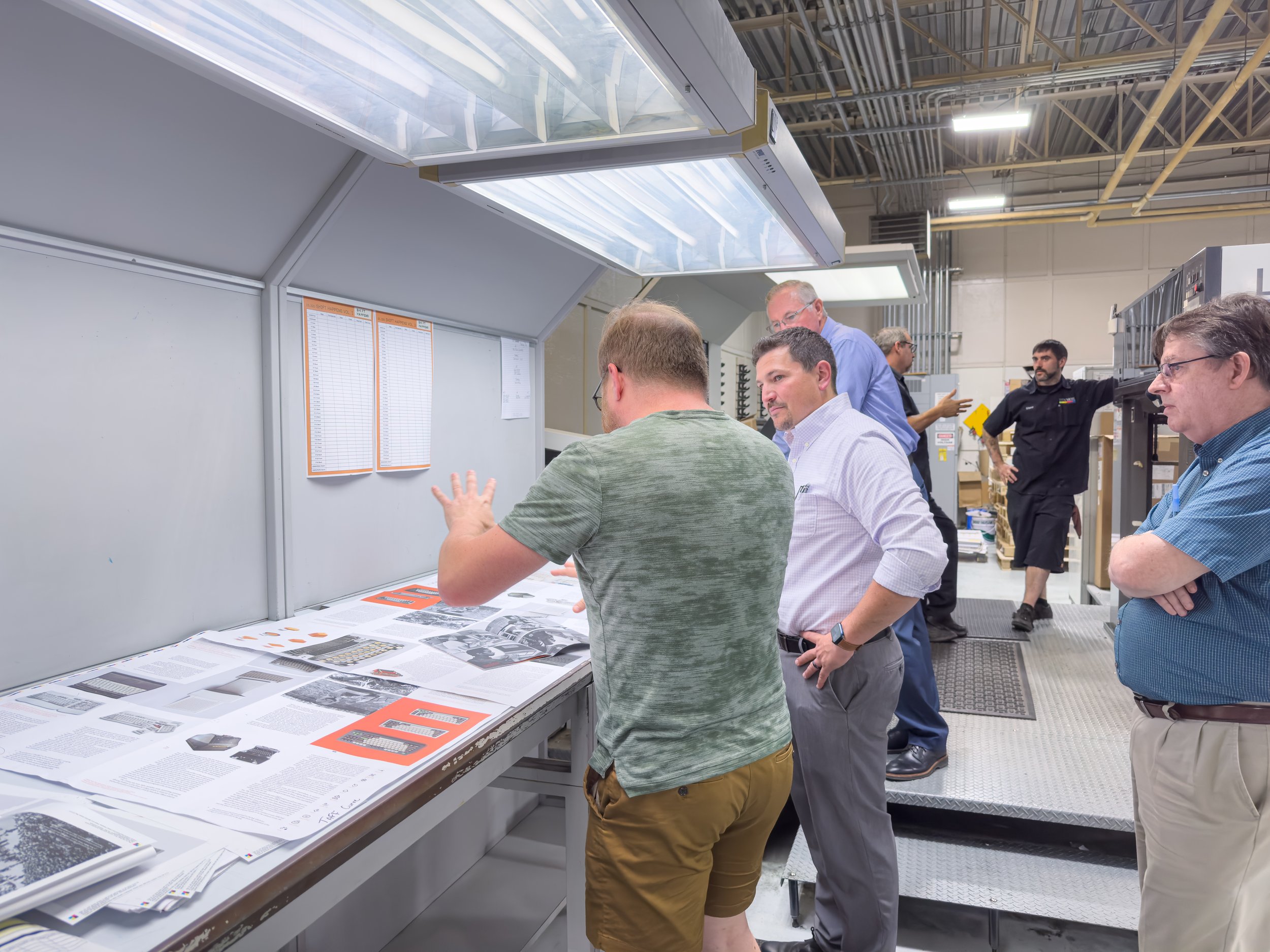
I found myself thinking of it like a ship on the first day of a multi-day press check that I’m on with my author client Marcin Wichary for his massive book Shift Happens at our printers, Penmor Lithographers, in Lewiston, Maine. The press is long—maybe 40 feet end to end. At one end, one pressperson feeds

The Proof Is in the Printing

Print

The Proof Is in the Printing

I’m currently in Lewiston, Maine, with Marcin Wichary, the author and designer of Shift Happens. I’ve been his editor and project manager. Having worked with Marcin for years on the text, we shifted into crowdfunding (raising over $750,000) and now into production. After we talked to many printers over a couple of years and received lots of bids, Marcin opted to go with Penmor Lithographics, a company in the United States we knew we could go “on press” with—we could actually travel to them and view the pages as they came off a press.

If he had selected a printer outside the U.S., it might have been more expensive or impossible to do a “press check” like this. We would have entirely relied on a printer rep managing our interests to ensure everything went as desired during the printing process. (We were also concerned about

Print

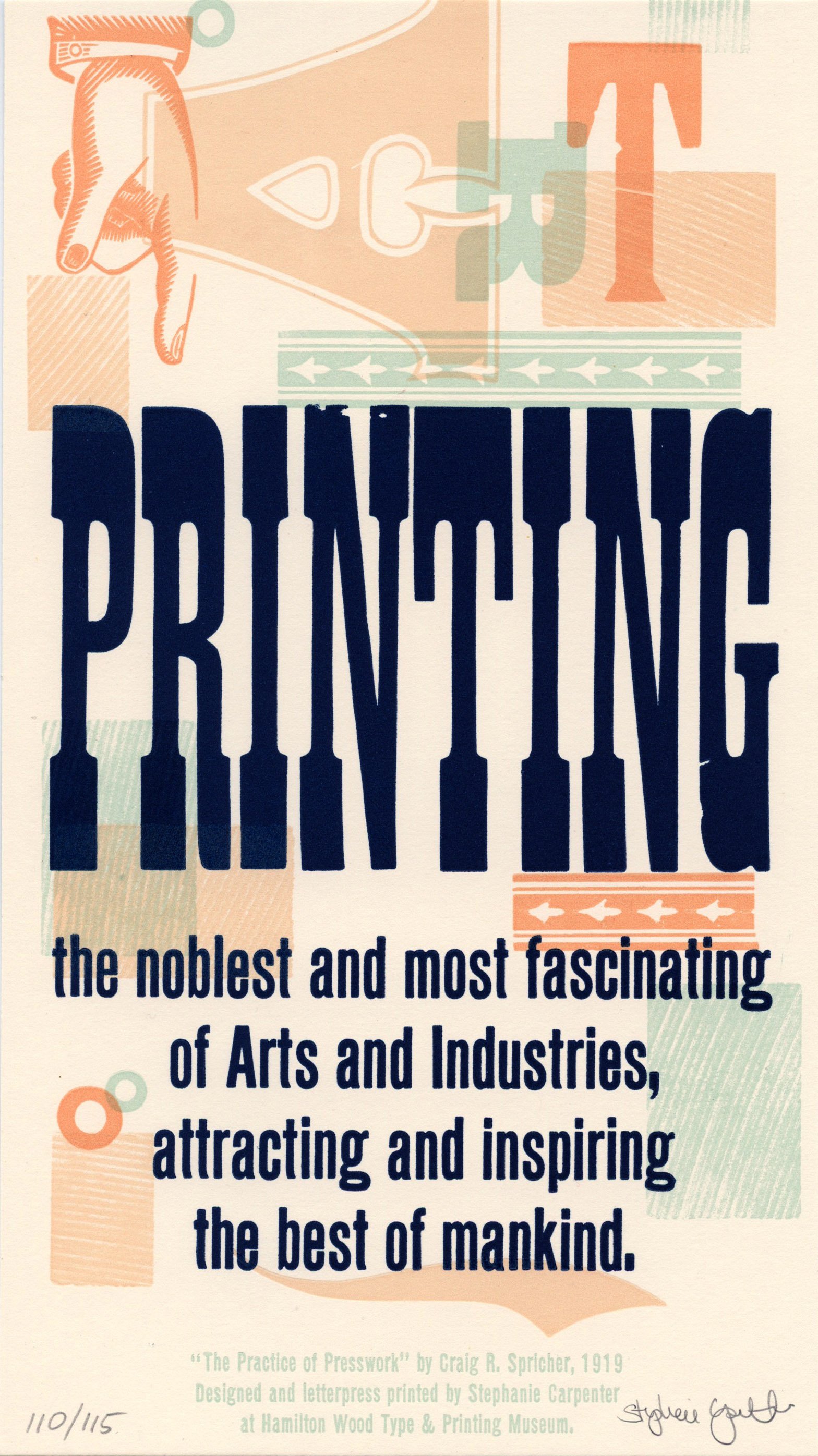
Poster by Stephanie Carpenter from the Tiny Type Museum

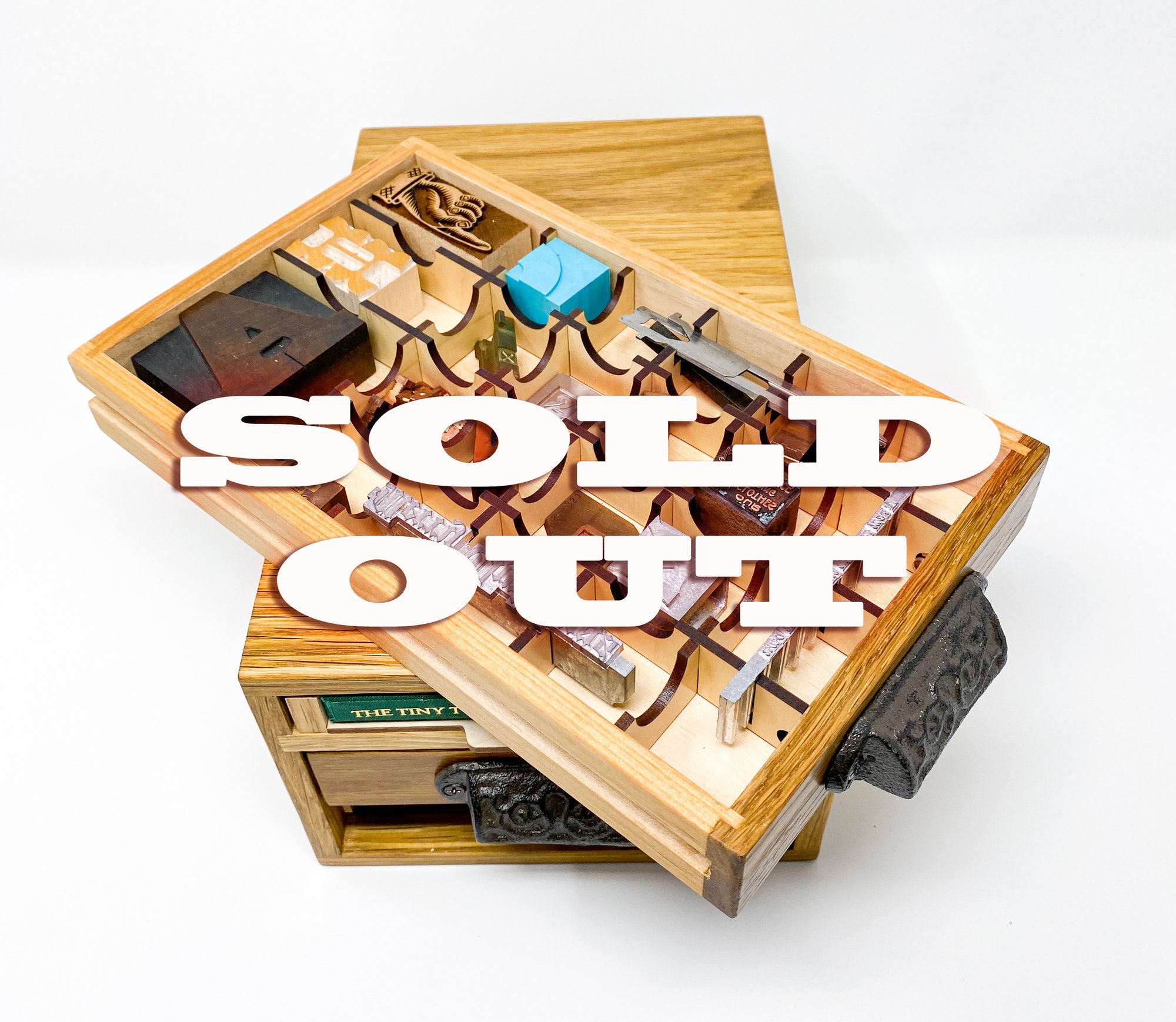
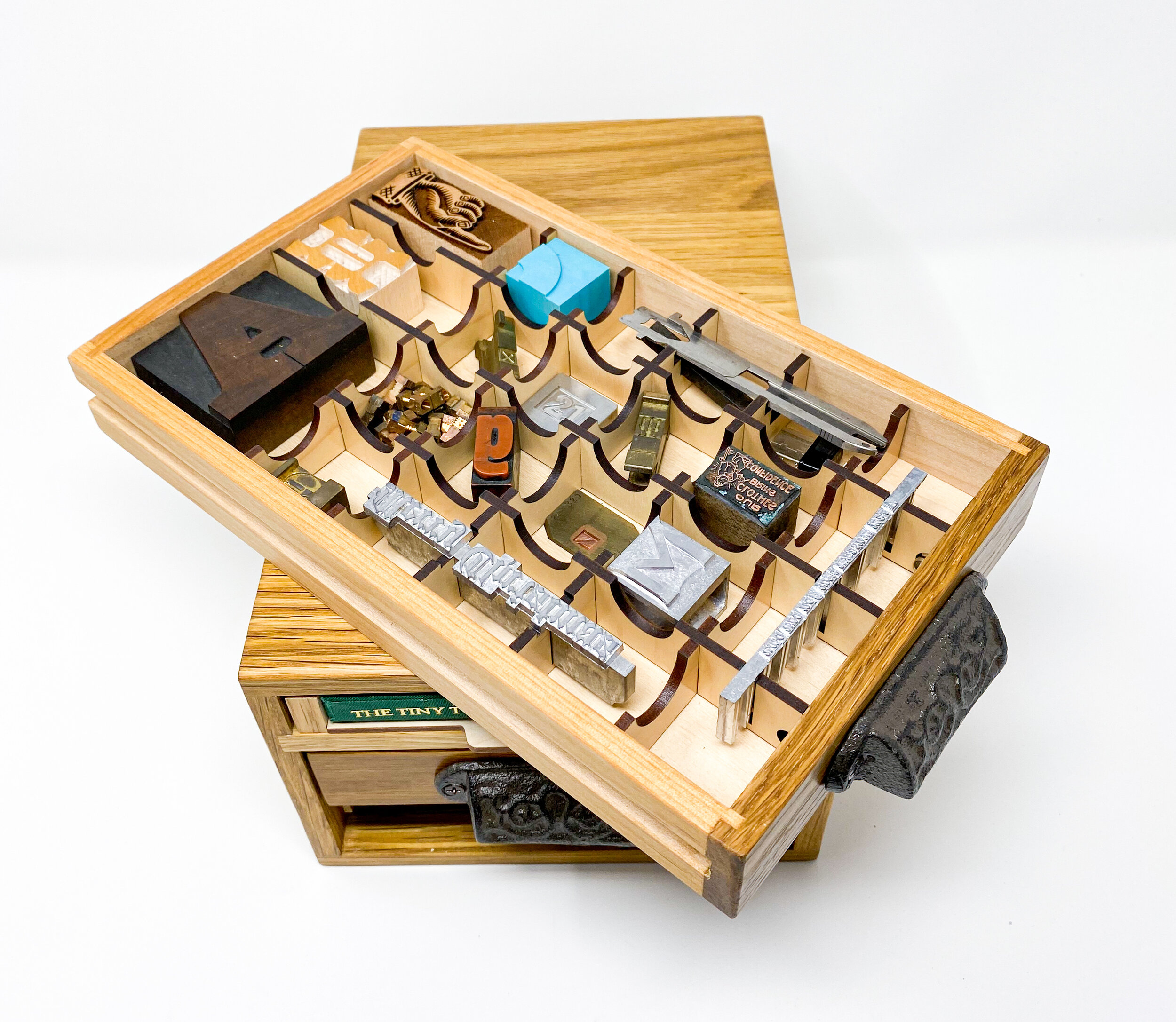
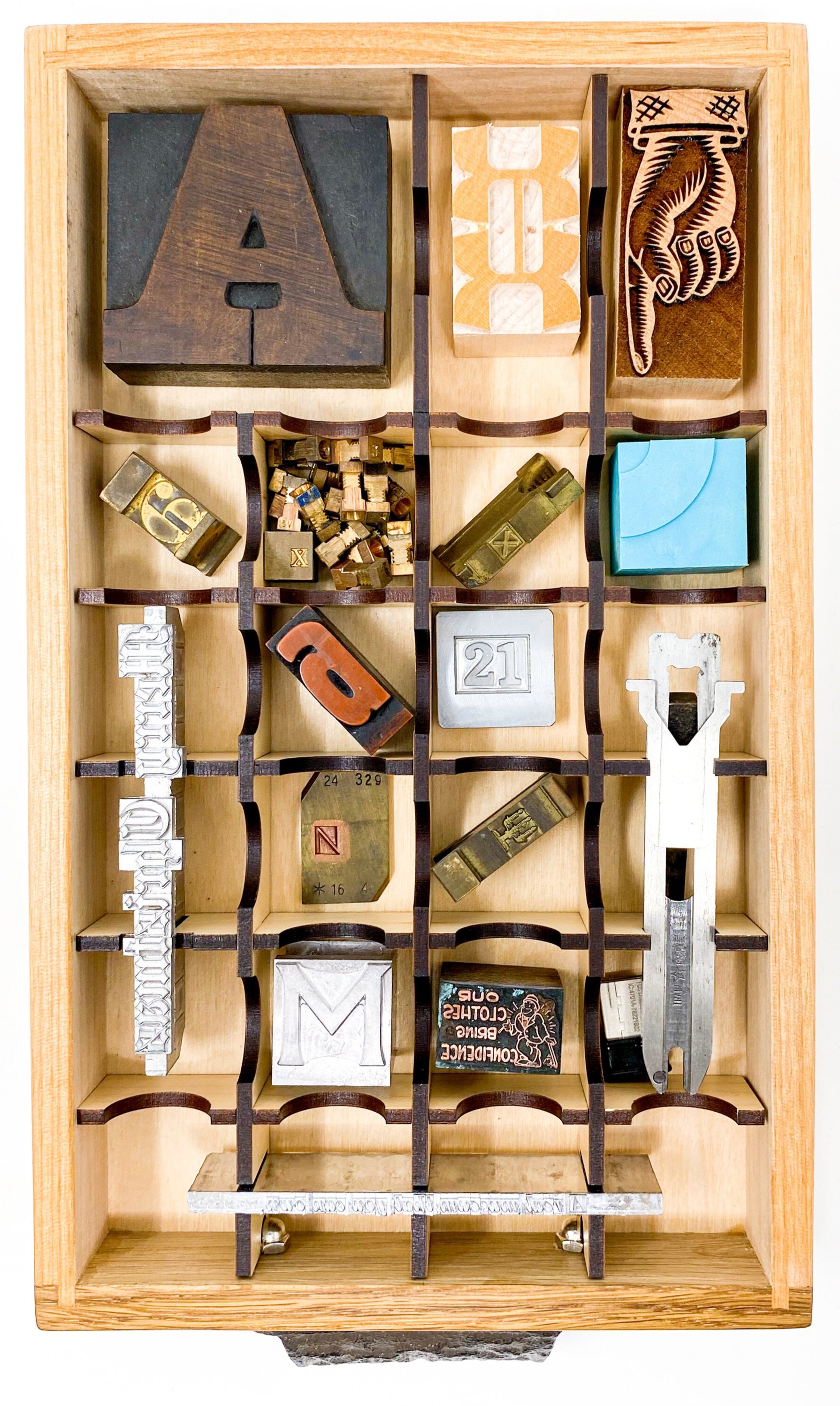
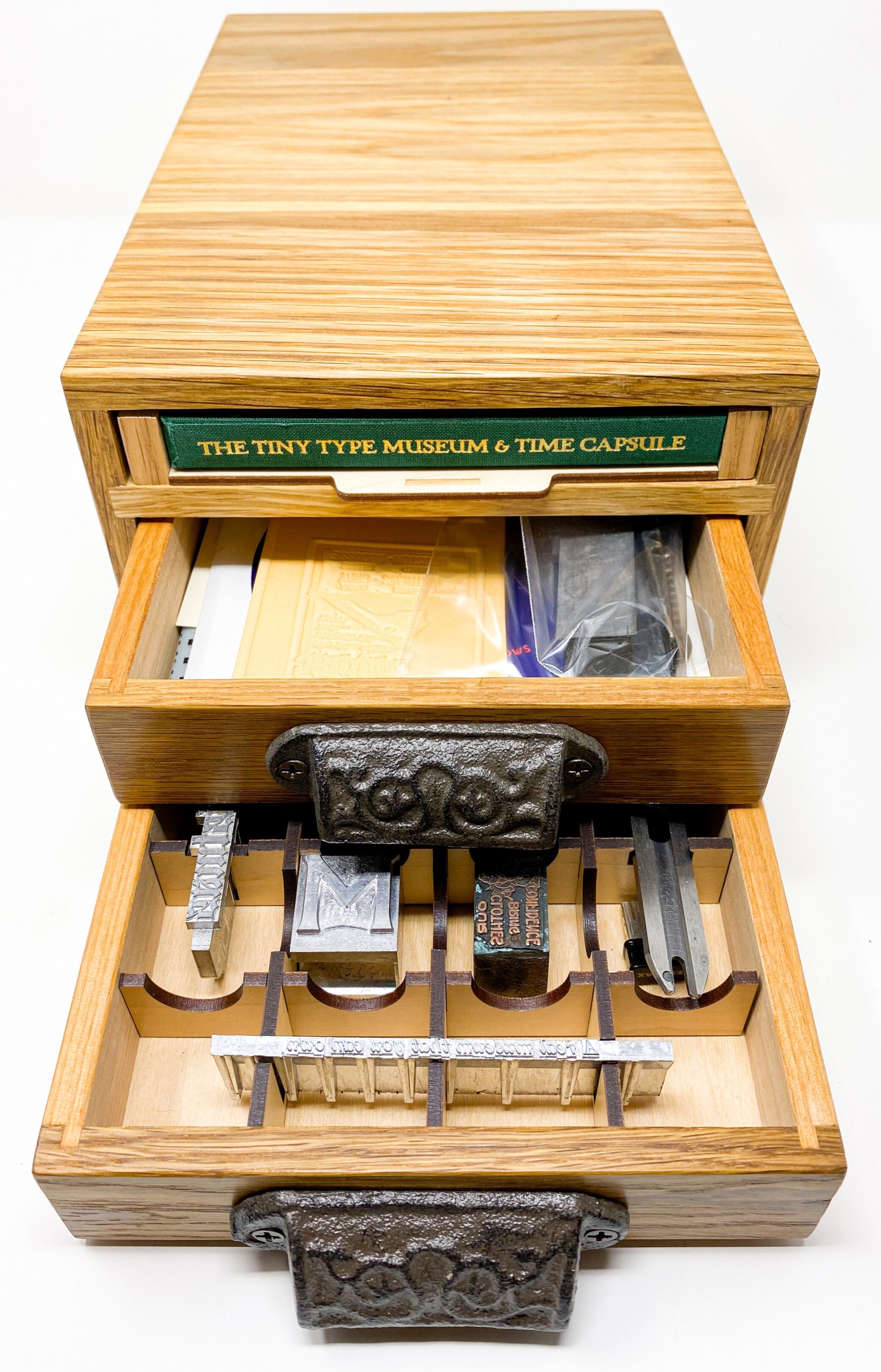
With the last Tiny Type Museum & Time Capsule sold in February 2022, I still have a substantial amount of materials and art left from its production. I’ll be making some of this available in the coming months in my online store.

One extraordinary item I have a handful of is a commission. I asked Stephanie Carpenter, an artist, educator, designer, and printer in Wisconsin—and the Assistant Director of the Hamilton Wood Type & Printing Museum—to design and print a small poster that fit within the Tiny Type Museum. Using historic type and presses, Stephanie created the beauty you can see here, a quotation from “The Practice of Presswork.”

You can purchase one of the six remaining prints via this link. Each print is numbered and signed from an edition of 115. № 110 to № 115 remain available. The poster is 9⅜×5¼ inches (237×133mm). Stephanie normally

Design

Senior Project: A Version of Wolpe’s Albertus

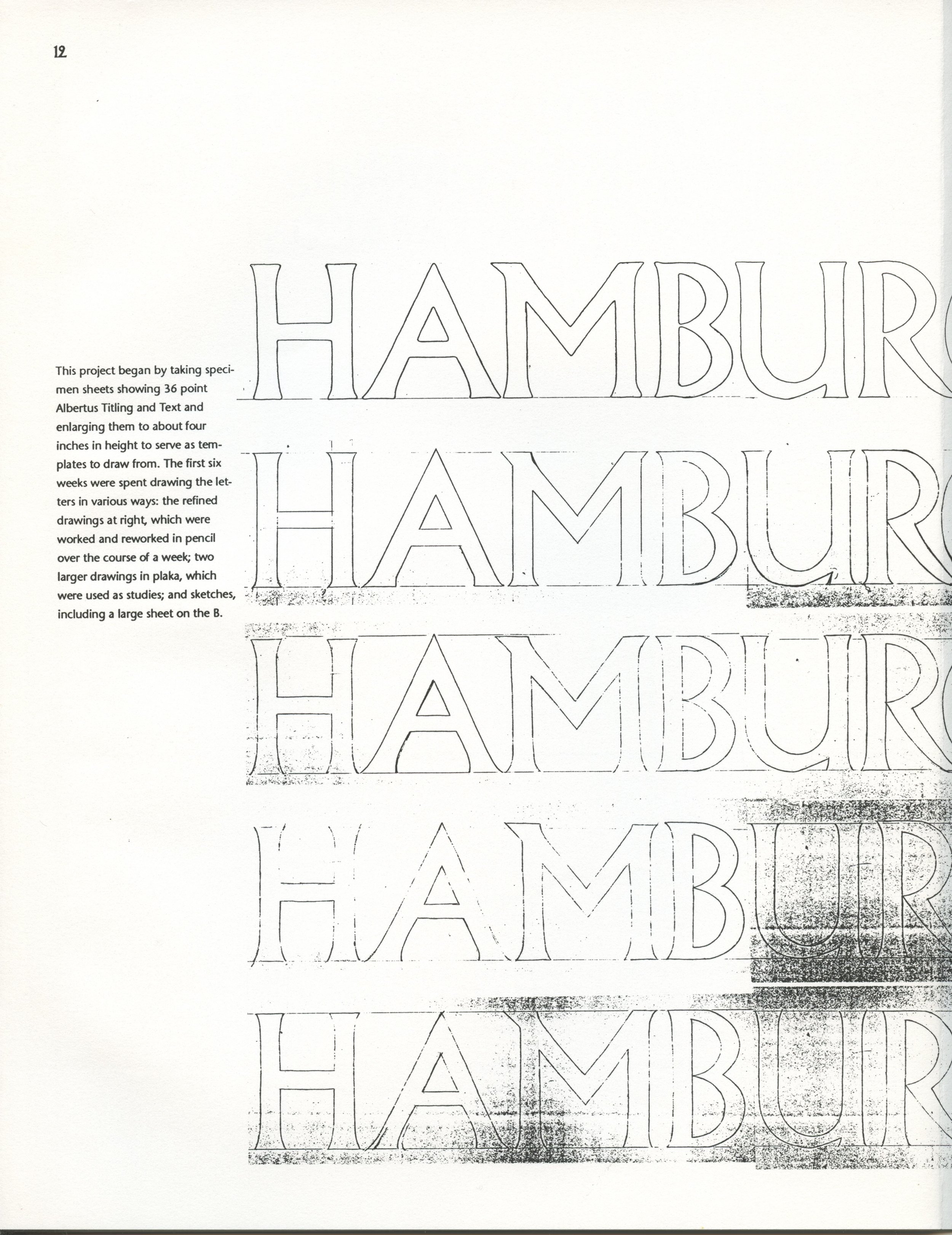
Searching for old photos recently, I uncovered my senior project in graphic design. I majored in Art at Yale with a subject concentration in graphic design, and this work was my part of my graduation requirement for the major. I had a strong interest in type design, and was encouraged by a mentor to produce a high-quality digital version of the typeface Albertus. Albertus had been designed in the 1930s by Berthold Wolpe, and it was one that in the late 1980s wasn’t yet available in a strong digital rendition. I’ve scanned the project for my own posterity and you can download it here. Missing, sadly, are pictures of the large exhibition posters that I created as part of my project.

 A page from my 1990 senior project in which I showed progressive improvements in hand drawing test letters.
A page from my 1990 senior project in which I showed progressive improvements in hand drawing test letters.

You can see the child of the adult in

Third Anniversary of the Tiny Type Museum & Time Capsule Project

Crowdfunding

Third Anniversary of the Tiny Type Museum & Time Capsule Project

On 29 January 2019, I launched the biggest artistic, writing, production, and commercial project of my life: the Tiny Type Museum & Time Capsule. Conceived of months before with Anna Peterson (formerly Robinson), who provided the woodworking expertise and case manufacturing, I envisioned the Tiny Type Museum as a way for people with an interest in type, typography, or printing to obtain a collection of actual artifacts, historical and modern, that they could use to educate themselves, share with others, or use as a teaching tool. We would make about 100 of these museums, each containing their own unique set of dozens of items.

I talked to a number of people I knew in the letterpress and museum world to get their take on whether this was an interesting idea and to be sure I could acquire the stuff I needed. I felt positive enough to move forward. In addition