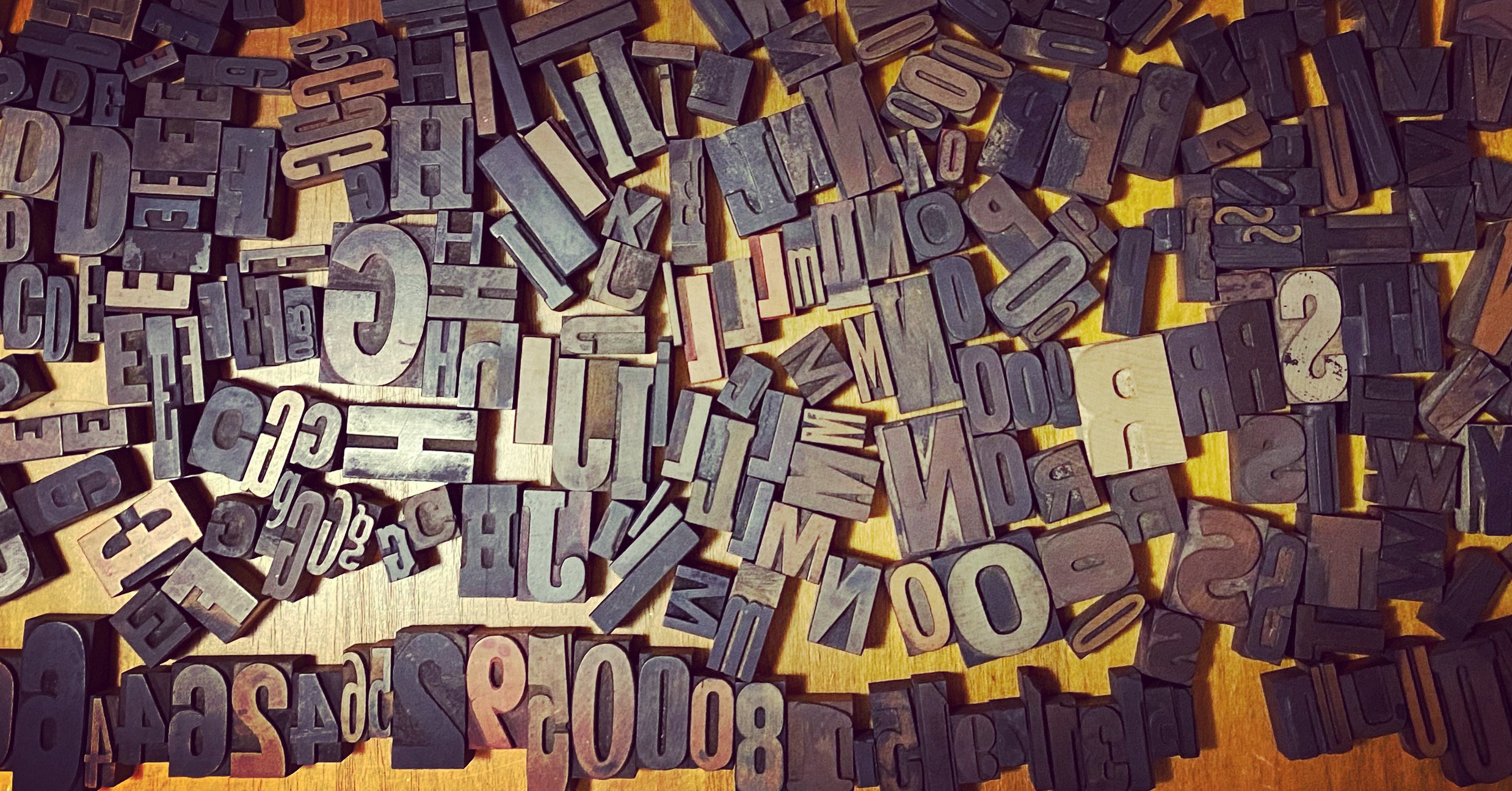
Third Anniversary of the Tiny Type Museum & Time Capsule Project


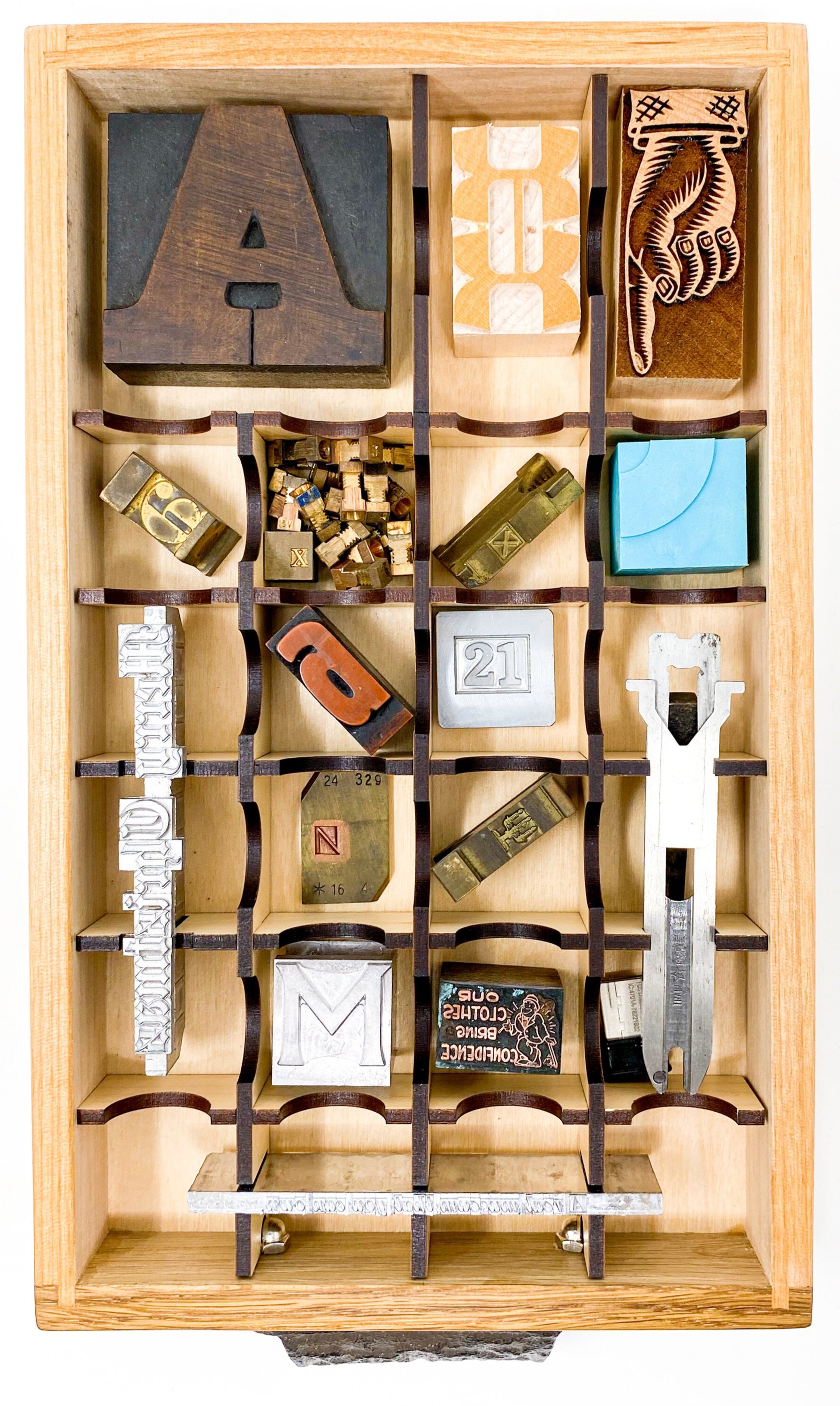
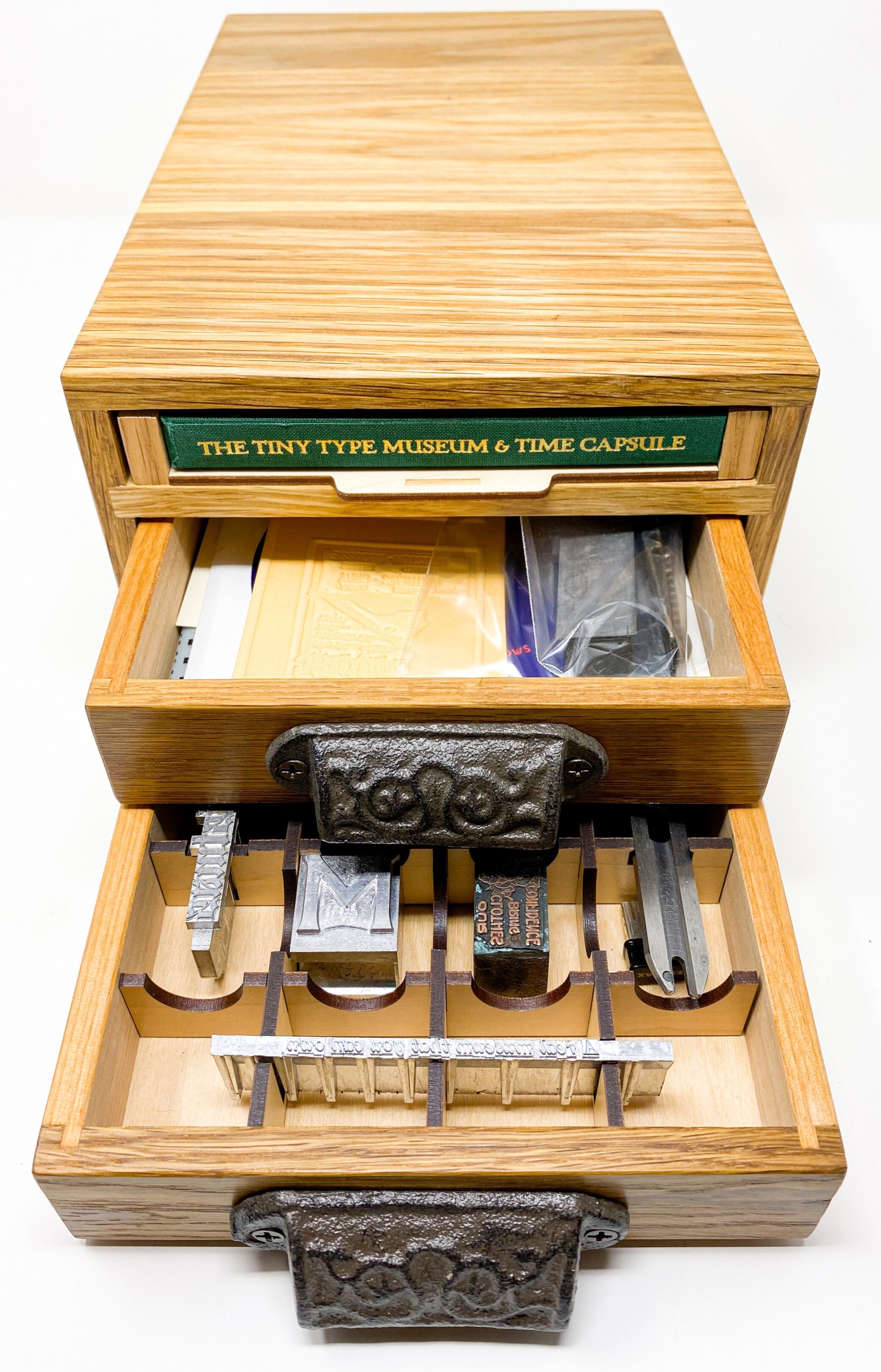
On 29 January 2019, I launched the biggest artistic, writing, production, and commercial project of my life: the Tiny Type Museum & Time Capsule. Conceived of months before with Anna Peterson (formerly Robinson), who provided the woodworking expertise and case manufacturing, I envisioned the Tiny Type Museum as a way for people with an interest in type, typography, or printing to obtain a collection of actual artifacts, historical and modern, that they could use to educate themselves, share with others, or use as a teaching tool. We would make about 100 of these museums, each containing their own unique set of dozens of items.
I talked to a number of people I knew in the letterpress and museum world to get their take on whether this was an interesting idea and to be sure I could acquire the stuff I needed. I felt positive enough to move forward. In addition to Anna making the cases, I commissioned a limited-edition poster from Stephanie Carpenter, program officer at the Hamilton Wood Type & Printing Museum; bought laser-cut wood type from Scott Moore, Moore Wood Type and historical pantograph-cut wood type from the Hamilton museum; purchased die-injection molded type blocks, pica poles, font CD-ROMs, and other material from Rich Kegler’s P22 Type Foundry; arranged for foundry type from M&H Type/Grabhorn Institute; connected with Larry Lionetti, a letterpress equipment and type broker (find him on eBay), and Roger at Urbanfox Letterpress in England, who travels the country finding valuable material for active printers; licensed a subset of The Doves Type from Robert Green; ordered metal type from the Bixler Press & Foundry; worked with Ron Hylton at Chapel Printing to get Intertype type slugs cast; and collaborated with Nick Gill of Effra Press in North Yorkshire, England, for hot-metal typesetting and Phil Abel of Hand & Eye in London for printing, with Spinner Buchbinderei in Germany handling the fine binding for Phil and I. I scoured eBay, Etsy, Instagram, online forums, and mailing lists, and made friends around the world to find examples of artifacts spanning the last two centuries of type and printing. I got in touch with four filmmakers I knew to license their movies about letterpress and printing history as digital items: the aforementioned Rich Kegler, Making Faces; Erin Beckloff, Pressing On; Briar Levit, Graphic Means; and Doug Wilson, Linotype: The Film.


We launched the Kickstarter campaign pricing the museums at $1,000 each plus shipping. We didn’t know what to expect, but set the goal at $50,000 to make sure we would raise at least enough money to cover expenses, Anna’s labor, and some of my time. During the Kickstarter campaign, we sold nearly 60 museums! This was enough to fund an entire edition, planned for 112 and ultimately pared down in pandemic to 108, with 104 intended for sale.
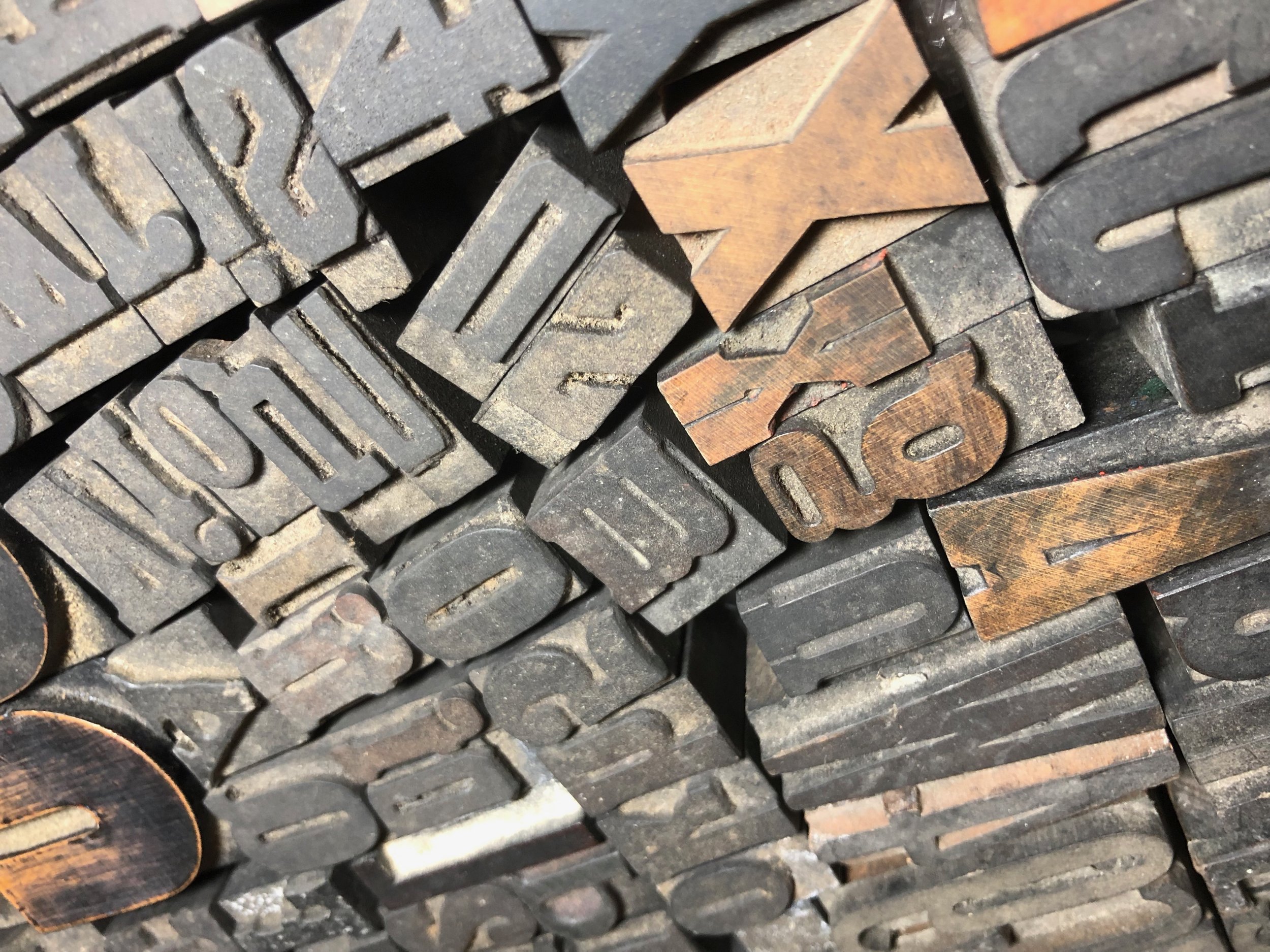
I spent much of the rest of 2019 reading, talking to experts, and researching materials. It was an incredible process to find something historically relevant and then be able to purchase the 100-odd quantity I required to fill museums. I also wrote an accompanying book in 2019, Six Centuries of Type & Printing, which took shape as I dug into physical materials I could study and hold. (Each museum has a copy of the book; you can still buy a separate copy.)


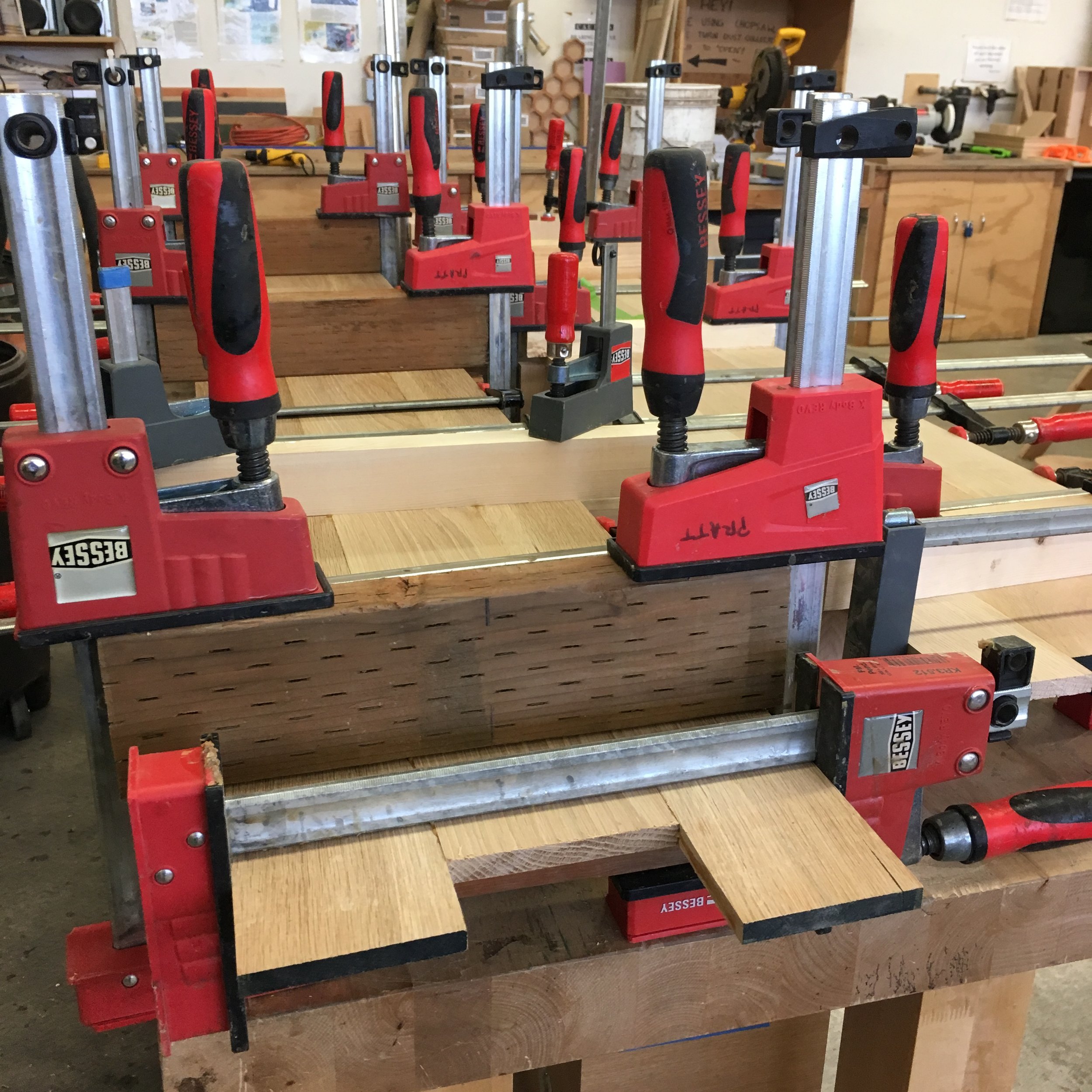

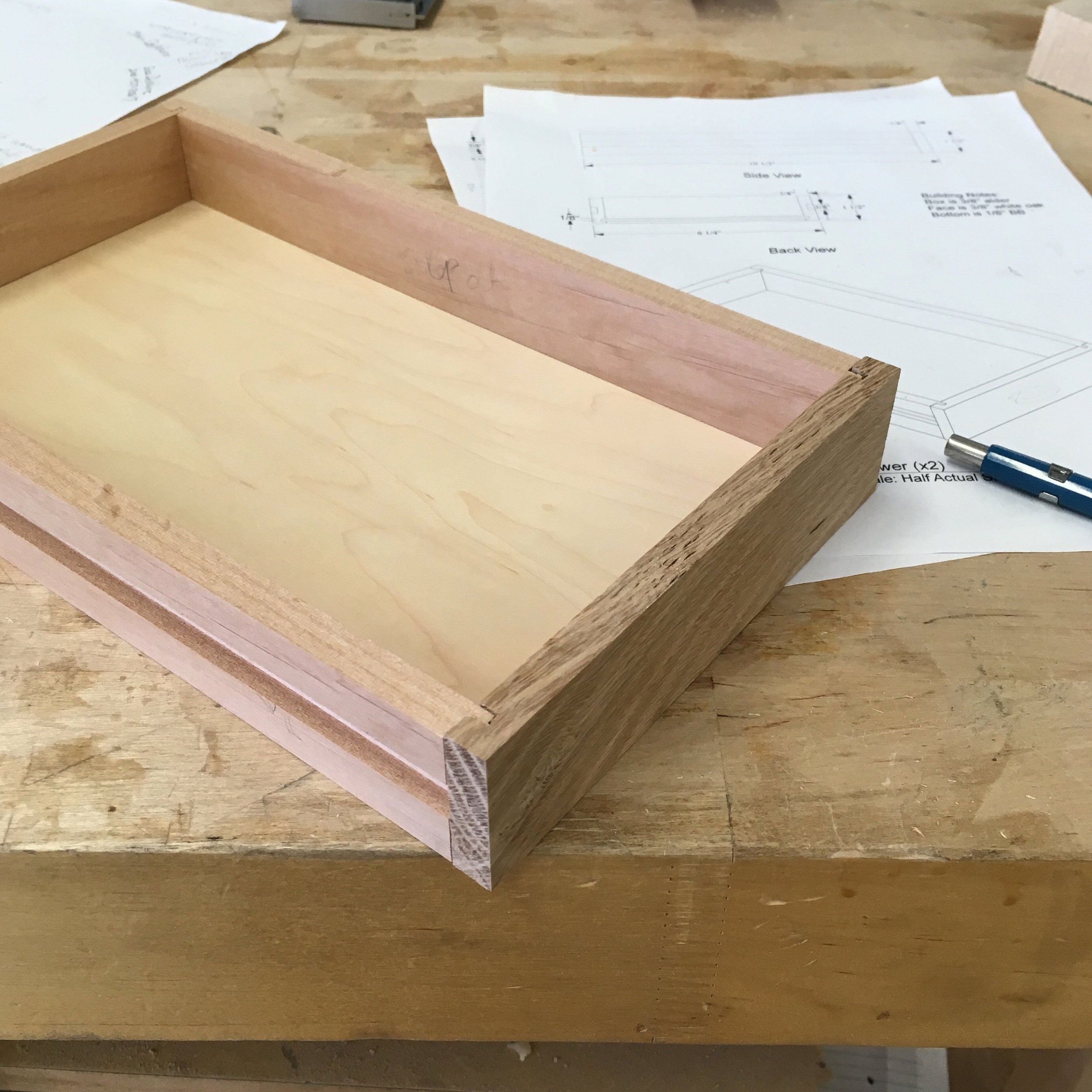


We were nearly ready to move museums into the shipping stage when the pandemic hit. That caused our work to grind to a halt. However, because the book had gone into production overseas, it proceeded. After months of typesetting, proofing, and printing in England, finished sheets went to Germany, where industry was still going strong with masking and social distancing. In April 2020, twenty-seven boxes suddenly showed up on my doorstep from FedEx! I was able to then dispatch books to people who pre-ordered them separately from the museum.
Between finalizing little details in producing some associated print materials (each museum features a “curator’s manual”) and Anna’s last wood-related steps, including staining, we were finally nearly ready in August. Anna worked to finish up a second batch as I started to prep shipping the first dozens.
Then we had fire and flood to join pestilence: wildfires in mid-September 2020 produced air so unsafe, I couldn’t work in my office: the particle count in our day-lit basement, where I work, was off the charts. After about 10 days of bad air, I put on an N95 mask and braved my office. (An air purifier kept our main floor with far healthier air.)


I began to ship museums in September, sending a few out to test packing methods. No major disasters, but a couple minor repairs had to happen, and I revised how I packed museums. Several dozen museums then shipped out in October and November, nearly 90 total, in a massive amount of sorting, picking, inventory note-taking, and packing. I carried museums by the several—each box weighing almost exactly 10 lbs.—to the nearby post office or arranged for pickup (free next day from your door by the USPS).
Despite the pandemic, we only missed the mark on the first batch of museum by about six months and the second batch by less than three. I feel pretty good about that! Subsequent museums—actual orders, not pre-orders—take from a few days to a few weeks to ship. I’ve now sold and delivered 98.
Somewhere in there, I relocated museums that were stacked on the floor (on top of a barrier to prevent moisture) to the top of a table—just days before torrential rain led to trickles of water streaming through our basement, a problem we hadn’t had in a decade. (I’ve since figured out how to fix the problem.) No museums or other merchandise were damaged, but it was too close for my comfort.
With the permission of museum “curators,” here are some photos of these words of art where they now live. A significant subset of museums were given as gifts, incredibly gratifying as their creator.


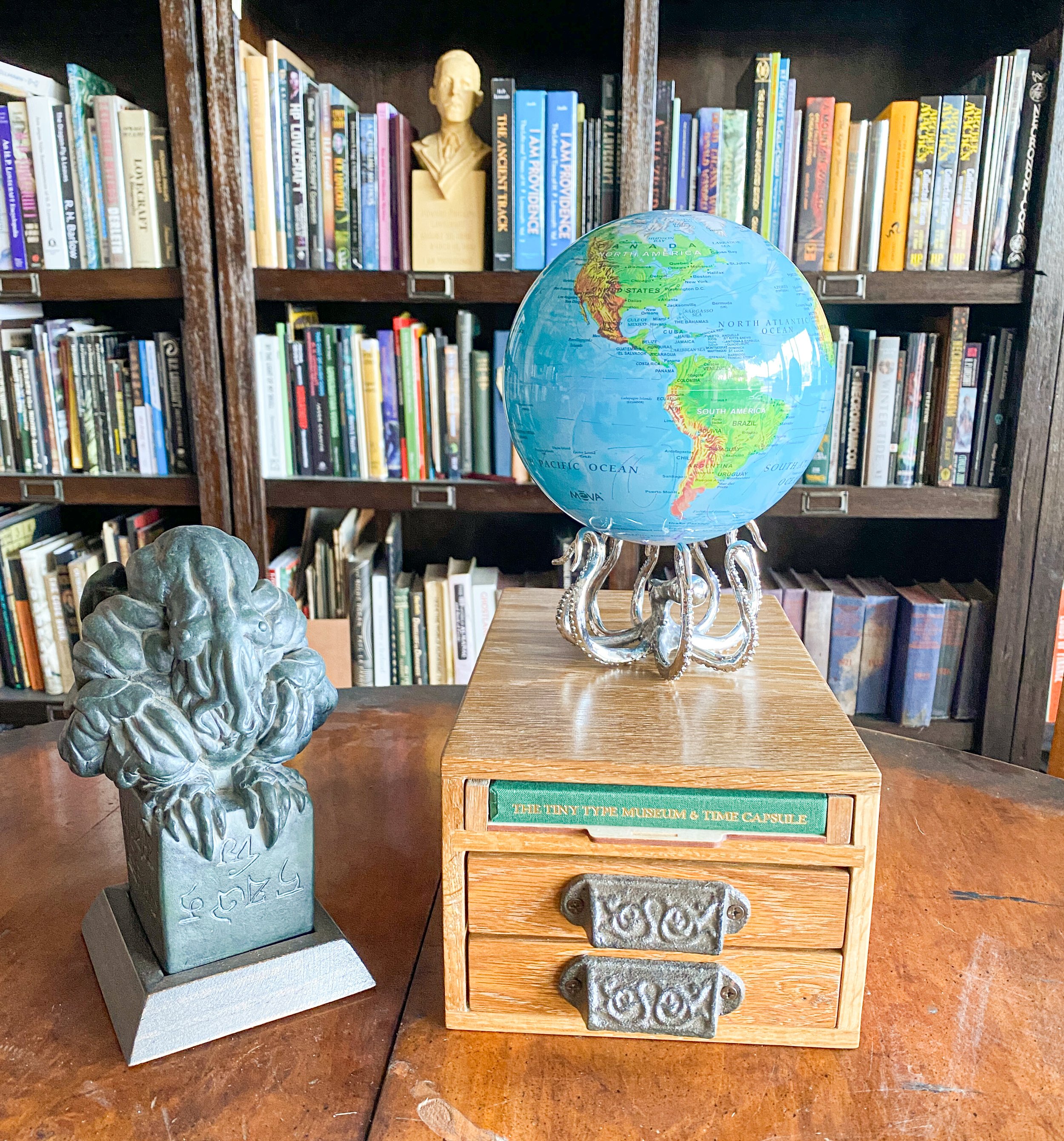


We originally planned to make an edition of 100 plus a few extra. We settled on 108 museums based on materials and timing as 2020 drew to a close—Anna was about to move with her husband to Sweden, where he’d taken a job! Anna handed off the last cases weeks before leaving.
I gave her one as my thanks, kept two, put one aside for a long-time patron, and held onto four for reserve against the first 100 being lost or damaged in shipping.
Update: As of 17 February 2022, the 104th and final museum made for commerce is now sold. I now have six in preparation for shipping!
I can’t begin to express my admiration and appreciation for all the people involved in this. It was an incredible day for me when the last museum sold! A big exhalation and a lot of satisfaction. It’s been such an incredible journey.