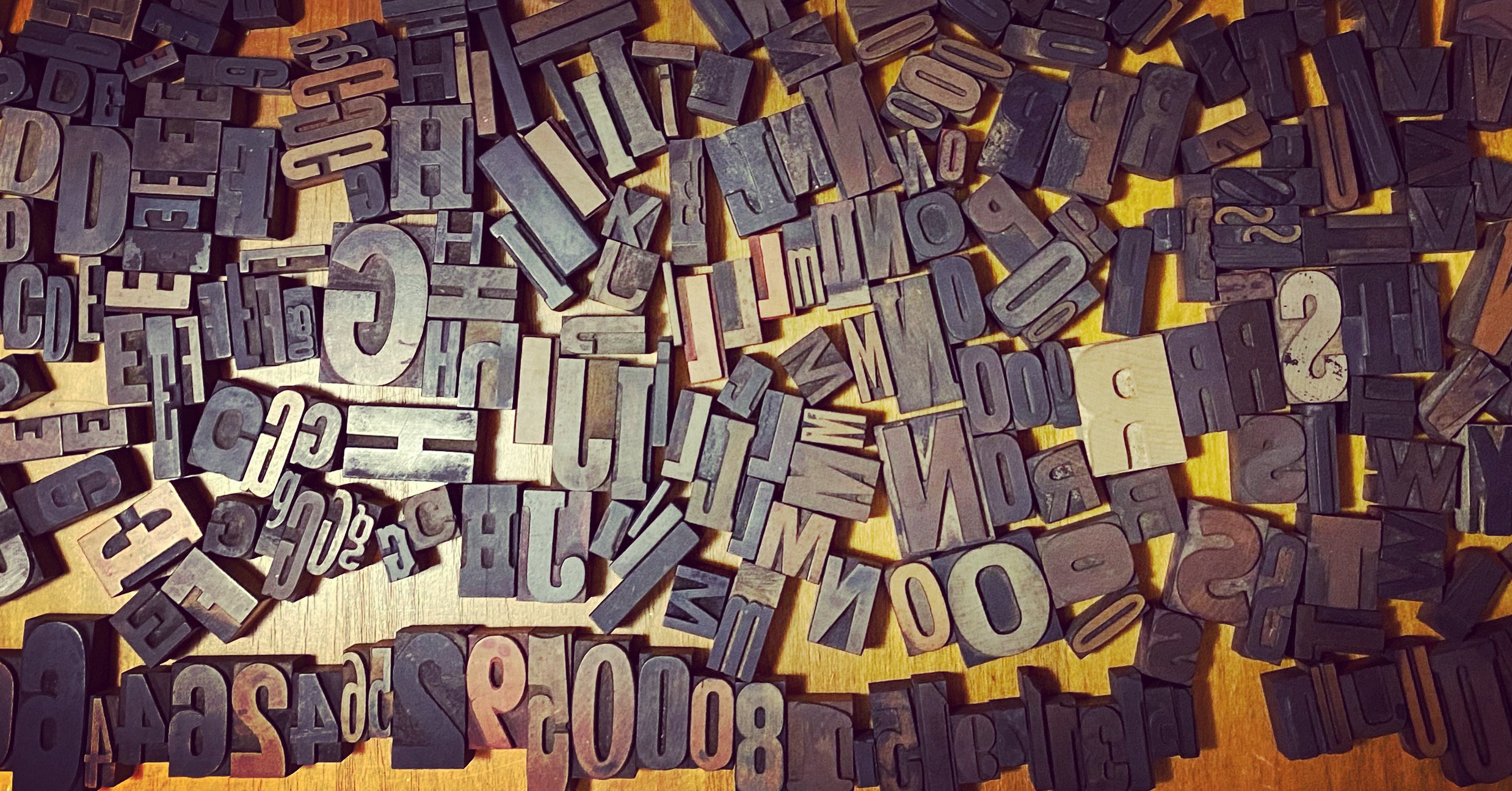
A Press with Paper Sails Traverses the Sea of Ink


A modern printing press is a thing of wonder. It’s highly automated. It has cameras inside it. There are digital controls for making fine-grained adjustments. A scanner checks color bars as pages are pulled during a print run to make sure the density (amount of ink laid down) remains consistent. A press makes constant course adjustments, and the helmsperson—the press operator—is in constant motion to keep it trim.
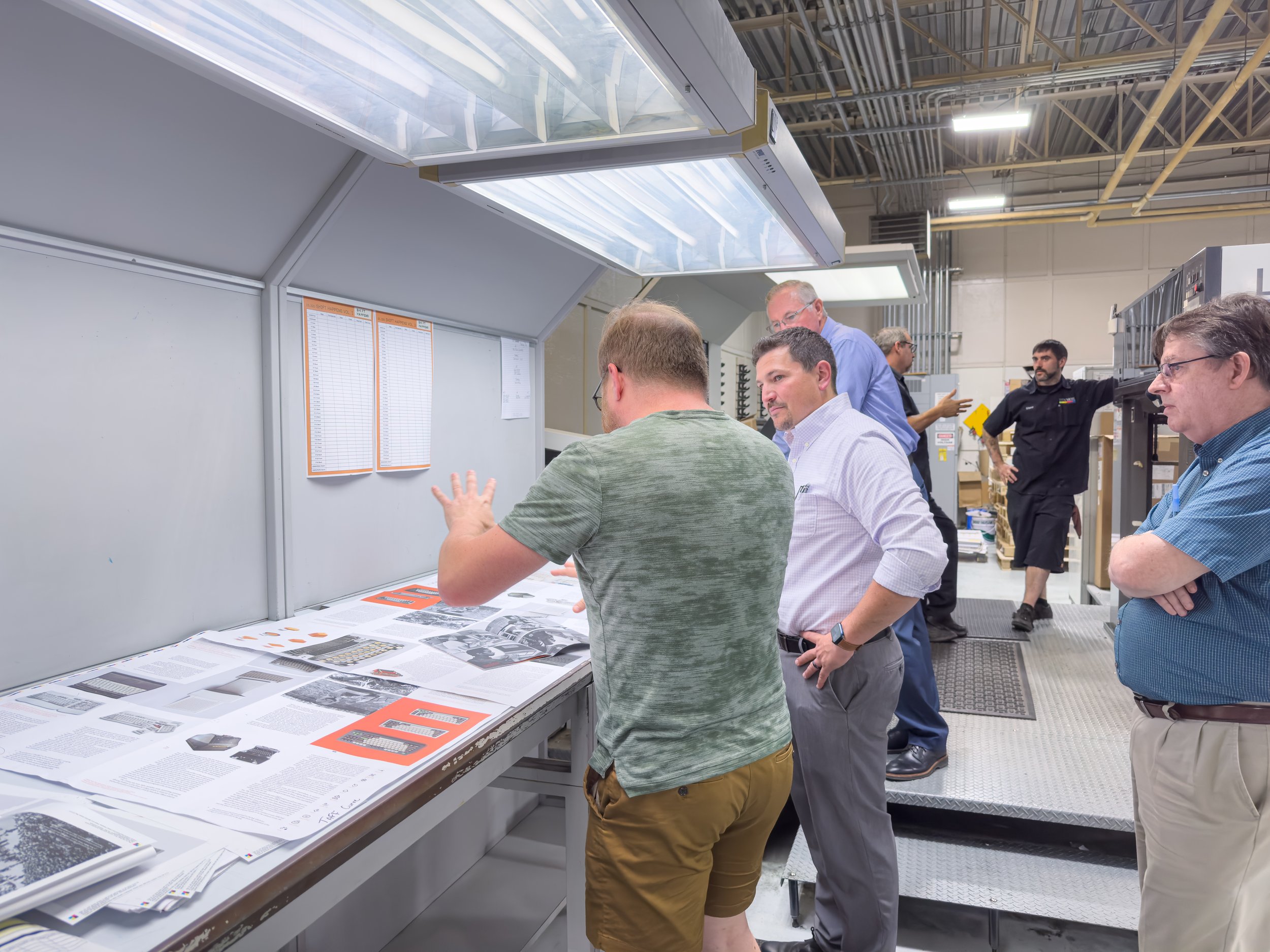
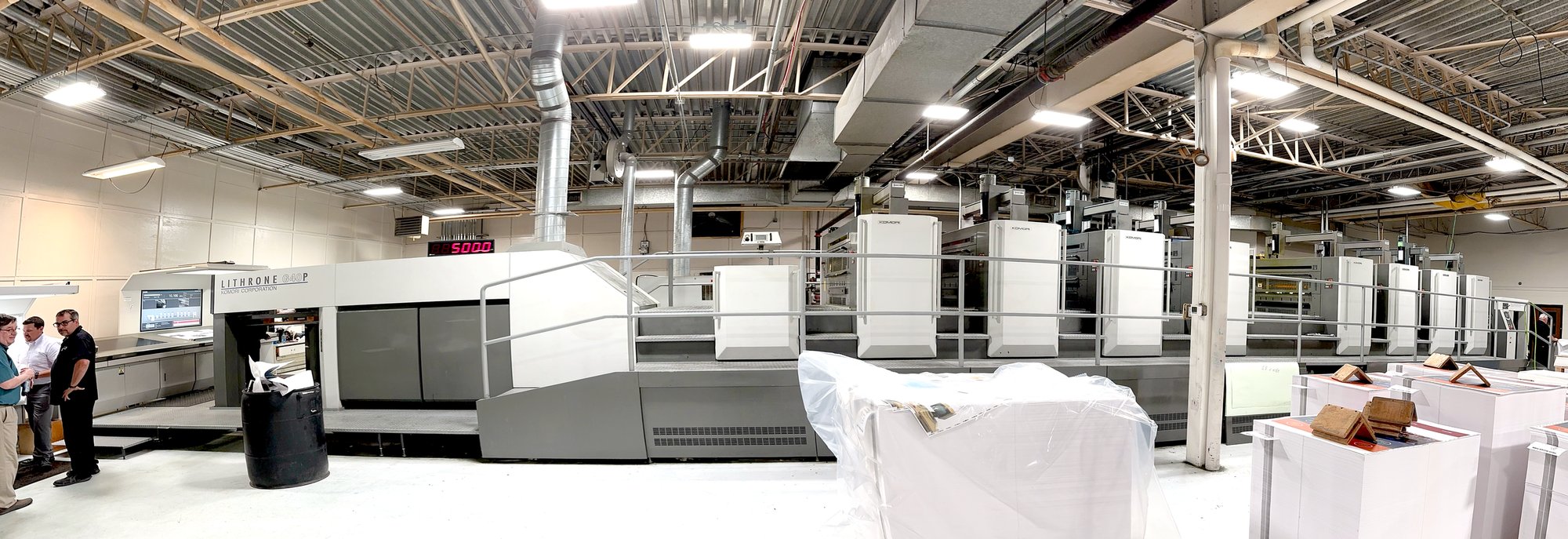
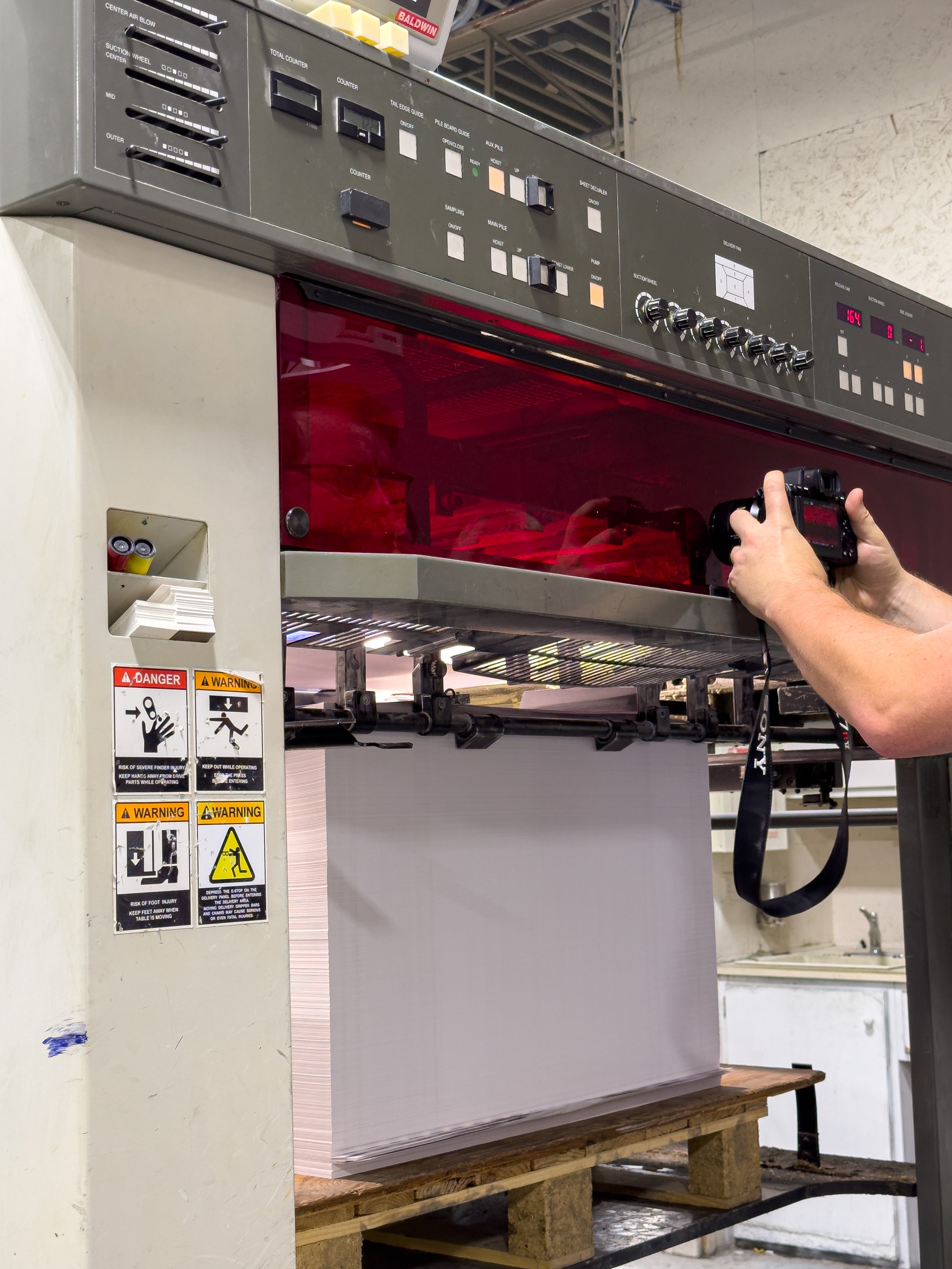
I found myself thinking of it like a ship on the first day of a multi-day press check that I’m on with my author client Marcin Wichary for his massive book Shift Happens at our printers, Penmor Lithographers, in Lewiston, Maine. The press is long—maybe 40 feet end to end. At one end, one pressperson feeds paper; at the other, the printed sheets come out, and the press’s primary operator staffs the console and makes adjustments. Because the press is so long and the environment so loud, the operator at the receiving end rings back to alert the feeder at the press’s “rudder”; there’s also an intercom between the front and the back if needed for more detailed communication. A press room supervisor is the “captain” of the room, giving people their head but also working to correct course and provide guidance. There are higher-ranking naval officers, too, who provide hard-won expertise, sometimes strategic, sometimes diplomatic.
The particular press, a Komori Lithrone G40P advance, has eight units. In offset printing, each unit prints a separate plate, and each plate is inked with a single color. (You can create a split fountain—the fountain being the ink reservoir—to print spectra—but that’s usually for craft printing silk screening.) For full-color printing, there are four plates per side of the paper: one plate each for cyan, magenta, yellow, and black.

This eight-color press can be configured in different ways. For our job, the press prints one side, then uses a clever flipping system that gently flops the paper to print four colors on the other side. (This is called duplexing or, to use an older term, “perfecting.”) The press also has a heat-based dryer and an ultraviolet unit that cures the ink by triggering a UV-sensitive component in the pigmentation. And there’s a special cover treatment unit that can optionally apply a texture on one side, too. (Some printers may have four to ten units: four lets them print one side and then the other; five allows CMYK plus a custom color or a clear varnish; ten allows duplex CMYK printing plus a custom color or varnish or even more complex expressions.)
Printing plates, made of a flexible metal coated with photosensitive material exposed by laser, have to be fed into the press, where four clamps—four on the head and four on the tail—hold it under tension. In offset lithography, the plate passes through an ink and water wash as the printing parts of the plate rotate around a cylinder. The plate is inked and washed via a multiple-roller system to provide the smoothest application of liquids and offsets onto a rubber blanket, which rotates onto the paper.
The press creaks and groans—more figuratively than literally, as it’s a well-tuned machine. The operators know how to baby it and how to steer it through rough waters. Because of the danger of an industrial machine and the distance from front to back, the operator at the front presses a button to alert the feeder at the back when they want to bring it up to speed. When plates are being loaded (called being “hung” as they descend into the press to be clamped in place), the press plays a little tune to make sure everyone is aware that parts of the press are open. The main press here performs an 8-bit rendition of the Indiana Jones theme, though that can be changed; another press sings “Itsy Bitsy Spider.” It’s become Pavlovian for us, waiting in a customer area, to anticipate being called back to look at press proofs 10 to 20 minutes after we hear the Indiana Jones tune.


It’s been hot while we’ve been printing, in the 80s, and the temperature rises significantly during the day. That’s partly because the press room is a giant box with a flat roof and partly because of the ink dryer in the press blasting out enough BTUs to heat your average suburban house. As the ambient temperature increases, this changes the flow of ink, Penmor’s press room supervisor, Jamie, tells me. As a result, the coverage of ink changes. Ink designed for a lithographic press is optimized for a particular thickness to produce a desired opacity—that is, if you want the intended color, it has to be applied at a layer of about four microns thick, according to Penmor general manager Eric. Sometimes you want a little more or a little less to play with the density. They can also control the tension of each of the four head and tail clamps individually to fiddle with a plate that could be warped the tiniest fraction of a millimeter, which can result in a noticeable drift in registration across a large sheet.

Ink is rolled out across four rollers as they’re applied to the plate. This particular press can adjust ink density in one-inch strips and feather the edges. They can also control the speed and coverage of the rollers individually, which can allow them additional control across the width of the sheet as it’s fed through. And the rollers can be cooled down.
This finessing of this massive industrial device reminds me distinctly of sailors—some are above decks, manipulating subtle and coarse parts of the ship, while others tend the boilers beneath decks. It’s a combination of hard, manual labor with fine control and nuanced tweaking. At sea, you have to watch the ocean at all times; on press, the operators must tend their machinery beast so it doesn’t leave them ink-stained and shipwrecked.
