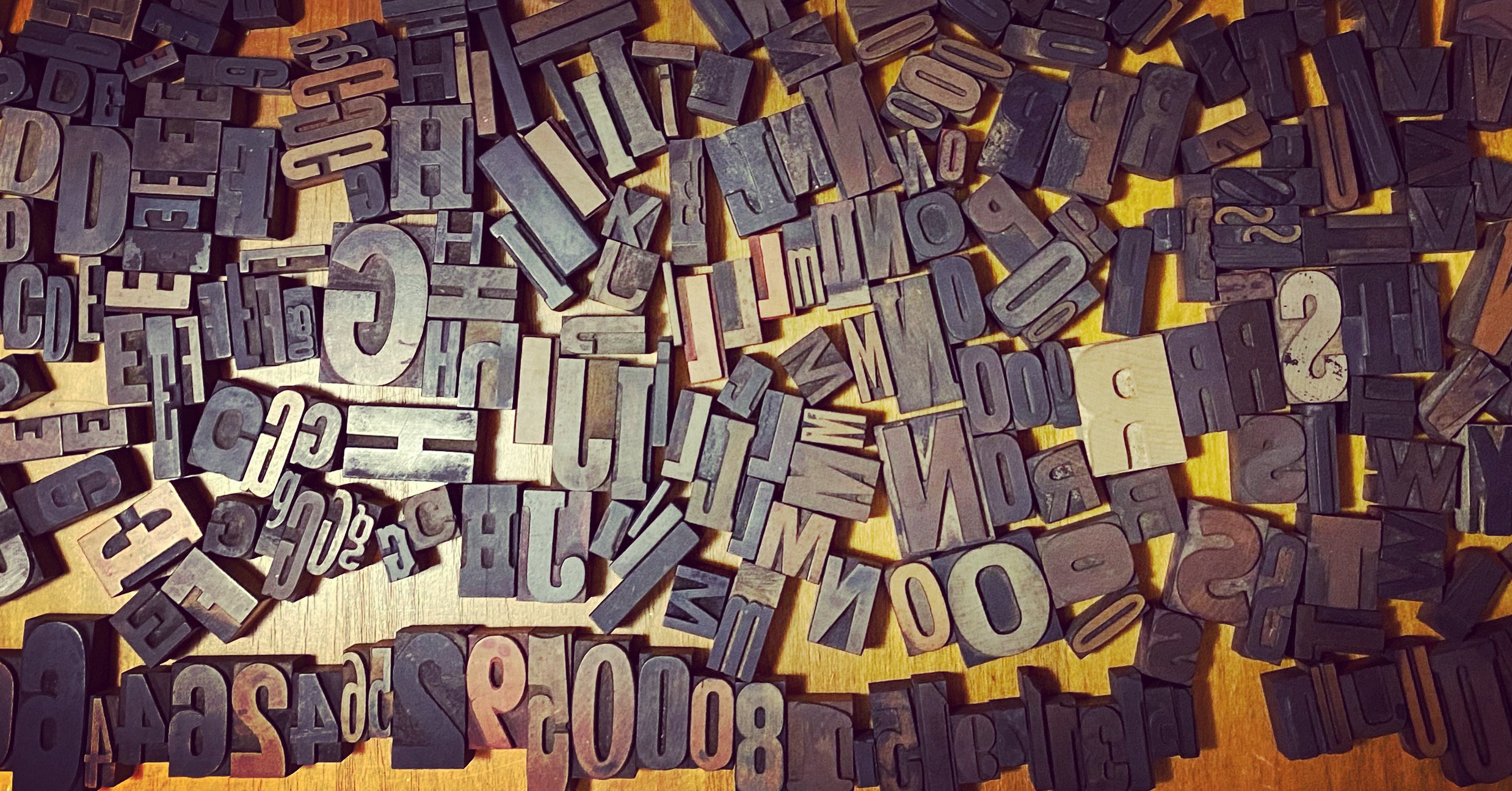
Last Copies of Six Centuries of Type & Printing

I’m down to the last 50 24 copies (as of September 2024) of my book Six Centuries of Type & Printing. If you were interested in a copy, now is the time! The price includes the letterpress edition, an expanded book edition (which features a full bibliography), and U.S. shipping.
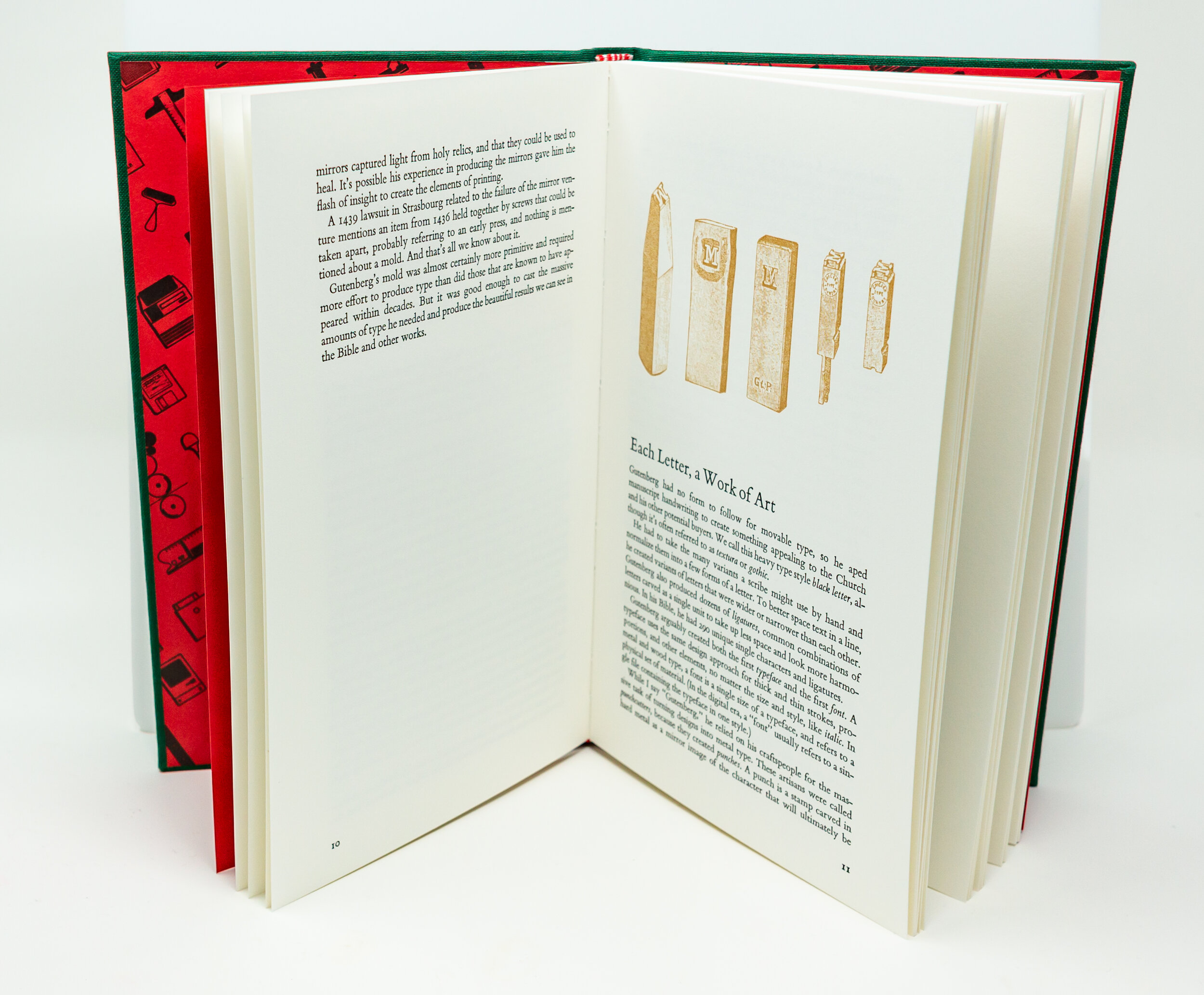
Back in 2019, when I launched the Tiny Type Museum & Time Capsule project, I envisioned a short edition of a book to include with the museum. The museum would have artifacts, uniquely created items, and a “curator’s manual” specific to what was included, the book would have a broader scope. As always, I was probably too ambitious to build out the museum and book at the same time—even with project partner Anna Peterson née Robinson, the fine woodworker who built the gorgeous cases. But when the pandemic hit, I didn’t regret having more work on my plate to keep busy.
The book was my gloss on the scope of modern printing, which started before Gutenberg in Asia, but didn’t ignite and spread until his particular combination of factors clicked. I approached the topic as someone who had worked as a typesetter and in a printing plant, studied and worked as a graphic designer, had stints printing with letterpress types and equipment, and being a modern technologist. The book is a technological lens on the development of type and printing, hand in and hand, and why development stalled after Gutenberg from the early 1500s to around 1800. (I started the book asking why, and make a pretty good stab at answering my own question.)
I wanted a metal type and letterpress printed book, which turned out to be easier than expected but more complicated to manage. I worked with Phil Abel in London (Hand and Eye Letterpress), who I’d met on a late 2017 trip while researching London Kerning. Phil coordinated the typesetting with his former employee, Nick Gill, who runs Effra Press, his own operation that acquired Phil’s Monotype composition equipment. Nick is in North Yorkshire. Phil was unable to find a satisfactory bindery for my project, and contracted with a German firm, Spinner Buchbinderei.
I had an edition of about 425 printed, 108 of which were included with museums. Over the last few years, I’ve slowly sold through inventory, but I offered it as an add-on item in my recent How Comics Were Made pre-order site, and it’s flying off my shelves.