Books in a Time of Trade War


Update April 2, 2025, and noted where that’s the case.
I didn’t set out to print books in Canada to stake out a political position, although it’s indirectly become that.
A few years ago, when I was obtaining bids for my client-author Marcin Wichary (Shift Happens) to print his books, we checked in with Hemlock Printers in Burnaby, B.C., Canada (adjacent to Vancouver). This was 2021 and then 2022. The Canadian border had been closed for a while. The future of the COVID pandemic’s direction remained unsure. And we had wanted to go on press—to be there while the book was printed. Hemlock came highly recommended but their pricing was somewhat above the printer we chose, Penmor Lithographers in Lewiston, Maine. We felt that in a pinch, we’d be able to get to Maine and possibly not to Vancouver.
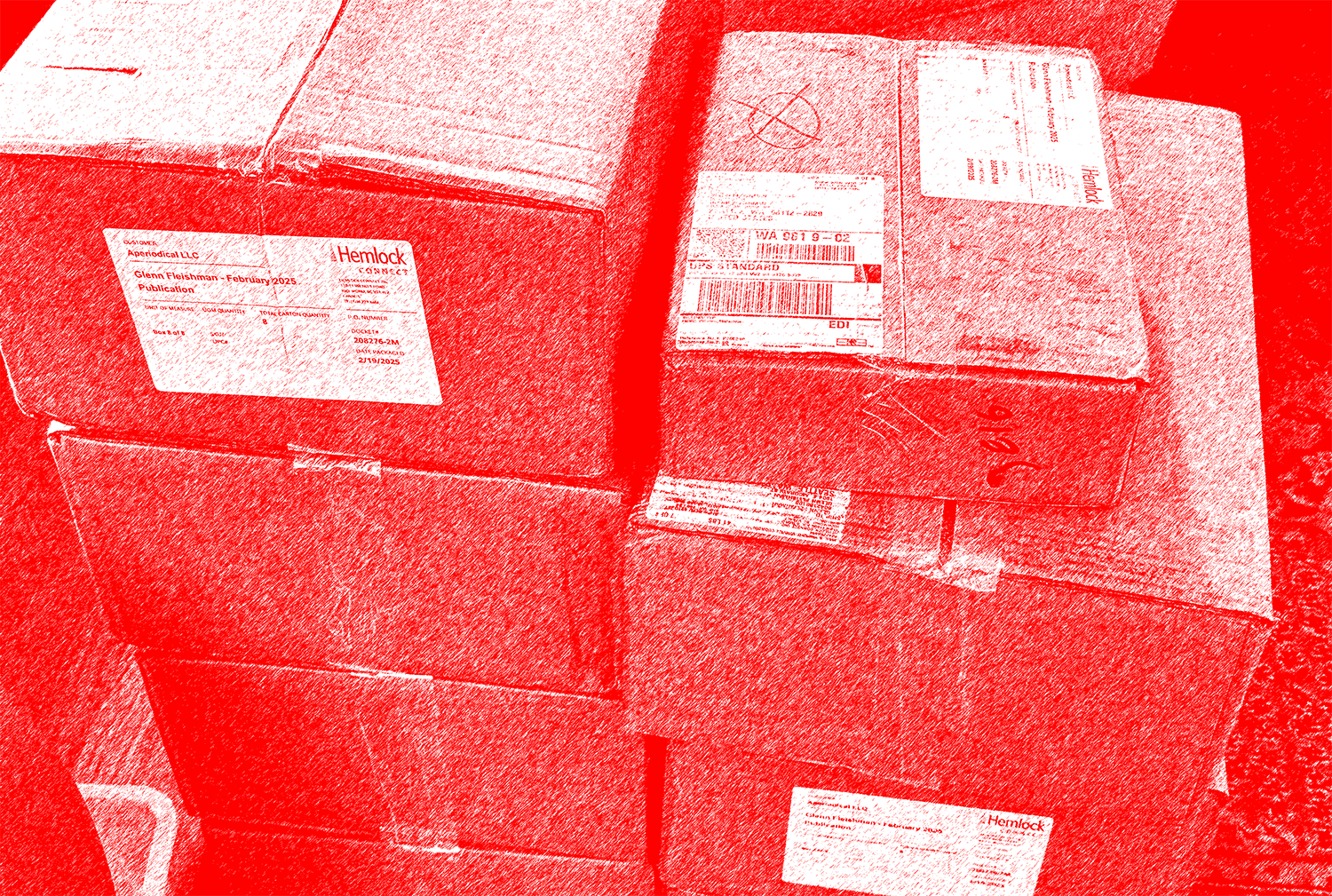
When I was planning How Comics Were Made, I look at several printers in the U.S. and Canada, and ultimately picked Hemlock. I live 2.5 hours from the Burnaby, have a NEXUS border card (the equivalent of TSA Pre for crossing into Canada), and wanted to diversify my experience since I run book projects for other people.
The big advantage to Hemlock wasn’t price—they are competitive with North American printers. They have a sterling reputation and I owned books they printed plus samples they had sent; I knew they could deliver the goods as well as anyone. Rather, it’s integration. Many printers offer some mailing operations. For instance, Penmor can ship via USPS mail in batches of 300 or more. But few can provide domestic, international, and on-demand fulfillment. That’s the role of Hemlock Connect to Hemlock Printers.
The two operations are sibling companies under one corporate parent, locally owned in B.C. (in fact, family run like Penmor). When my How Comics Were Made book was printed, it was trucked about 30 minutes away to the Connect warehouse. After intake, I sent them a spreadsheet with all global addresses, they processed it, and that was it. With Shift Happens, I had to get the printer to arrange freight to the only fulfillment firm I was able to get both return calls and provide exact information about pricing and timing.
Hemlock Connect also operates as a fulfillment warehouse—that is, as orders come in, whether one or 1,000, they process them on demand, sometimes as quickly as the same day. Being close to the border, the company can offer USPS pricing for Media Mail and other services. They drive a truck (or more than one) over the border nearly every day to drop off pre-paid USPS packages in Blaine, Washington, which must be a very strange post office. Blaine is a small town, but Hemlock and many other nearby Canadian firms likely send millions of packages a year through the branch? The cost differential between shipping directly from Canada and driving over the border is enormous.
That border used to be one we didn’t worry about. The huge trade between Canada and the United States guaranteed it would remain open, plus NAFTA’s transition into a somewhat fairer USMCA (called CUSMA in Canada), which provided more labor protections along with benefits for trans-national integration.
Then we had the second iteration of this president, who has decided to destroy the economy by whim and outdated economic theories, proven time and again to ruin countries. But it turns out, there is a silver lining for books being imported or shipped from Canada.
I am certainly not an international trade lawyer, but I received email this morning from a Hemlock competitor that confirmed other information I had read at law firms’ sites and from Canadian publishers, and combine with some research of my own:
- USMCA: The walkback of early March tariffs were to the borders of the USMCA, exempting or subjecting products under those rules. Books remain exempted under USMCA, which means they can be imported by ones or 1,000s into the U.S. at no cost. April 2, 2025: The Trump administration seems to have opted to keep this in place, besides metal and car imports. So books still remain exempted through this pathway.
- IEEPA: Here’s an abbreviation you have probably not heard: the International Emergency Economic Powers Act. This is a 1977 act that Congress used to delegate certain tariff powers to the president for rapid, unilateral action—though subject to congressional revocation later (the current Congress is too weak to exercise oversight). Under the IEEPA, books and other “information and informational materials” are exempt from tariffs. (Anything under “heading 49 of the US Harmonized tariffs schedule.”) You can find this in the March 6, 2025, tariff order in a pretty circumlocutionary legal form. It says, in essence, this category of stuff has no new tariffs. April 2, 2025: As far as I can tell, this also remains in place because it would require new legislation from Congress to change the terms.
- De minimus exemption: There has long been an exemption for low-value goods entering many countries. De minimus means “too small to matter.” For the U.S., de minimus packages had to total under $200 per shipment per individual until 2016, when it was raised to $800. This is described in the document linked just above, too. When Trump made his first tariff pass on February 1, the rule accidentally removed the de minimus exemption. The sheer volume of such packages—four million per day!—threatened chaos and all imports under those rules were halted briefly until a correction was made within a couple of days. Under the March 4 rules (revised March 6), de minimus goods will still remain exempt. (It “shall cease to be available for such articles upon notification by the Secretary of Commerce to the President that adequate systems are in place to fully and expediently process and collect tariff revenue applicable pursuant to subsection,” which is certainly months but might be years.) So shipping individual books or small quantities each day from Canada even with other tariffs in place should remain tariff free for now. April 2, 2025: Trump did remove the de minimus exemption for China but it appears to remain in place for now in all other countries.
This all reassures me, as I have a book currently in crowdfunding that, for reasons of price, quality, and fulfillment integration, I picked Hemlock Printers + Connect for once again. The printing side reassured me that they would manage any increase due to tariffs; the shipping side felt they wouldn’t see a change based on what most of their customers need, either.
I do have a political side note…
While we received via a broker a couple of bids from China for Shift Happens, I made the decision during that project that I could not in good conscience have work sent to that country. (My authors certainly can, but I would not be involved in the print production management.)
Part of it is human rights: while nearly every country has issues, the plight of the Uighurs is enormous and profound. Prison labor is often used without disclosure in China. The environmental record is poor for how they handle production and waste in industry. All books must pass a government censor’s review. And I feared getting caught up in a geopolitical conflict in which books would be seized and destroyed or cost 100% as much to import as expeted.
The flip side is, of course, that Chinese printing is often of very high quality and can cost 20% to 50% of the North American price including ocean freight delivery to a U.S. port and then truck or train to a warehouse. I have found, though, that European printers can offer prices between the U.S. and China with the added adventure of offering European shipping costs to delivery goods within that region and to Africa and Asia.
Right now, the tariff picture remains unclear—the president could impose further tariffs at any moment on China, China could add an export tax on goods, or the flow of some goods could be halted.