Glog

Cartooning

Bookselling

Pre-Order How Comics Were Made

The Kickstarter campaign for How Comics Were Made ended yesterday, and it was a rousing success, raising nearly $170,000—over 110% of the goal I’d set to make the book financially feasible due to the overhead involved. This puts it in the top 150 publishing projects at Kickstarter of all time (out of nearly 70,000). Thank you if you backed the campaign, provided moral support, or are just reading this post!

Even though the crowdfunding stage is over, I’ll be selling the book as a pre-order until it’s printed later this year and offering limited-edition/quantity high-tier rewards while they last. You can go to the pre-order store for more information! I don’t have to give the printer a final number for how many books I want printed until this summer, giving me time to expand based on demand.
Are We Having Flong Yet?

Cartooning

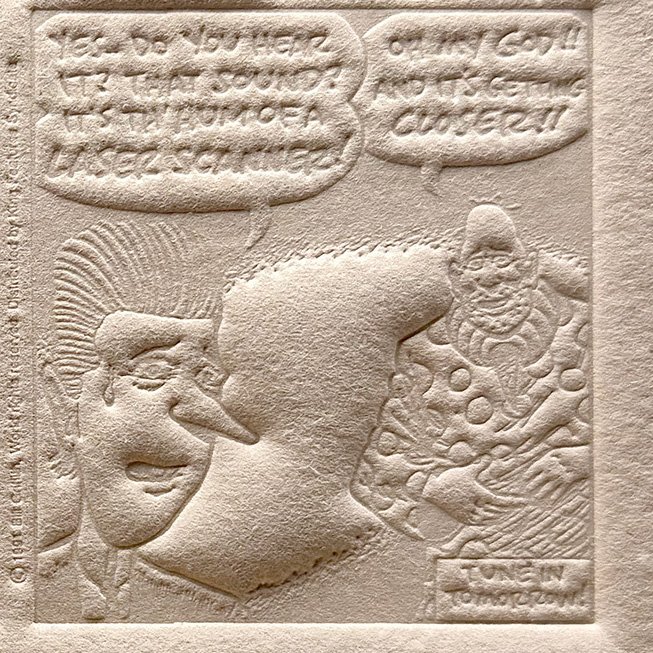
Are We Having Flong Yet?

I vaguely remember when I first encountered the “Zippy the Pinhead” comic strip. I am sure I was in my teens, when I was reading some underground stuff, though my interest was largely mainstream. Zippy was in the middle: started by Bill Griffith as a character and then a heavy focus of his underground/alternative work, the strip was picked up by his local San Francisco paper and then, not long after, put into syndication by King Features nearly 40 years ago. It blew my mind: something this surreal and not-at-all-square (except the panels) in regular newspapers?! Zippy scratched an itch in my head similar to when I discovered Dada and surrealist art when I was a little older. I became a lifelong fan.

In preparing to launch How Comics Were Made: A Visual History from the Drawing Board to the Printed Page, I knew that Bill would be a

Bookselling

How Comics Were Made: Get a Copy on Kickstarter!

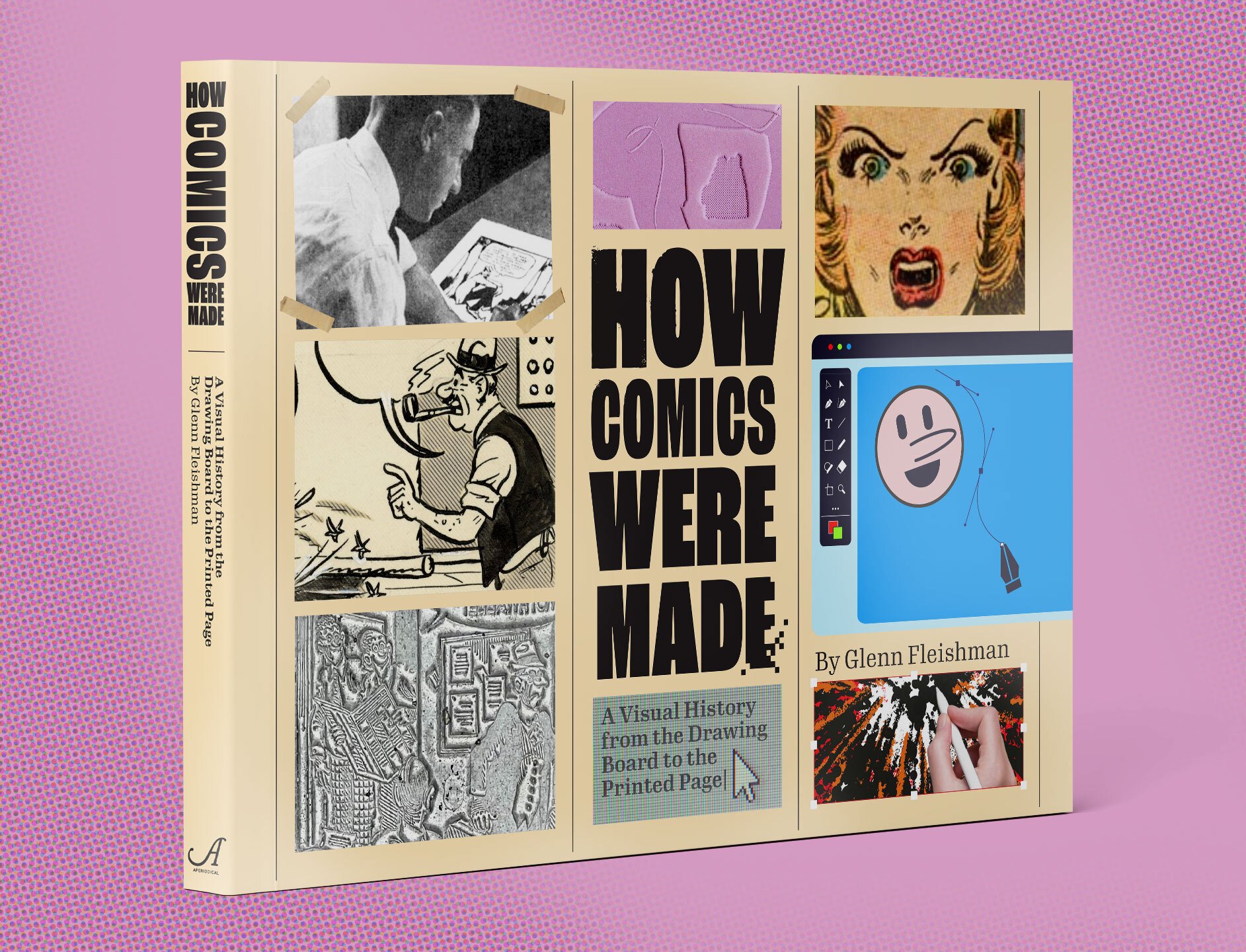
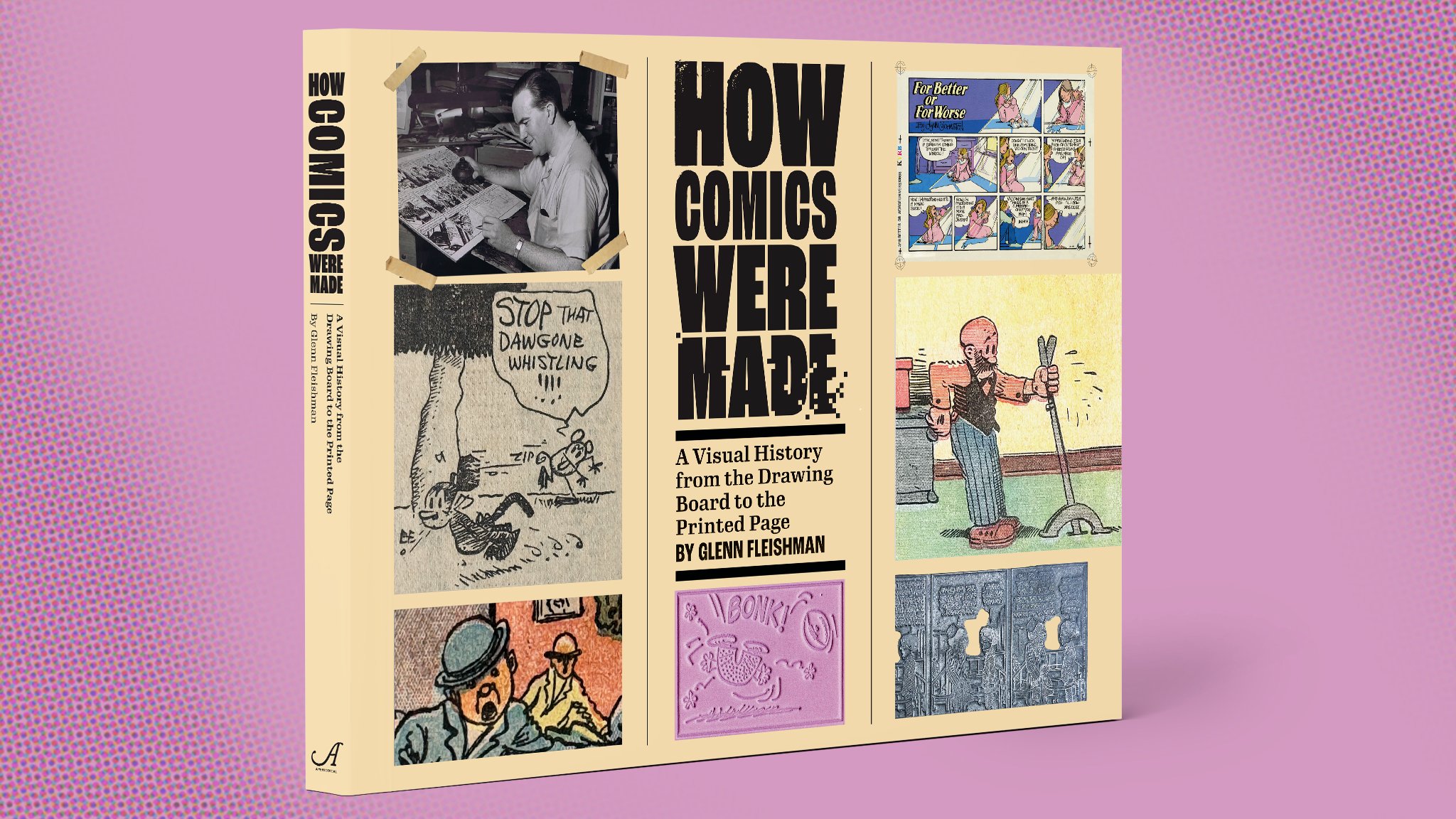
 Cover of the book,   How Comics Were Made
Cover of the book, How Comics Were Made

Years in the making, How Comics Were Made: A Visual History from the Drawing Board to the Printed Page launched this morning on Kickstarter! (Watch a replay of a live session in which I answered questions and showed printing artifacts.)

The book is based on research into the history of printing I’ve been in engaged in for the last several years coupled with visits to libraries and archives and dozens of interviews with cartoonists. It covers 130 years of newspaper cartoon history, showing original art, printing artifacts, and newspaper reproductions, examining how an artist’s drawings make their way through the production and reproduction process into print. I hope you’ll take a look!

Working with designer and cartoonist Mark Kaufman, we have a preview of a full chapter of the book for your downloading and reading pleasure.

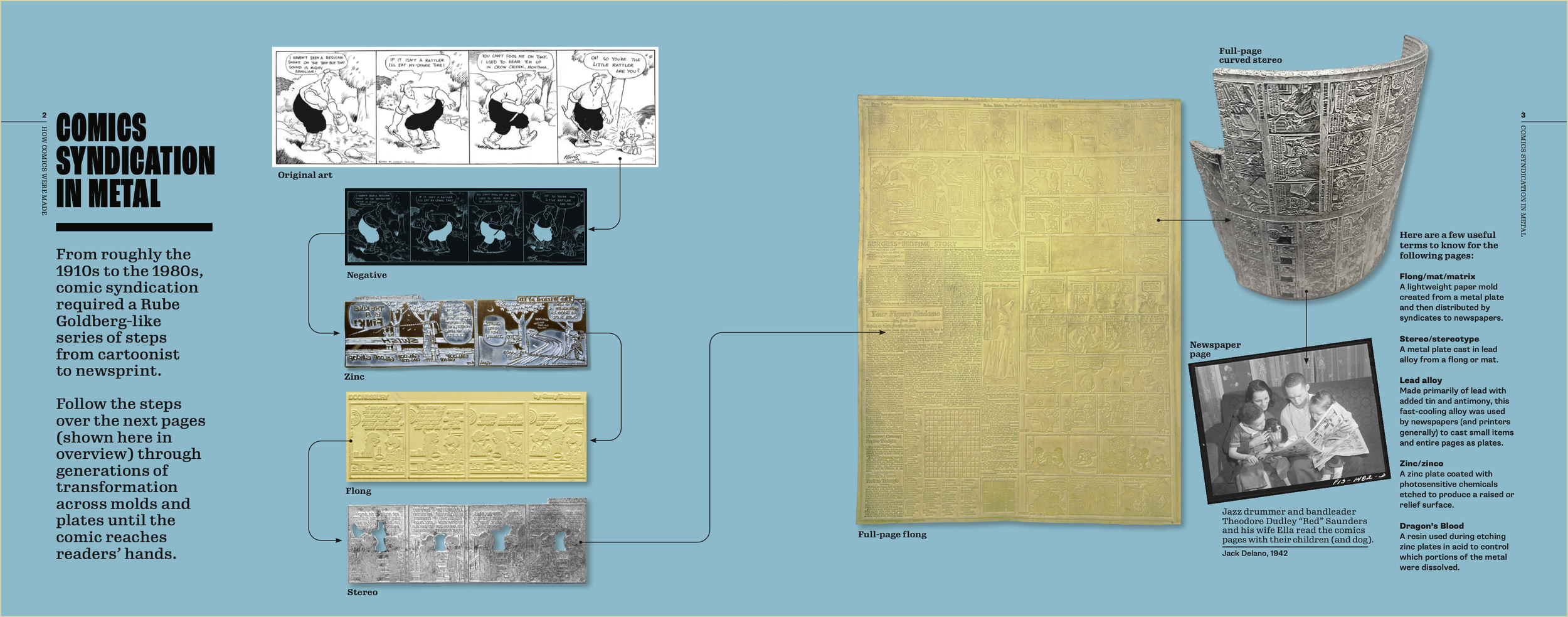
 This two-page spread from the preview chapter gives you a sense of how I’ll tell the story of cartoon artistry, production, and reproduction.  Download the whole chapter for more .
This two-page spread

Bookselling

A New Newsletter with an Excerpt of a Bill Griffith Interview

The long and short: subscribe to my new newsletter about how newspaper comics were made or read the inaugural issue.

If you’re anything like me, I would be surprised. (I stole that joke in part from the late, great Mitch Hedberg. “If you’d like to see me after the show…I would be surprised.”) But, if you’re of the same era, you may remember the glorious surrealism of Zippy the Pinhead. Somehow, in our universe, this comic strip was syndicated by King Features and ran daily in hundreds of papers. Even more bizarrely, nearly 40 years later, it still does!

I loved Zippy and used to pore over old collections of it. Thus it was a huge pleasure to meet Bill Griffith briefly at the Small Press Expo (SPX), an indie comics event, back in early September, and intrigue him enough about my upcoming book, How Comics

Cartooning

An Upcoming Book: How Comics Were Made!

I’ve just launched a website for How Comics Were Made: A Visual History from the Drawing Board to the Printed Page, a book that I’ve been cooking up writing for a few years. On the heels of editing and projecting managing Shift Happens for Marcin Wichary (thus part of raising over $750,000 in that campaign), I am excited to get back into print and share the comics and printing history I’ve been assembling for the last six years.

 Preliminary cover of  How Comics Were Made , designed by Mark Kaufman
Preliminary cover of How Comics Were Made , designed by Mark Kaufman

I’ve already started prep, and hired Mark Kaufman (of the recently late and forever-to-be-lamented The Nib) to design and illustrate the book. He’s created a preliminary cover that we’ll be refining as we move towards a Kickstarter campaign in February 2024. The book’s expected publication date: October 2024. I’ve done a far

Cartooning

How Comics Got Their Color

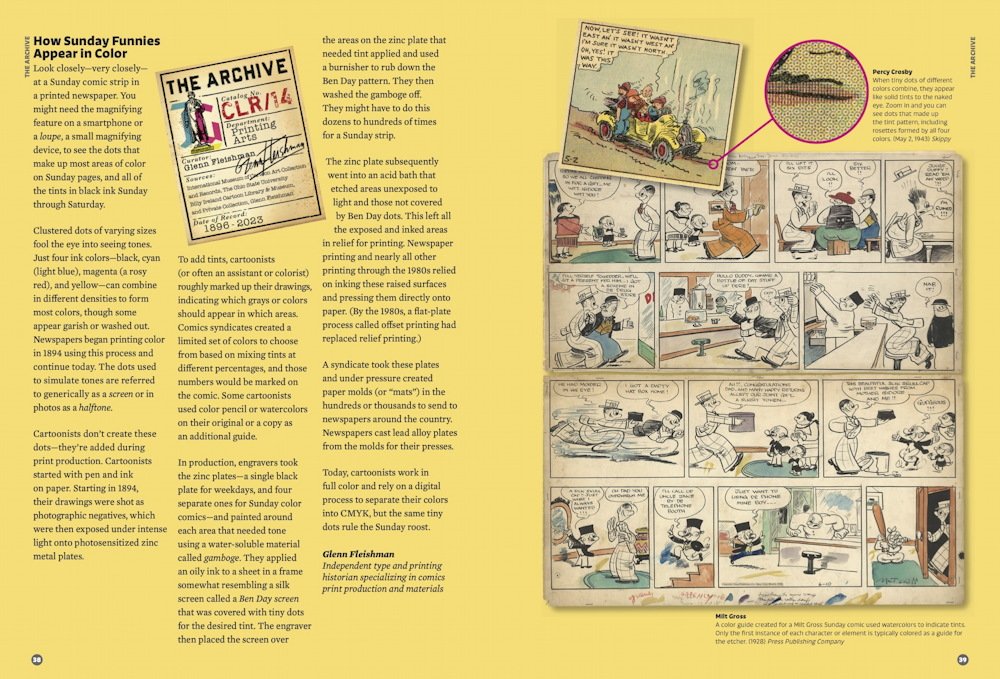
A four-page spread I wrote for The Nib is now available on its website! I explained in words and images how newspaper cartoonists marked color up on their comics for engravers in the printing plant to apply color through a very complicated process in the days of metal printing. I’m at work prepping a book that will go into crowdfunding later in the year that will cover that and a lot more about how comics were made for different eras of printing and the production process that got them on to paper.

 How the article appeared in print—the first of two two-page spreads
How the article appeared in print—the first of two two-page spreads

Cartooning

Man Saved Comics!

The event last weekend at the Billy Ireland Cartoon Library & Museum went fantastically. First, I was able to visit and get a tour from the co-curators of the “Man Saves Comics!” exhibition, Caitlin McGurk and Ann Lennon. Really tremendous. They packed the museum space with as much material as they could, but with 2.5 million items they could work from, they had to make choices—and they were great ones. I learned a lot from the exhibition, which is available in an archived form online. I posed with my video!

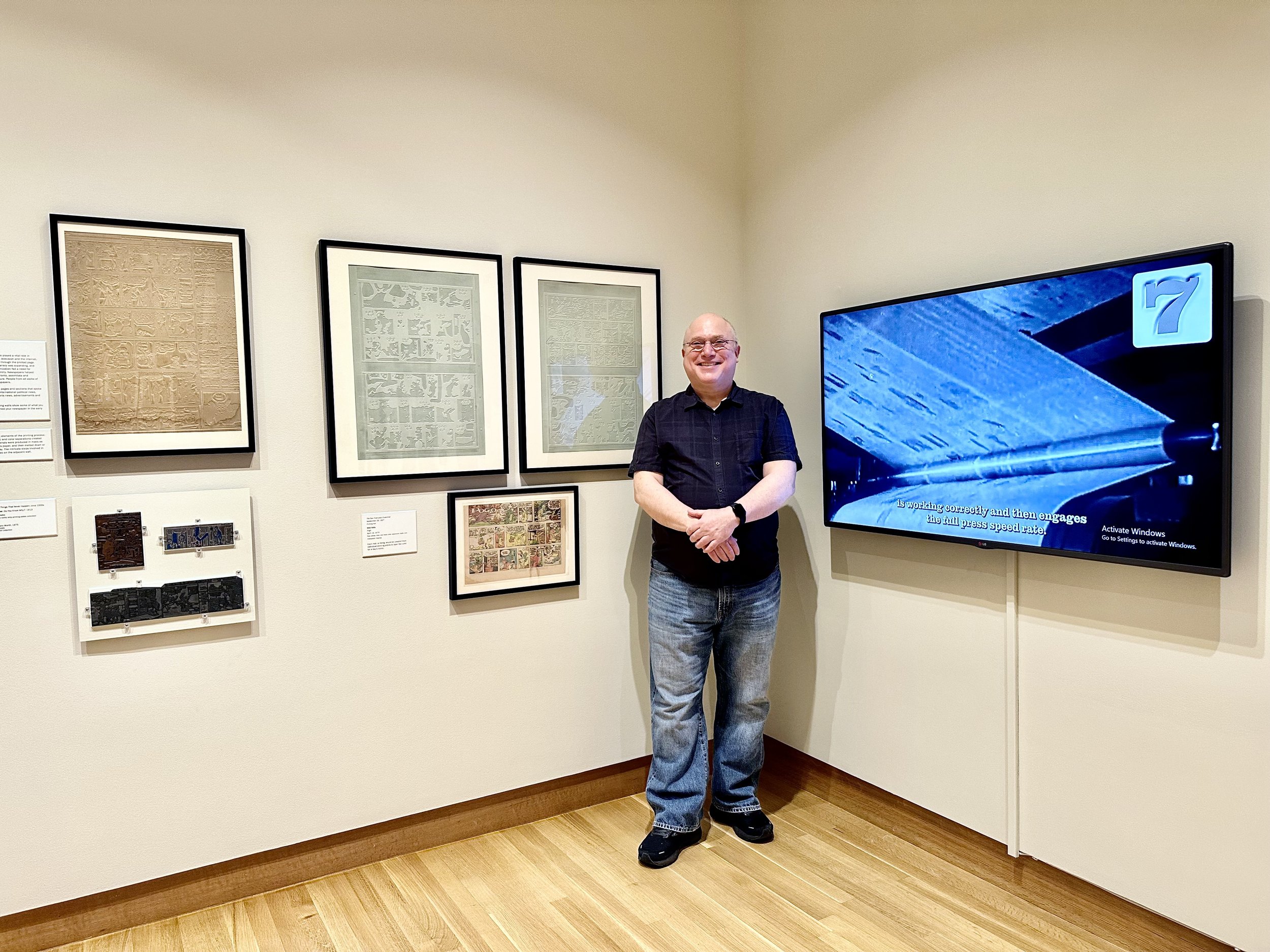
 Man documents comics printing! To my left is the video I created for the exhibition, showing the process of taking a cartoonist’s drawing from board to newspaper during the era of metal printing from the 1910s to 1980s.
Man documents comics printing! To my left is the video I created for the exhibition, showing the process of taking a cartoonist’s drawing from board to newspaper during the era of metal printing from the 1910s to 1980s.

Then, the event! No one took an exact count, but the place was hopping from get-go and across three

Cartooning

Meet me in Columbus, Ohio!

In the slight chance a reader of this blog will be in or near Columbus, Ohio, on 22 April 2023, come to the Ohio State University’s Billy Ireland Cartoon Library & Museum. A free-half-day event, the Printing & Papercraft Day, includes yours truly! The 1:30–4:00 pm event starts with an optional guided tour by the curators of the current “Man Saves Comics!” exhibition, celebrating the 25th anniversary of the acquisition of the San Francisco Academy of Comic Art Collection—Bill Blackbeard’s amazing stash.

The event features letterpress printing, paper craft, and me on hand to show artifacts from the library and my own collection that illustrate the process of moving from an artist’s drawing board through the complex printing process all the way to a newspaper or comic-book page. This draws from now years of research plus the work I put into a video

Cartooning

World Premiere of My Exhibition Video on Newspaper Comics

Please enjoy the world premiere of my video “From Artist’s Board to Newspaper Page: How Comics Were Made in the Age of Metal Printing, 1910s–80s,” made for the Billy Ireland Cartoon Museum & Library at the Ohio State University. I produced this video to explain the many, complicated steps between an artist drawing a strip through syndicate production of the materials sent to newspapers and newspapers’ adding those into their own layouts and printing newspapers. It’s elaborate, but shown here in a crisp six minutes using public-domain archival footage and images and video from my own collection.

I was asked to make this video by curators Ann Lennon and Caitlin McGurk for an incredible exhibition opening today, “Man Saves Comics! Bill Blackbeard's Treasure of 20th Century Newspapers,” which opened today! This is the first time I’ve had anything included in a museum exhibition, much less been

Cartooning

Peanuts Flong Unboxing: Live!

I recently bought nearly 200 Peanuts flongs, the molds used to make metal plates back in the days of relief printing, and they arrived from Sweden today! To celebrate this incredible treasure trove, I had a live unboxing on Thursday, May 20 at 10 am Pacific to explore the strips as I saw them for the first time. Along the way, I answered questions and provided some background on how newspaper syndication worked historically with etched plates, flongs, and stereotypes. You can watch below. (Post updated after event.)

I showed off a number of four-color Peanuts color separations, some original etched plates used to make flongs, and the 40-pound-plus newspaper plate of comic strips that I acquired last year!

A Historic Bit of Peanuts

Cartooning

A Historic Bit of Peanuts

 Charlie Brown, you blockprint head!
Charlie Brown, you blockprint head!

Support from patrons at my Patreon site makes it possible for me to write articles like this, produce podcast episodes, and create other work that I can make available to everyone. Consider becoming a patron, and receive special rewards, exclusive articles, and writing that appears first for patrons.

Updated 16 July 2021: Added a scan of a copy of the printed strip as it appeared in a newspaper that I purchased off eBay.

As regular readers of this blog know, I love flong. (If you don’t know, here’s an introduction and a history.) I’m always on the lookout for unique flongs that help illustrate aspects of printing history. Despite likely 99.999% of all flongs being burned or discarded after use or because they were remade due to errors, judging by eBay and other sources, a substantial number survive. And, clearly, some

Podcasting

The New Disruptors Is Back!

I somehow managed to fail to post here that the first episode in the new series of The New Disruptors podcast came out! Last month! I am very good at self-promotion!

Listen to my interview with comics publishing impresario C. Spike Trotman (or use the SoundCloud link below). You can subscribe to the podcast via this link or find it in all podcast directories.

That was episode #100 (I jumped up a few to reset). Episode #101 is coming soon plus a mini-episode. I’ll be creating 12 new full episodes between August 2018 and July 2019, but I also plan some shorter ones in which I ask a creator about their latest project.

You can help support the creation of more episodes and keeping the show running past July 2019 by becoming a monthly or one-time sponsor. Benefits include a private discussion forum, nifty enamel pins, and thanks on