Glog

Public Domain

In the Works for a Flong Time

Books

In the Works for a Flong Time

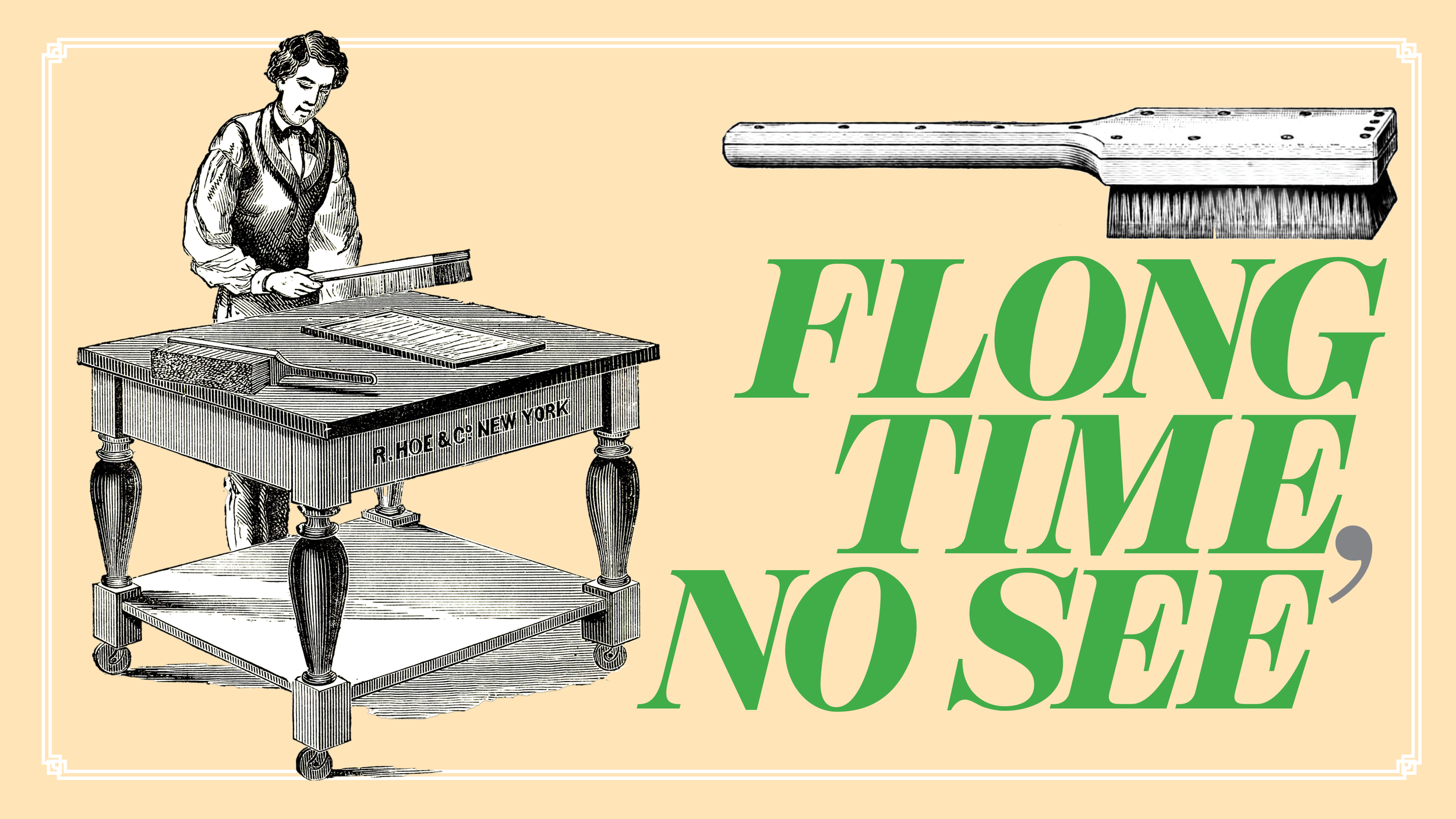
I’m happy to announce the launch of my latest book, Flong Time, No See! This book is a collection of reported work and essays I’ve written over the last seven years about topics as disparate as how a New York Times printer had a job for life for over 50 years, when magazine publishers thought they could replace typesetting with typewriters, how to find and eradicate type lice, and how boilerplate transformed from a literal piece of metal into a metaphor.
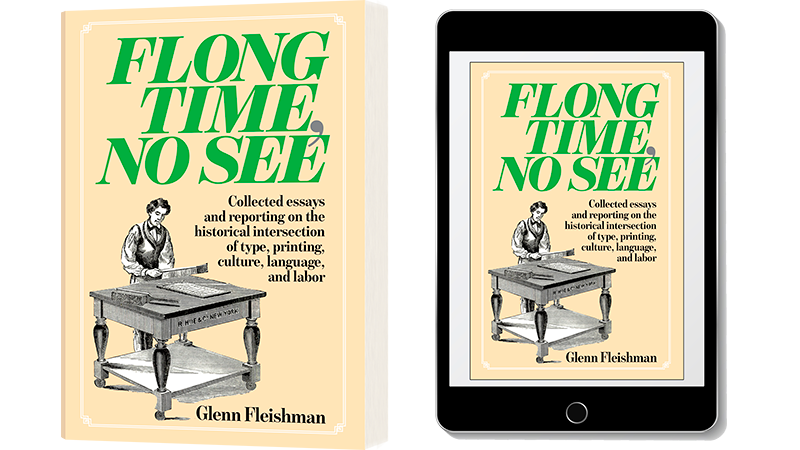
 The book comes in print and ebook editions (simulated previews)
The book comes in print and ebook editions (simulated previews)

There are over 12 stories in all, including the flagship essay on flong, a printing mold used to cast metal plates that helped speed up print production, leading to newspapers with more pages and more editions, and which was a driving force in comic strip syndication.

For more information, take a look at the campaign page, which

Bambi: the Forest and Copyright Are Both Cruel

Copyright

Bambi: the Forest and Copyright Are Both Cruel

Over at Meh, a site that offers implausibly great bargains on overstocked and discontinued items that are perfectly good and didn’t find their original market, I wrote about Bambi. This might seem an odd connection! But the folks at Meh have quite active forums and asked me a few years ago and then again recently to write some provocative researched articles about quirky points of interest.

I’m restarting these articles with a serialized four-parter about Bambi, which has a complicated backstory. The book was written by the Austrian newspaper journalist, playwright, and novelist Felix Salten (not his original name) and its history ties in underpayment, the Alger Hiss trial, Nazis, Walt Disney, and alleged copyright misdeeds.

In the first part published today, I look at Bambi’s early publication history and reception, and how Walt Disney got his hands on the rights to make an animated movie. In

Public Domain

The Latest in Bananas

Back on New Year’s Eve 2019, after the clock had struck midnight, I led a rousing chorus of “Yes, We Have No Bananas,” a song published in 1923 that had just entered the public domain that minute and uploaded it to YouTube.

Every January 1 for the next 42 years, another tranche of work from 95 years preceding will enter the public domain, too! (For work published after 1977, copyright is the life of the author plus 70 years, which means every copyright has to be sorted out by death date.)

NPR ran a great story on Morning Edition today about this year’s release, and why more hasn’t been done with newly entered public-domain works. The most notable example so far is Nick, a book about the narrator of The Great Gatsby, which enters the public domain today. The author wrote the book a few years ago,

Publishing

That's Bananas©

On January 1, 2019, the 1923 song, “Yes! We Have No Bananas” entered the public domain after a long wait. Due to congressional maneuvering, Disney’s greed, and other factors, nothing “new” had entered the public domain between January 1, 1998, and January 1, 2019. Every year for the next several decades, another year of material published in the U.S. 95 years ago enters the public domain. I wrote a lengthy article in the Smithsonian magazine last December on the topic.

To celebrate the re-opening of the public domain, I had guests at our New Year’s Eve party sing, “Yes! We Have No Bananas” and then uploaded the performance on YouTube.

I literally titled the video, “Yes! We Have No Bananas, now in the public domain.”

A few days ago, I received this notice from YouTube.

Now, this wasn’t a takedown, in which the video was removed.

Yes, We Have Some Bananas!

Public Domain

Yes, We Have Some Bananas!

Updated: We sang it!

Celebrate the entry of everything first published in the U.S. in 1923 into the public domain this January 1st by singing, “Yes! We Have No Bananas,” a 1923 novelty song that is no longer protected by copyright as of midnight on New Year’s Day! The tune is a send-up of a greengrocer one of the songwriters met, who started every sentence with “yes,” even when the answer was “no.”

With the January 1, 2019, expiration of 1923 copyrights in the U.S., anyone can perform that song without license or fee (and even release a recording for free or charge for it), along with thousands of other tunes (mostly forgotten) from that year.

I’ll be leading at least one chorus among New Year’s celebrants at my house at a midnight past midnight Eastern, and then post it to social media.

Here’s

Publishing

Whose Words These Are

I have an article in the January 2019 issue of Smithsonian magazine about the potential cultural impact of the expiration of copyright on nearly everything published in the U.S. in 1923. With few exceptions, everything that had proper initial notice and filed for copyright renewal from that year in 1951 (renewal was once required) will enter the public domain on January 1. It’s exciting, as it starts a 54-year cycle of annual releases of each year from 95 years prior into the public domain.

“Stopping by Woods on a Snowy Evening” is a prominent bit of literature from 1923. Robert Frost’s poems have had zealous copyright enforcement. It even featured in a landmark Supreme Court case, Eldred v. Ashcroft, in which the Supreme Court decided that the “limited terms” of exclusive ownership defined in the Constitution meant any duration that Congress picked.

In honor of “Stopping by