Glog

accessions

printing history

A Doonesbury Stereotype

 A flong of Doonesbury
A flong of Doonesbury

Regular readers may recall that I mentioned several months ago I had acquired a flong of Doonesbury comics from the 1970s. I have an article in preparation at a magazine about some of the interesting details associated with the particular strips, some of which never ran in print, but were preserved by someone who grabbed the sheet from a newspaper that received it before the syndicate sent out replacements. I don’t want to give too much away, as the article has a lot to say on the topic, including insight from a special source.

You can read my magnum opus on flong, a kind of paper mold also known as a “mat,” as in short for “matrix.” I find a lot of references to “ad mats” in particular, as flongs were used by advertisers in the same way that photostats and “slicks” were sent out

accessions

Woodn’t It Be Nice?

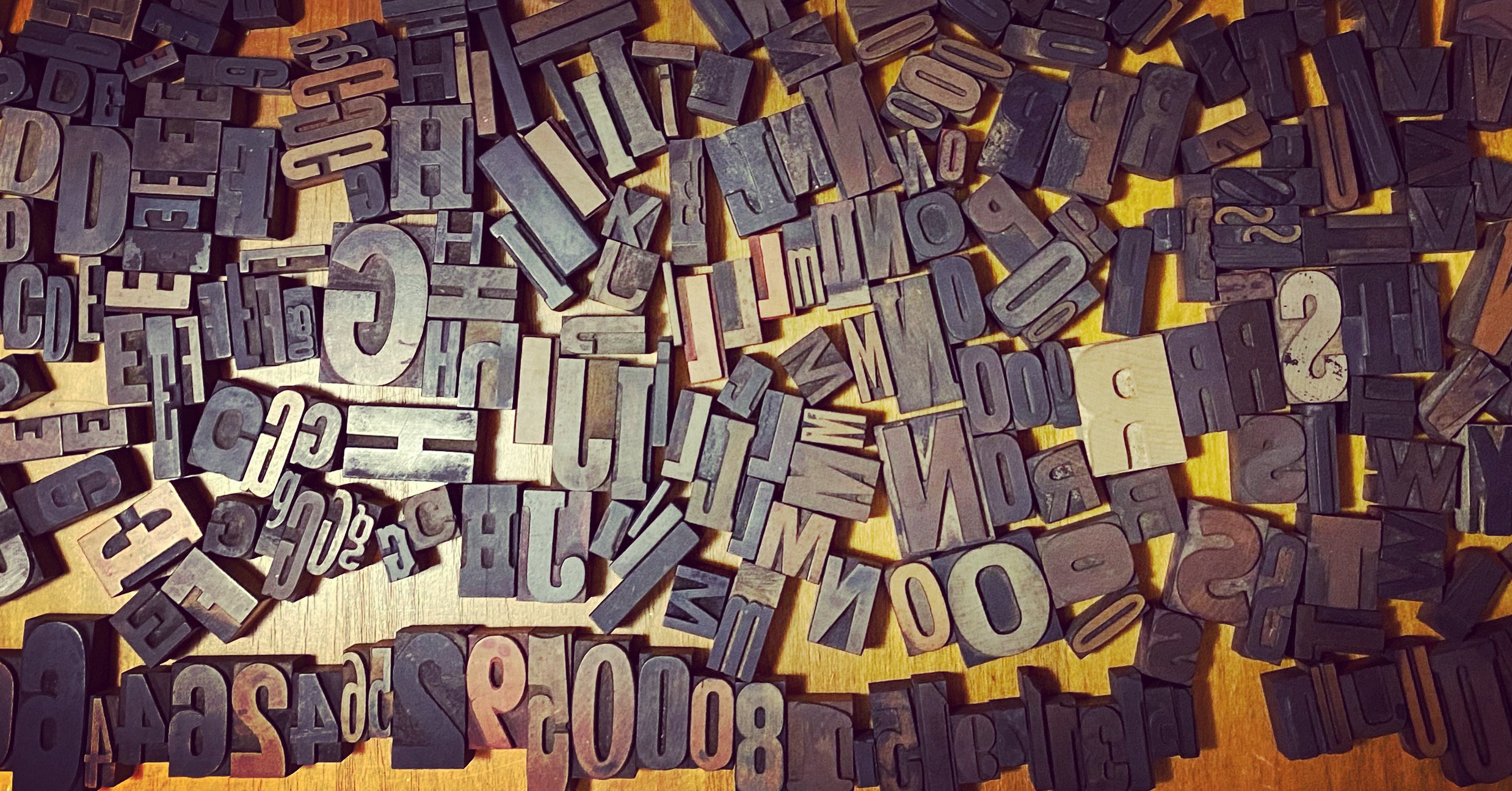
A key aspect of printing history is the development and evolution of wood printing type. It’s a reason why every Tiny Type Museum & Time Capsule will have at least three kinds of wood type included.

Some wood type background

There’s a strong suspicion and good historical evidence that the earliest printing, at least 1,000 years before Gutenberg, involved entire pages carved in wood in China and elsewhere in Asia, and later movable wooden letter blocks.

However, logographic languages like Chinese, Japanese, and Korean had a significant bit of overhead: often at least thousands of unique characters are required for a book of any length. The diversity of logographs in the language overcame the benefits of movable type versus carving entire pages for wood-block printing. Gutenberg may have been a genius, but he had the advantage of requiring roughly 23 characters for Latin and German with some

general

When Doves Cry and Four Films

I’m happy to note five digital accessions to the Tiny Type Museum & Time Capsule. While the museums are largely focused on analog items, there are five digital items that I’ve arranged to include for their historic and informative value. A USB stick included in the museum will contain this items along with a number of public-domain films and books useful for further study.

A Tale of Betrayal and a Watery Type Grave

Robert Green became mildly obsessed with the beauty of the type cut for the Doves Press starting in 1899 and used for all its works. A many of many talents—a graphic designer, book restorer, type designer, and more, who received his master’s from the Royal College of Art—he wanted to take this extraordinary type and produce a digital version authentic to its roots.

The type is legendary, because of a dispute between

printing history

Latest Accessions and Book Update

It’s past the midway point in summer, and my basement is full of lead and wood and books. Most of the items for the museum have now been acquired, arranged for, or are being made by various people. I have a few more special things to find and to order—some of those I want to wait a little longer, as they can be turned around quickly and I can refine my decisions. I’ll soon have samples of Linotype slugs (actually made on an Intertype, a competitor to Linotype after patents expired).

Two kinds of matrices—the molds from which metal type was made—that I’d really wanted to include in the museum recently arrived. One set is for Ludlow, a fairly simple kind of slug-casting machine designed for larger-sized type, typically employed in newspaper work. However, I believe one was in use still until 1990 at

accessions

A Host of New Accessions, a Trip, and More

Since the last update a few weeks ago, material has been arriving in abundance for the Tiny Type Museum & Time Capsule. I expect by the end of the project to have collected around 5,000 individual items, which will then be mostly distributed into up to 100 museums. In some cases, I’ll wind up with a lot of material left over because of how it has to be purchased, and that may lead to future sets of different kinds.

(An update on orders: 70 tiny museums have now been pledged on Kickstarter or pre-ordered since. Only 30 remain available, as I plan the edition to be no more than 100 museums.)

San Francisco Type & Archives

Early in the month, I took a trip to San Francisco, to visit the Grabhorn Institute (home of M&H Type and the Arion Press) for an upcoming article for a

printing history

The South Bend Malleable Range

While most of what I acquire for this project is intended to go into individual Tiny Type Museum & Time Capsules, as I noted in previous posts, I’m also trying to assemble a small study collection as I write about and provide context to printing history. That led to me purchasing a copper plate with an etching of an ad for South Bend Malleable Range products.

 A copper etching made photographically from an original drawing, c. 1917
A copper etching made photographically from an original drawing, c. 1917

When I saw the plate listed on eBay, I searched to find its era—its provenance is unknown, and the plate has a hook as it were hung on someone’s wall. I quickly found that this ad had run around 1918, making the plate over a century old. The mounting was clearly done after printing, because it’s not type high, which is 0.918 inches. Instead, the raised portion is

Quoins, Wood Type, and Phototype

printing history

Quoins, Wood Type, and Phototype

The latest accessions to the Tiny Type Museum & Time Capsule have arrived!

Quoins and Quoin Keys

From the earliest days of printing, certainly in Gutenberg’s studio, type had to be locked up. You first composed it into lines, columns, and pages, and spaced it just right. But then you had to ensure that it stayed solid and level as it was moved from a composing stone—a level surface that assisted in planing type and other material—to the bed of a press. (For newspaper, it would be into a matrix-making machine en route to stereotyping.)

As you may know generally or from previous posts, a page or pages of type are collected into a forme and  locked into a chase. The locking requires furniture or various sized rectangular pieces of metal and wood to fill on empty areas, and then wedges to lock them into place. A

accessions

Movie Ad Mats, a Superior Printing Press, and Tiny Type

More accessions have arrived for the permanent collection of the Tiny Type Museum & Time Capsule project, as well as artifacts that will be distributed among all tiny museums!

An eBay seller had a variety of tiny type (6 and 8 point) in wrappers that mostly had never been opened. The rubber band on one is still flexible after decades in storage, even. This isn’t unusual. Printers weren’t perfect about using every bit of type ordered, and sometimes type was purchased on behalf of clients and the projects never materialized.

This set of type is a mix of type produced in a foundry and type set on a Monotype, as well as some spacing material.  It includes type from American Type Founders (ATF), a group of nearly three dozen foundries that merged in response to the rise of Linotype in the late 1800s, but eventually fell afoul of