
Glog

Business

Testing Out New Kickstarter Features

Bookselling

Testing Out New Kickstarter Features

Kickstarter has had long periods in which it has changed little about how to build, run, and manage post-campaign details. These lulls have been punctuated with major changes. When I got ready to launch the campaign for Six Centuries of Type & Printing earlier this year, I noticed that the company had added and tweaked lots of features. Some may have been in place for a year or more, but I believe only one was available when I launched How Comics Were Made in February 2024.

I started using Kickstarter to fund my book and art projects about 15 years ago. Six Centuries was my 11th! My 9 successful campaigns have ranged from raising $3,000 to over $165,000. I also managed the project for Shift Happens, which brought in $750,000 in its crowdfunding stage. I’m always looking to see what I can test and what I
Books in a Time of Trade War

Bookselling

Books in a Time of Trade War

Update April 2, 2025, and noted where that’s the case.

I didn’t set out to print books in Canada to stake out a political position, although it’s indirectly become that.

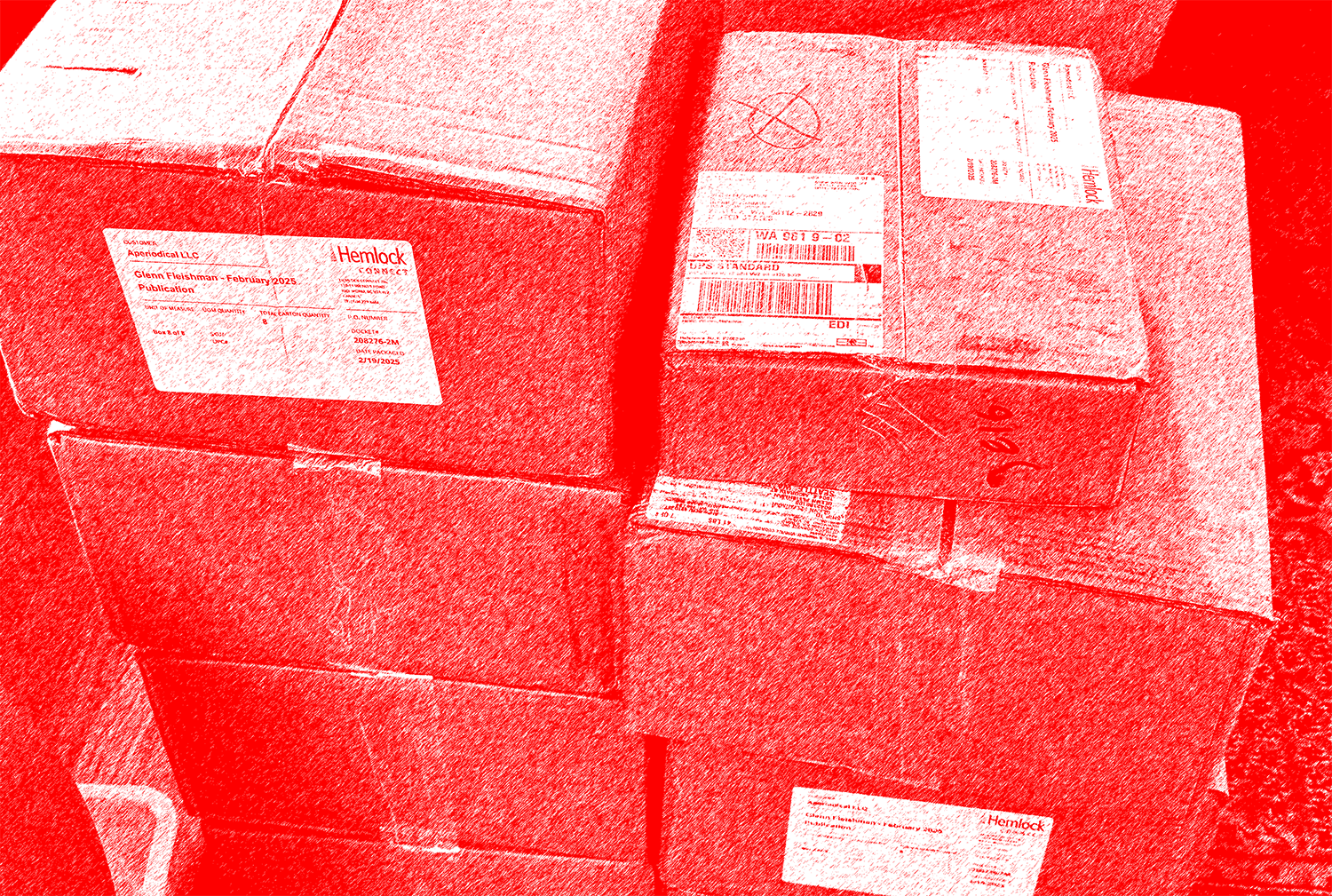
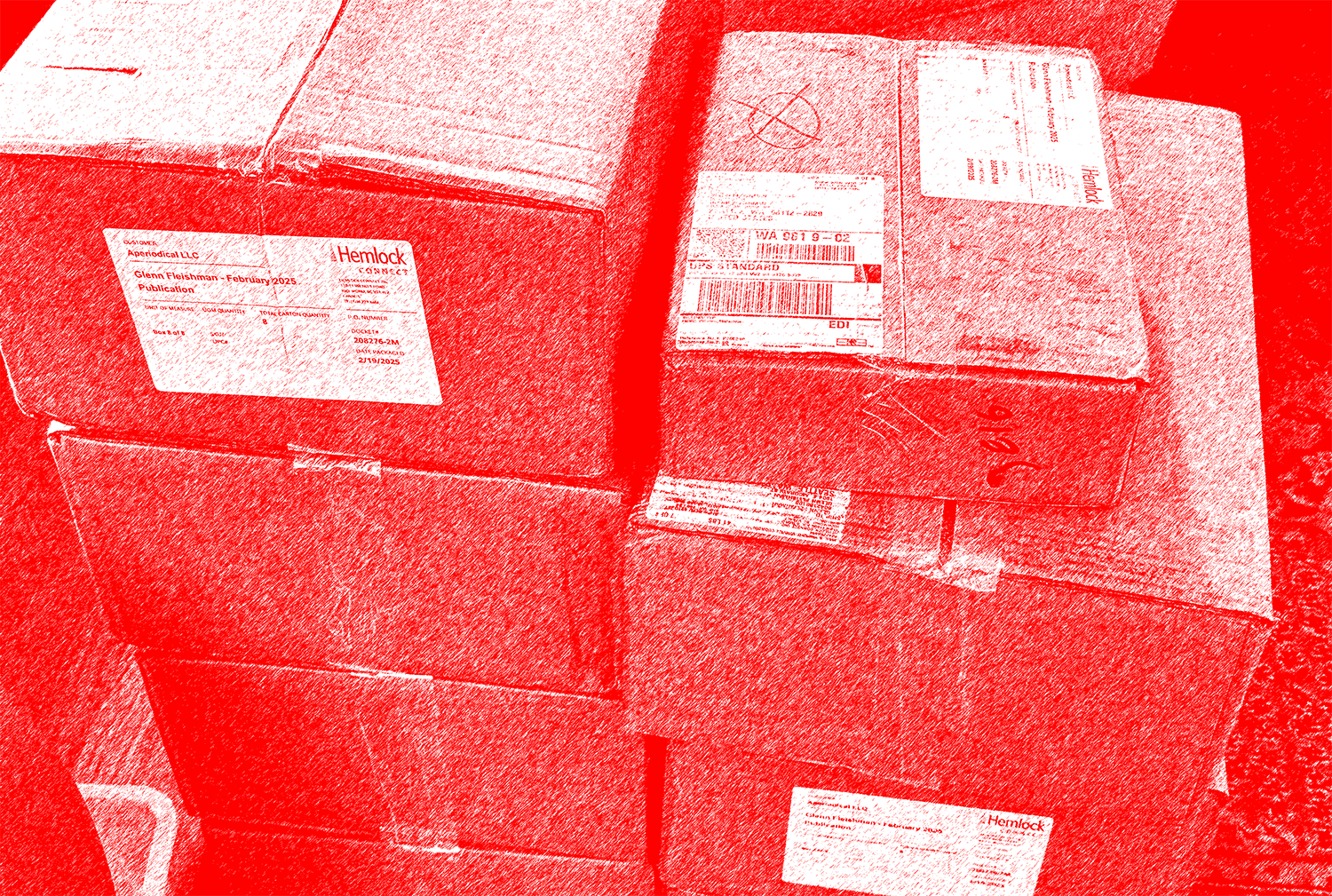
A few years ago, when I was obtaining bids for my client-author Marcin Wichary (Shift Happens) to print his books, we checked in with Hemlock Printers in Burnaby, B.C., Canada (adjacent to Vancouver). This was 2021 and then 2022. The Canadian border had been closed for a while. The future of the COVID pandemic’s direction remained unsure. And we had wanted to go on press—to be there while the book was printed. Hemlock came highly recommended but their pricing was somewhat above the printer we chose, Penmor Lithographers in Lewiston, Maine. We felt that in a pinch, we’d be able to get to Maine and possibly not to Vancouver.

When I was planning

Publishing

New Book on Suddenly Having to Work from Home (Free)

Sometimes you have to shout into the darkness. Last week, after I tweeted a semi-joke about newly minted work-from-home telecommuters needing to find a freelance buddy for advice, I realized that I could something useful with myself during this period of anxiety and isolation.

So with the support of my publisher, Take Control Books (Joe and Morgen), and the input of tips all the way through chapter drafts from Take Control authors, TidBITS writers, and social media friends, colleagues, and acquaintances, I wrote a 66-page book that we’re giving away. You can read an excerpt on work-life boundaries and the inevitably of a toddler dancing into view of a videoconference at Fast Company.

(It’s totally free. We’re using the Take Control site to distribute it so people can choose to get updates if we revise the book, or never hear from us again after downloading.)

Take Control

Business

Seattle Has Heated Up, and I Don’t Mean Climate Change

It’s…a little overheated. And it’s not slowing down. It’s not even a bubble per se. We have rapidly growing companies sucking in employees as fast as they can. Our unemployment rate is well below 4% in Seattle, far lower among white-collar and technical jobs.

We have relatively little land on which to build office buildings, and they’re filling up like mad. The scarcity increases prices. We’ve long been a city without enough density for the future

Journalism

Are We Obliged To Load and View Ads on Web Pages?

The Parable of the TV Store

Imagine a TV store that makes money in two ways: selling sets and showing programming. Their store is very comfortable, and they invite people in to watch unlimited shows. The only proviso is that those entering the store have to fill out a survey. There's a lengthy disclosure statement you can ask for, but it's not part of the form. Ads are shown during programming. Sometimes, people buy TV sets, but they're mostly there watching TV.

Also, there may be hidden cameras, which you may or may not be told about. These cameras may record your behavior. And you might be chipped as you leave the store without your knowledge (there's a tiny label on the chip if you find it and get a magnifying glass) that tracks your visits to many different stores with the same business model.

A clever person invents a

Crowdfunding

Journalists and Patronage

(See also my essay on Patreon and its literal problem with nazis.)

It's about ethics in journalism. Seriously, it is. The rise of direct funding of creative and business projects through Kickstarter, Indiegogo, and others, and the ongoing support of same through Patreon (which is not sui generis, but generates the only substantive volume), brings out new issues regarding conflicts of issues between journalists and the people and organizations they cover.

This has been highlighted speciously as a major component of GamerGate (GG). Somewhere a few months ago, it became a trope in the harassment campaign against Zoe Quinn (that morphed into GG) that journalists contributing to Patreon projects were de facto corrupt: their collusion in helping a creator make things on a regular basis (Patreon is per item created or per month) meant that they couldn't fairly review or write about that creator's work.

There's a kernel of truth

Show Me the Numbers: Serial's Data Transfer Costs

Business

Show Me the Numbers: Serial's Data Transfer Costs

Serial is the most accessed podcast ever from iTunes, according to Apple. By November 18, it was downloaded and streamed 5 million times. The show claims some 1.5 million listeners per episode, of which nine have so far been produced. That would mean nearly 9 million downloads or streaming sessions (assuming people went back to listen to the whole thing) from non-iTunes sources, which seems high, but would also indicate a better distribution of means by which people obtain podcasts, which is good for all podcasters!

David Carr, the lead media reporter at the New York Times, wrote that the episodes were downloaded "at a cost of nothing," which may refer to what it costs to deliver or what listeners pay; hard to tell. But I'd like to guess at the amount. What does it cost to deliver that many episodes?

Let's take the notion for simplicity that roughly

A T-Shirt Celebrating The Magazine

Business

A T-Shirt Celebrating The Magazine

With our friends at Cotton Bureau, The Magazine is offering a limited-time-availability T-shirt to commemorate our 28-month run, which ends next month. The color is from Issue #1. The back shows our three-diamond "end of story" icon and our run date.

This shirt is an American Apparel Tri-Blend Tri-Black with long-lasting ink — I've got others from Cotton Bureau using this method, and they remain vibrant and stand up to many, many washings.

Business

Vital Reads

This linked photo is no longer available.

              How Buildings Learn: What Happens After They're Built  $23.95  By Stewart Brand                      Buy on Amazon        

There's a book I bring up all the time in talking to people about innovation, creativity, and spaces. It's Stewart Brand's How Buildings Learn. I have probably mentioned in it 10 episodes of The New Disruptors because it's so relevant to people getting themselves off the ground, often using odd or temporary spaces.

While Brand looks across a whole swath of issues relating to architecture and the changes that occur to buildings over time (even ones that are claimed to be historically fixed, and are not), the part I like to point to is the importance of space that nobody cares about.

That is, space in which you can experiment, drill holes in the floor, knock out walls, install plumbing, paint walls and repaint them, build and

Design

Approaching Halfway with Kickstarter

The Magazine: The Book is nearly at 50% of the goal we need to make it happen.

Kickstarter campaigns can follow a few arcs.

They can flatline, which is about 20% of them, last time I was able to get statistics. 20% of all projects approved by the company get no bids. Another 20% get less than one-fifth of the way to their goal amount. 16% of all projects fail between about 20% and 50% of the total amount they plan to raise.

But at the halfway mark, when you raised 50% of your total, the odds are pretty dramatic: 97% of Kickstarter projects that fund halfway proceed to fund fully by the end of the campaign.

We're about 48% of the way to our total, and I'm confident that, as we hit our last 12 days, we'll start to see some steam as people both see that it's coming

Business

Multi-Modal Economics on Recent Trip

For my trip to Portland for the XOXO event, I opted to go by train and use car2go here in Seattle and down in Portland. The train was $100 with tax round-trip including business class each way. The train has Wi-Fi, which is halfway reliable in the more populated areas of the route. (Business class on the 3 1/2-hour route gets you a nicer seat, including a single when you're traveling alone, and a power outlet, as well as a $2 discount on the club car, which has fairly decent food.)

car2go is a one-way car-sharing service, unlike ZipCar, which requires that you return the car to its allotted parking space at the point of origin. car2go has negotiated with cities to pay them in lieu of lost parking fees. The car has to be returned within the home zone, which can be as large as an entire city

Explaining Apple's Incremental Approach

Business

Explaining Apple's Incremental Approach

Many people have asked me since Apple's Tuesday announcement: Where was the sex? Where was the sizzle? Where was Apple's disruption? Where was the "one more thing"?

My reply is that Apple makes its living through punctuated equilibrium[1], not through disruption. Revolutions are hard; small but significant improvements are far easier. The all-in-one iMac, the MacBook Air, the iPod, the iPhone, and iPad all changed the way in which the entire industry created similar products.

Those were released at years-long intervals, not every year. On the Mac side, the ones I think of as having the greatest long-term impact on both Apple and the rest of the computer world:

  • The iMac (1998) had USB and no floppy drive. Clearly, it would fail, because people needed a built-in floppy and there were practically no peripherals that used USB. ADB (Apple Desktop Bus) was the standard.
  • The MacBook Air (2008) with