Glog

printing history

Amelia Hugill-Fontanel, Associate Curator in the Cary Collection at RIT, Historian, and Letterpress Printer
podcast

Amelia Hugill-Fontanel, Associate Curator in the Cary Collection at RIT, Historian, and Letterpress Printer

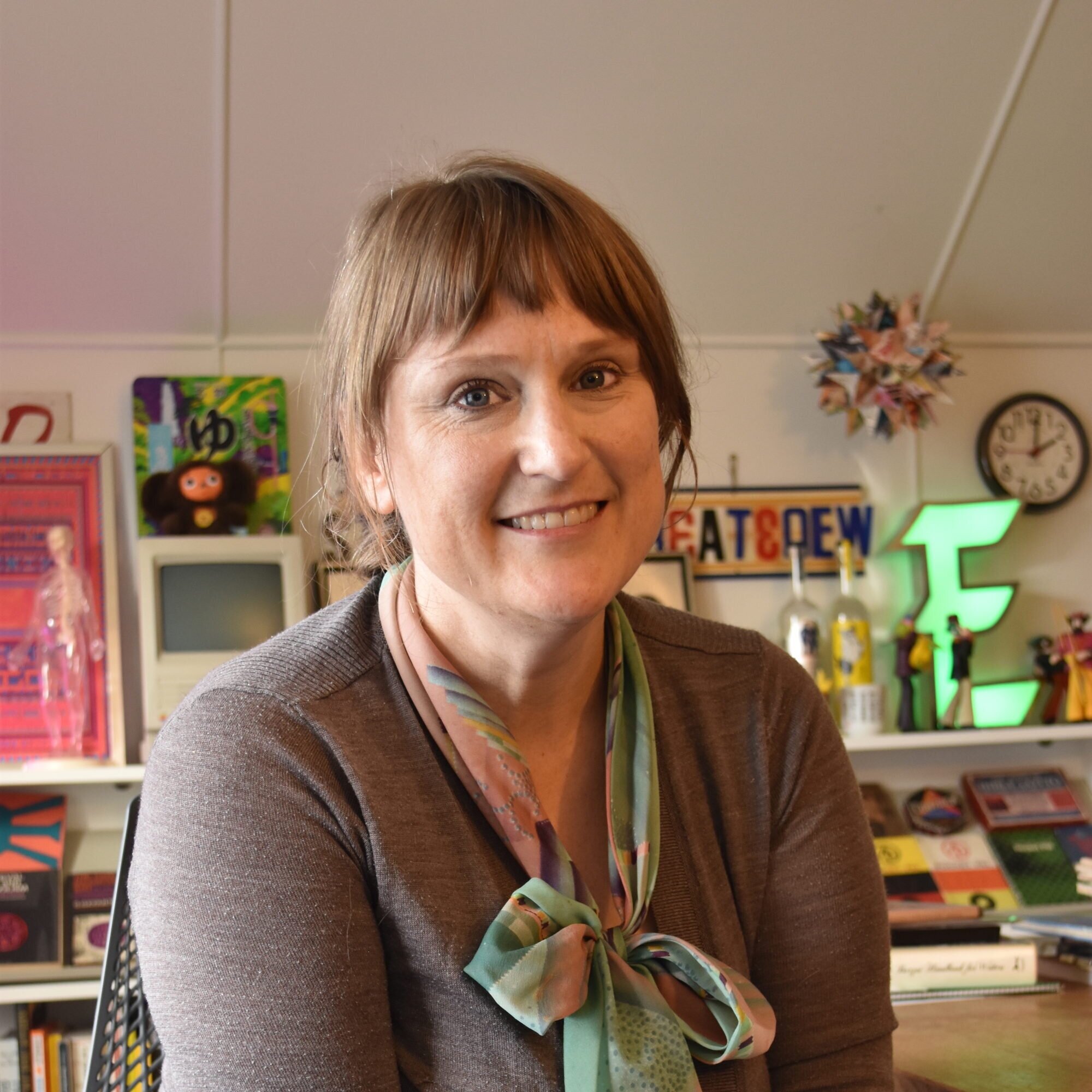
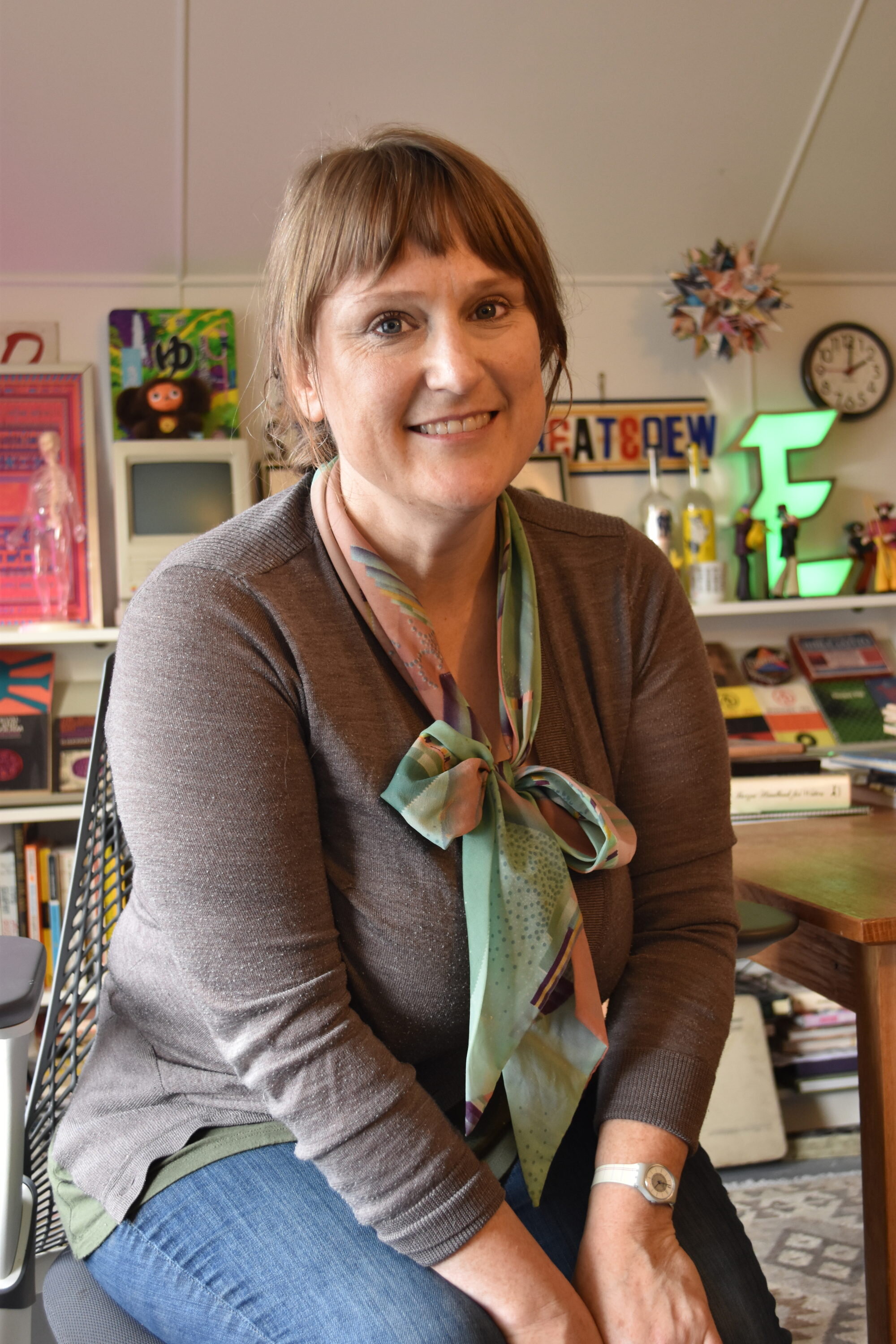
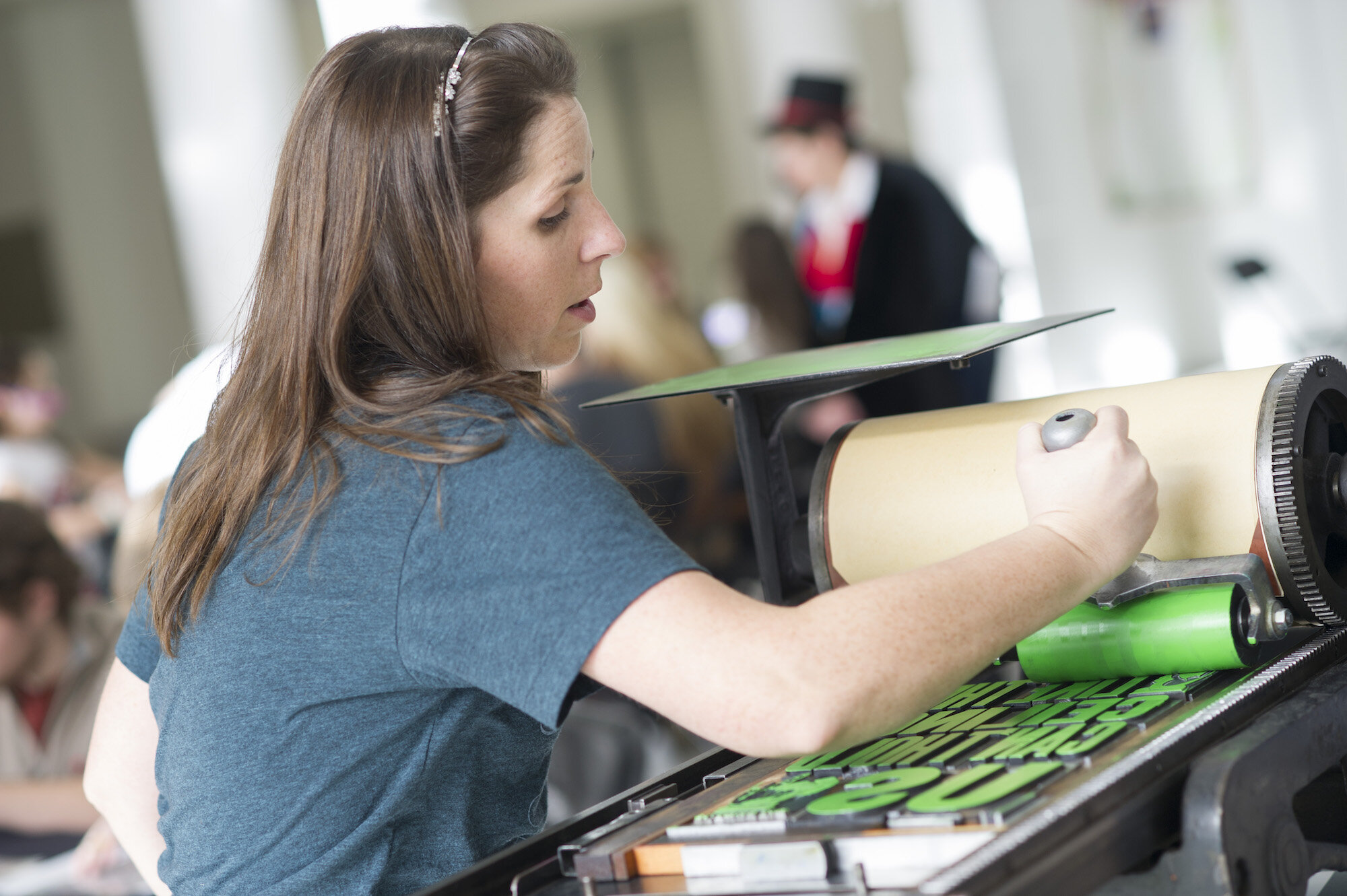
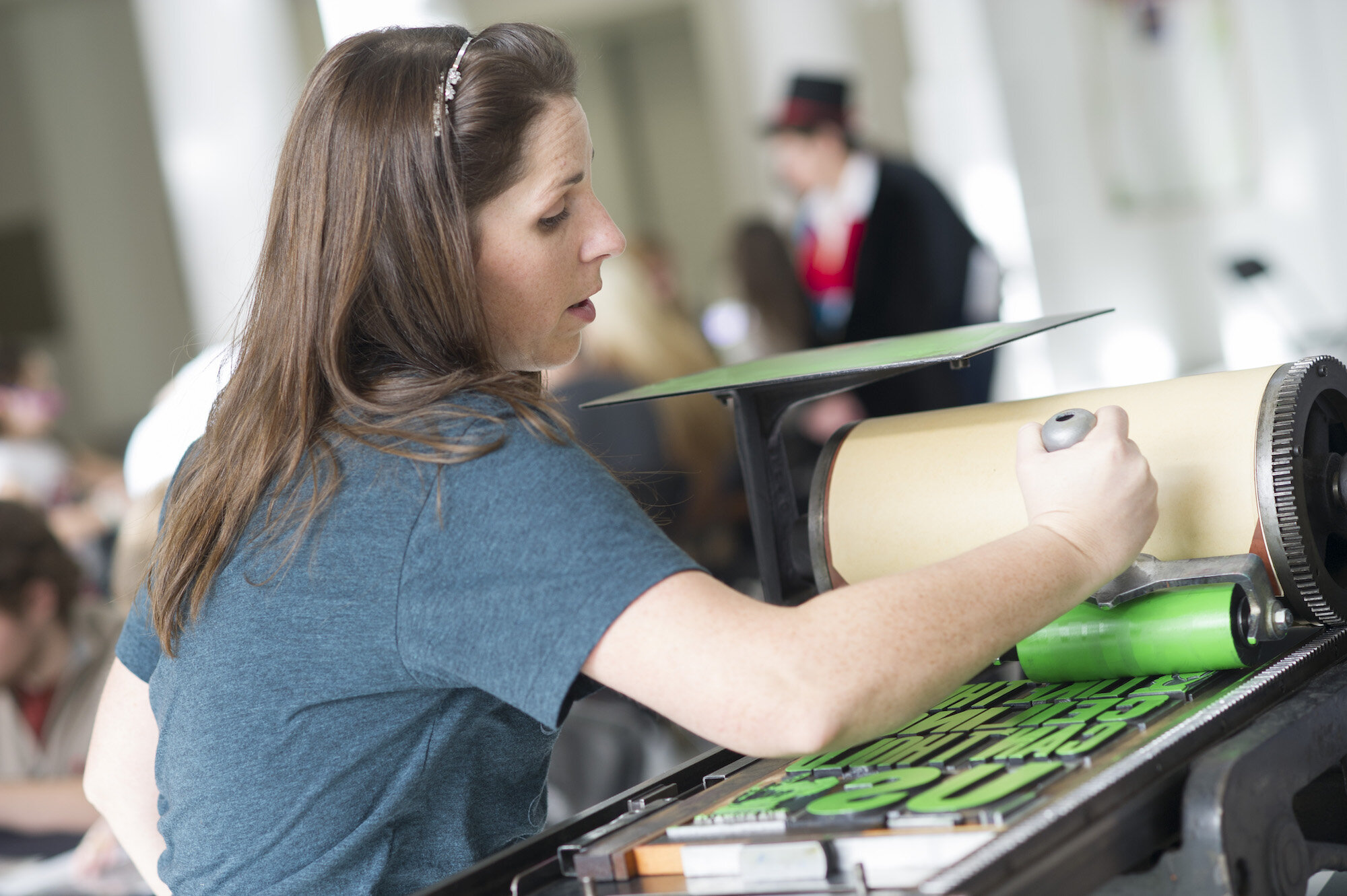
 Amelia Hugill-Fontanel on press (Photo: RIT Production Services)
Amelia Hugill-Fontanel on press (Photo: RIT Production Services)

Amelia Hugill-Fontanel, the Associate Curator in the Cary Collection at the Rochester Institute of Technology discusses the history of the collection, the nature of preserving the past, and the rapid development of printing—especially how quickly reproduction sped up—across the early part of the 19th century.

Amelia has held her position at RIT since 2009, and her time working with collection dates back a further decade. She’s an active artist and letterpress printer. She manages the Cary Collection’s extensive set of historical presses and type, which are used actively in teaching and research, and also lectures extensively printing history and practice. Amelia is the vice president of programs at the American Printing History Association.

Subscribe to the podcast feed directly via this link, via iTunes, or any podcasting app.

audio-thumbnail
Amelia Hugill-Fontanel, Associate Curator in the Cary Collection at RIT
Alix Christie, Author of Gutenberg’s Apprentice, Reporter, and Letterpress Printer

podcast

Alix Christie, Author of Gutenberg’s Apprentice, Reporter, and Letterpress Printer

 Alix Christie (Photo: Kirsten McKee)
Alix Christie (Photo: Kirsten McKee)

Alix Christie wrote the book on Gutenberg. Her novel, Gutenberg’s Apprentice, puts us squarely in the milieu in which Gutenberg formed his studio, told through the eyes of his apprentice Peter Schöffer, also a historical figure. Alix’s non-fiction work includes reporting across decades as a domestic and foreign correspondent for a host of publications, including the Washington Post and the Guardian. She’s also a letterpress printer, who received her training in her youth from her grandfather, Lester Lloyd.

We talk about Gutenberg, the history and “invention” of printing, the Grabhorn Institute (the non-profit preserving Mackenzie & Harris Type and the Arion Press), learning letterpress as a youth, and much more.

Subscribe to the podcast feed directly via this link, via iTunes, or any podcasting app.

audio-thumbnail
Alix Christie, Author of Gutenberg’s Apprentice
0:00
/0:00

Notes from This Episode

printing history

Steve Finan, Memories of the Last Days of Metal Printing

 Steve Finan
Steve Finan

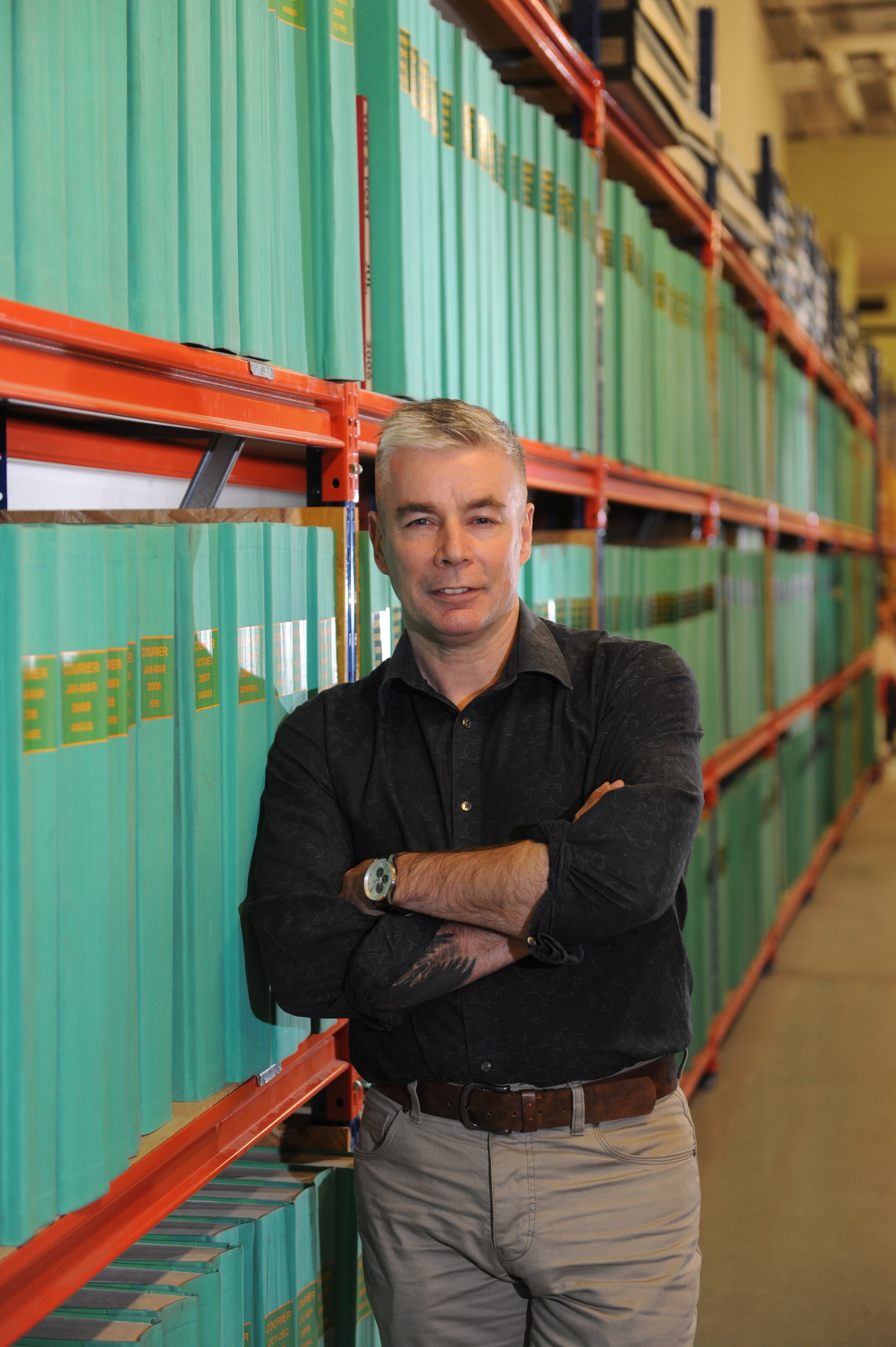
Steve Finan is journalist who writes regularly about language and the misunderstandings that result every time we open our mouths. His column “Oh My Word” appears in The Courier of Dundee, Scotland, and other DC Thomson publications, where he is the heritage unit editor. He's the author of several books about football—that's proper football not the American kind—including Lifted over the Turnstiles, described as "the best book about old Scottish football grounds ever published."

Steve began as a printing apprentice in just under the last four years of hot-metal typesetting and relief letterpress printing at a newspaper in Scotland. He loved the sound, the smell, the pranks, the robust work of it all. He reminisces about his work in those days, and tells stories best known to printer’s devils and those who labored on the stone.

Steve sent along a few photos of his days

Toshi Omagari, Type Designer and Video Game Font Historian

podcast

Toshi Omagari, Type Designer and Video Game Font Historian

 Toshi Omagari (Photo: Yasuyuki Omagari)
Toshi Omagari (Photo: Yasuyuki Omagari)

Toshi Omagari studied Visual Communication Design at Musashino Art University, Japan, and then got his master's in Typeface Design at the University of Reading in England. From 2012 to 2020, he worked at Monotype, one of the leading digital type foundries, with roots that date back well over a century. During that time, he created his own faces and revivals, including a major reworking and expansion of five typefaces created by Berthold Wolpe. Toshi runs his own font studio now, and lectures and teaches.

His 2019 book, Arcade Game Typography (find it at a bookstore), is an incredible deep dive into the 8-by-8 pixel fonts used in early video game systems and arcade consoles. Just a few days before we spoke, he posted a blog entry about ink traps and light traps, which has the kind of obsessive detail that appeals to someone like me,

David Shields, Wood Type Historian (Tiny Typecast)

wood type

David Shields, Wood Type Historian (Tiny Typecast)

 David Shields at the Rob Roy Kelly American Wood Type Collection  (Photo:  Romy Suskin Photography )
David Shields at the Rob Roy Kelly American Wood Type Collection (Photo: Romy Suskin Photography )

David Shields is my guest on the latest episode of the Tiny Typecast. He’s the preeminent expert on the history of wood type, and currently the chair of the Department of Graphic Design at Virginia Commonwealth University in Richmond, where he teaches design. David previously taught at the University of Texas at Austin, where he was the Design Custodian of the Rob Roy Kelly American Wood Type Collection. David has engaged in extensive studies of the history of wood type production in America and Europe, as well as actively using historical type in printing. He produced the reproduction edition of American Wood Type: 1828–1900.

His work provides an invaluable tool to historian and to printers, by helping people track down the provenance of type and re-assemble sets of type that have been scattered.

Briar Levit, a Historian of Forgotten Figures of Design Past

podcast

Briar Levit, a Historian of Forgotten Figures of Design Past

 Briar Levit
Briar Levit

Briar Levit is a book designer, filmmaker, and former art director of Bitch magazine. She has taught graphic design for years, and is an associate professor of graphic design at Portland State University in Portland, Oregon. She directed the film Graphic Means about the phototype and paste-up period that acted as a transition between metal and digital production processes. That movie also delved into the way in which printing shops acted as gatekeepers to communication, and how women were severely underpaid during this period as they entered a previously nearly all-male industry.

With founder Louise Sandhaus, she and Brockett Horne are collaborating on fostering an amazing online gathering place, The People's Graphic Design Archive. And she's at work on Baseline Shift: Untold Stories of Women in Graphic Design History, a collection of essays due out later this year (not yet available for pre-order). We talk about all that

Jim Moran, Hamilton Wood Type & Printing Museum (The Tiny Typecast)

podcast

Jim Moran, Hamilton Wood Type & Printing Museum (The Tiny Typecast)

The Tiny Typecast is back in a new year with new energy, following my delivery of 90 (soon to be 95) of the Tiny Type Museum & Time Capsules, leaving room to breathe and resume paused projects. Subscribe to the podcast feed directly via this link, via iTunes, or any podcasting app.
On this first episode in the new run in 2021, please welcome Jim Moran, the master printer and collections officer at the Hamilton Wood Type & Printing Museum in Two Rivers, Wisconsin. Hamilton is a unique institution in all sorts of ways. It preserves the manufacturing history and remaining wood type assets of the historical Hamilton Wood Type Company, the dominant producer of wood type in America from the late 1800s through the 1990s.

audio-thumbnail
Jim Moran, Hamilton Wood Type & Printing Museum
0:00
/0:00

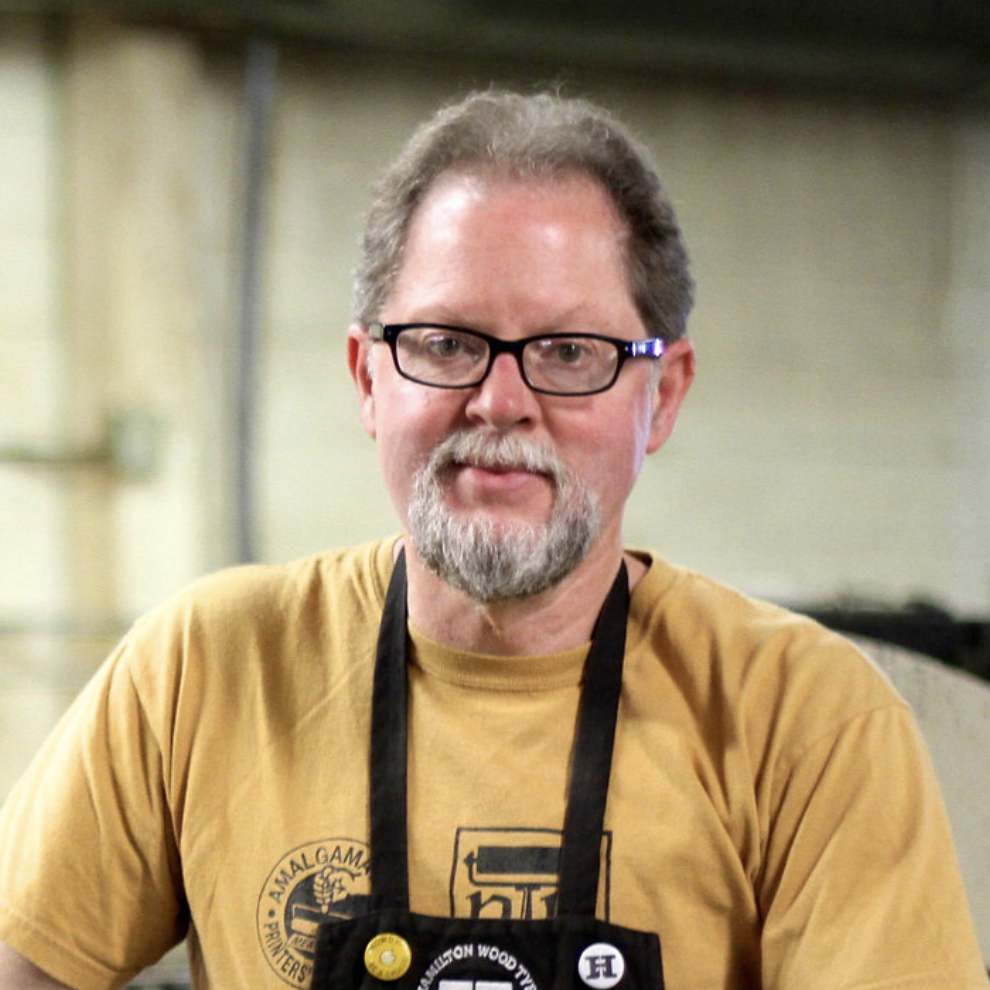
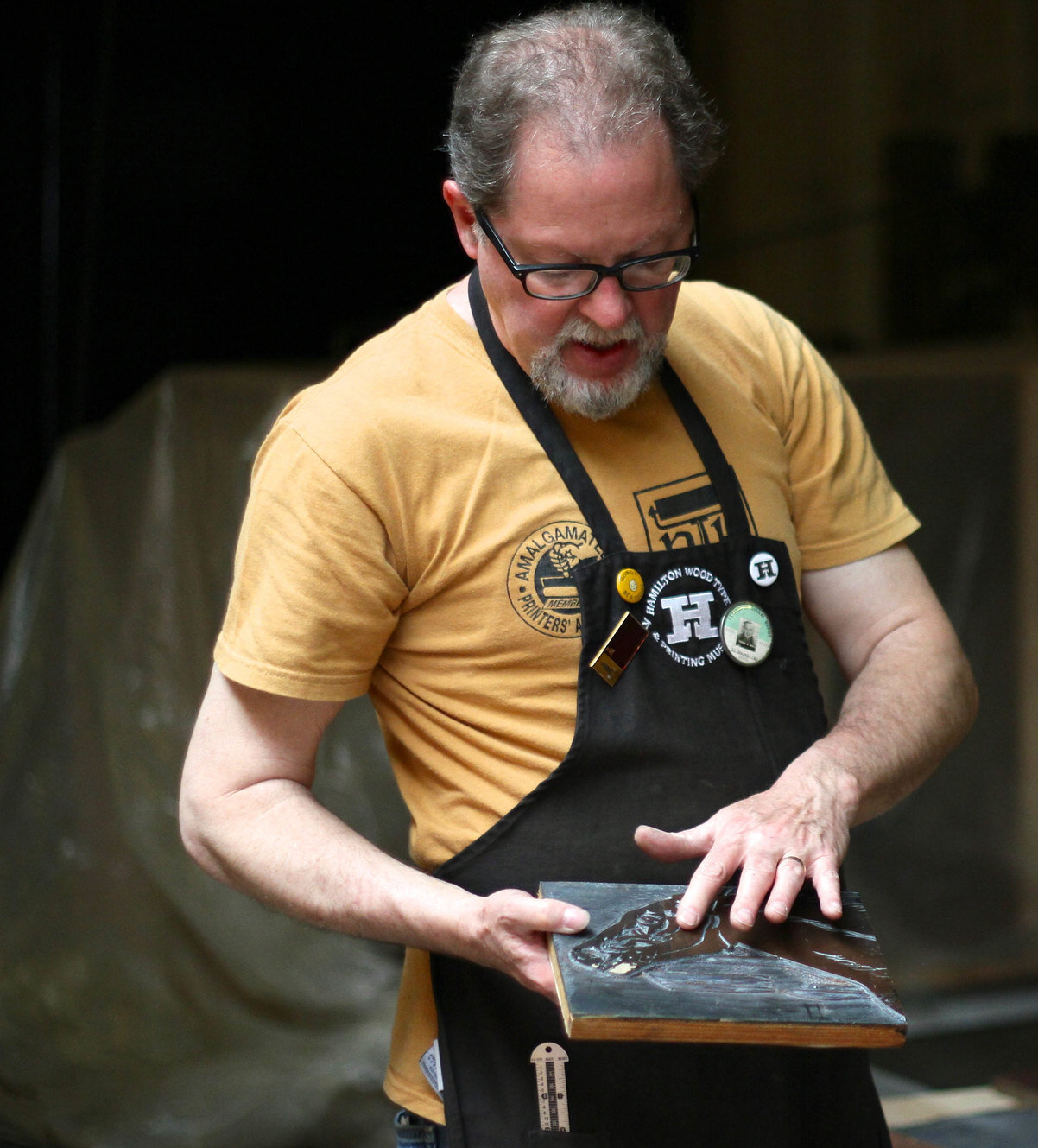
 Jim Moran holding a wood block (photo by Jacqui Cheng for  The Magazine )
Jim Moran holding a wood block (photo by Jacqui
Jeremy Burge, Chief Emoji Officer of Emojipedia (The Tiny Typecast)

printing history

Jeremy Burge, Chief Emoji Officer of Emojipedia (The Tiny Typecast)

Emoji are the first kind of symbolic element designed to read only online that’s also difficult, sometimes impossible, to reproduce accurately in print—or in a static electronic document, like a PDF. In this episode, I talk with Jeremy Burge, the chief emoji officer of Emojipedia, a site that exhaustively documents the past and present of those popular pictographs. He also helps chart the future as a member of the Unicode Consortium group that considers adding new emoji to the official Unicode set.

Jeremy and I talk about the issues of permanence with emoji: they can change appearance over time, they differ among graphical presentations in different operating systems and services (like Facebook and Twitter), and they largely require color output. How can you be sure what you see on screen is the same on another screen, and how can you possibly include emoji in a book, or archive

David Sax, Revenge of Analog and the Soul of an Entrepreneur (The Tiny Typecast)

podcast

David Sax, Revenge of Analog and the Soul of an Entrepreneur (The Tiny Typecast)

This podcast looks backward to understand the present and future, and there is nobody better on the business side than David Sax. The author of three books—on delis, on the revival of analog culture, and on the right way to look at entrepreneurship—David’s insights help give us insight into the joy people feel in letterpress printing and the way in which cottage businesses dominated the world, and still do. Printing and letterpress aficionados will particularly like his 2016 title, The Revenge of Analog.

audio-thumbnail
David Sax, Author of The Revenge of Analog and The Soul of an Entrepreneur
0:00
/0:00

David Sax believes the lifeblood of the economy is the small-scale entrepreneur, and studying how small businesses work and succeed offers more lessons to people than the billion-dollar-revenue unicorns and massive companies that capture attention. In his new book, The Soul of an Entrepreneur

printing history

A Doonesbury Stereotype

 A flong of Doonesbury
A flong of Doonesbury

Regular readers may recall that I mentioned several months ago I had acquired a flong of Doonesbury comics from the 1970s. I have an article in preparation at a magazine about some of the interesting details associated with the particular strips, some of which never ran in print, but were preserved by someone who grabbed the sheet from a newspaper that received it before the syndicate sent out replacements. I don’t want to give too much away, as the article has a lot to say on the topic, including insight from a special source.

You can read my magnum opus on flong, a kind of paper mold also known as a “mat,” as in short for “matrix.” I find a lot of references to “ad mats” in particular, as flongs were used by advertisers in the same way that photostats and “slicks” were sent out

printing history

Keith Houston on His Book, The Book (The Tiny Typecast)

 Author Keith Houston, this episode’s guest
Author Keith Houston, this episode’s guest

Keith Houston talks about the past and present of the book, which has remained a remarkably consistent form since its invention millennia ago. We talk about bookiness, elements of a book, ebooks, and emoji, among other topics.

Keith is the author of Shady Characters and The Book, and maintains an active blog at which he posts ongoing articles on his current subject of interest. Right now, that’s been a long-running series on emoji that’s great reading, like all of his work.

audio-thumbnail
Keith Houston, Author of The Book (The Tiny Typecast)
0:00
/0:00

Subscribe to the podcast via Apple Podcasts or through your favorite podcasting app via its directory or this podcast URL.

A Visit to Letterform Archive (The Tiny Typecast)

podcast

A Visit to Letterform Archive (The Tiny Typecast)

 From left to right: Stephen Coles, Amelia Grounds, and Rob Saunders
From left to right: Stephen Coles, Amelia Grounds, and Rob Saunders

The long-delayed debut of the Tiny Typecast is here! Last year, I recorded four episodes for this podcast notion. My focus on keeping the Tiny Type Museum & Time Capsule moving along kept me from pulling the episodes together. But I’m glad to say with the majority of museums on the verge of shipping (in late March), I’ve finally been able to knuckle down.

Subscribe to the podcast via Apple Podcasts or through your favorite podcasting app via its directory or this podcast URL.

This first episode is an interview with three key people at Letterform Archive, a remarkable institution in San Francisco that preserves the history of design as a tool of communication. I spoke with founder and executive director Rob Saunders, associate curator and editorial director Stephen Coles, and then librarian Amelia Grounds. (She has