
Glog

wood type

Daniel Schneider, Industrial Archeologist

printing history

Daniel Schneider, Industrial Archeologist

Daniel Schneider (Instagram: rustedrebar) is a letterpress printer with an undergraduate degree in journalism and a master’s in industrial archeology, a field I am dying to talk to him about. His research has centered on the transformation of nineteenth century artisanal skills within the context of industrialization. He is the Headquarters Manager for the Society for Industrial Archeology at the Michigan Technological University, which is where he earned his master’s.

We discussed his master’s work “excavating” the function of a wood-border stamping machine at the Hamilton Wood Type & Printing Museum and, more generally, how we retain and recover industrial knowledge to understand how things worked in the past. Daniel’s work considers the worker’s role in industrial production, considering the transition of work from craft to repetitive low-skill production.

Daniel provided photos from his work that appear at the end of this post.

audio-thumbnail
Daniel Schneider,
David Shields, Wood Type Historian (Tiny Typecast)

wood type

David Shields, Wood Type Historian (Tiny Typecast)

 David Shields at the Rob Roy Kelly American Wood Type Collection  (Photo:  Romy Suskin Photography )
David Shields at the Rob Roy Kelly American Wood Type Collection (Photo: Romy Suskin Photography )

David Shields is my guest on the latest episode of the Tiny Typecast. He’s the preeminent expert on the history of wood type, and currently the chair of the Department of Graphic Design at Virginia Commonwealth University in Richmond, where he teaches design. David previously taught at the University of Texas at Austin, where he was the Design Custodian of the Rob Roy Kelly American Wood Type Collection. David has engaged in extensive studies of the history of wood type production in America and Europe, as well as actively using historical type in printing. He produced the reproduction edition of American Wood Type: 1828–1900.

His work provides an invaluable tool to historian and to printers, by helping people track down the provenance of type and re-assemble sets of type that have been scattered.

Jim Moran, Hamilton Wood Type & Printing Museum (The Tiny Typecast)

podcast

Jim Moran, Hamilton Wood Type & Printing Museum (The Tiny Typecast)

The Tiny Typecast is back in a new year with new energy, following my delivery of 90 (soon to be 95) of the Tiny Type Museum & Time Capsules, leaving room to breathe and resume paused projects. Subscribe to the podcast feed directly via this link, via iTunes, or any podcasting app.

On this first episode in the new run in 2021, please welcome Jim Moran, the master printer and collections officer at the Hamilton Wood Type & Printing Museum in Two Rivers, Wisconsin. Hamilton is a unique institution in all sorts of ways. It preserves the manufacturing history and remaining wood type assets of the historical Hamilton Wood Type Company, the dominant producer of wood type in America from the late 1800s through the 1990s.

audio-thumbnail
Jim Moran, Hamilton Wood Type & Printing Museum
0:00
/0:00

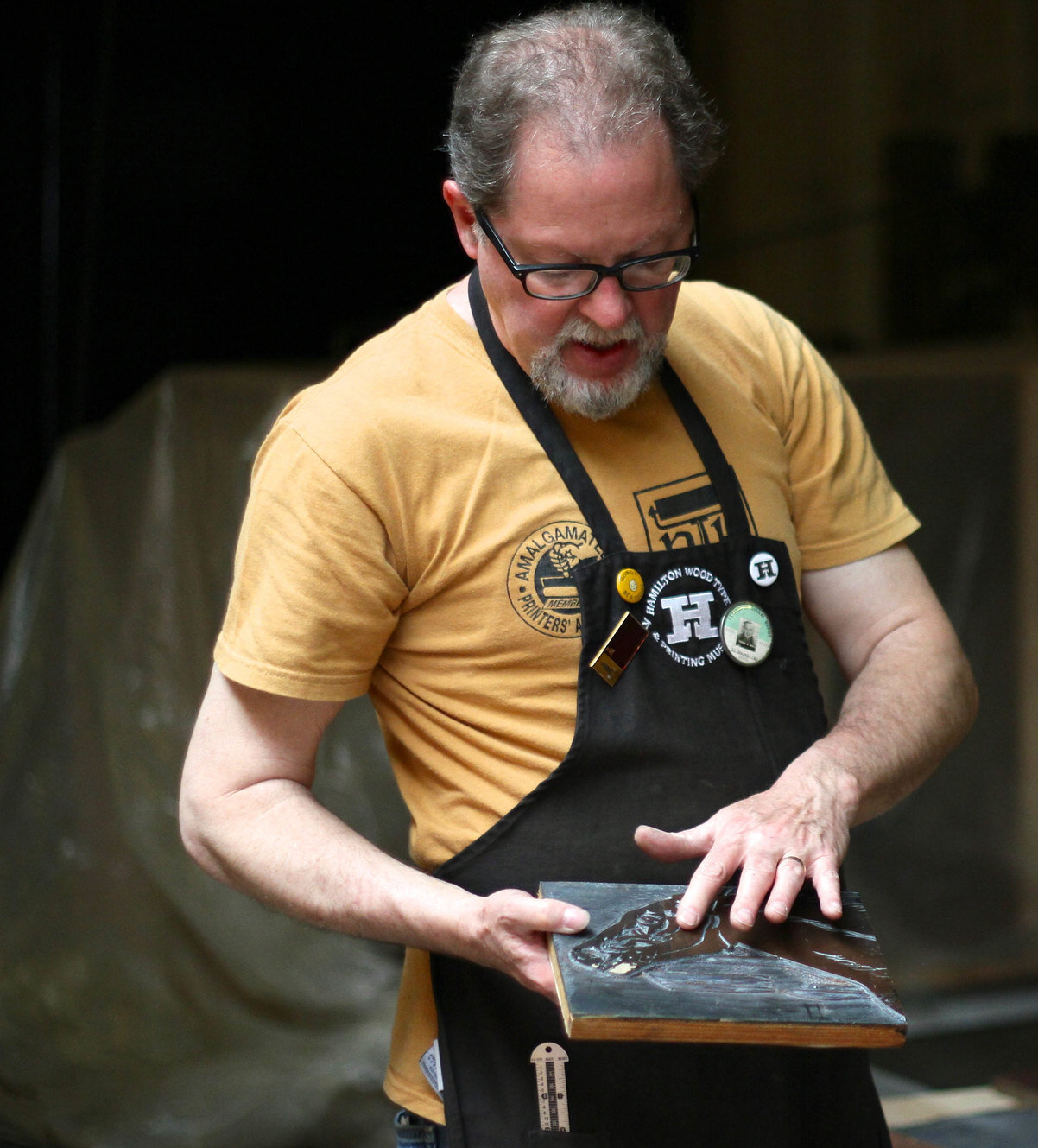
 Jim Moran holding a wood block (photo by Jacqui Cheng for  The Magazine )
Jim Moran holding a wood block (photo by Jacqui

accessions

Woodn’t It Be Nice?

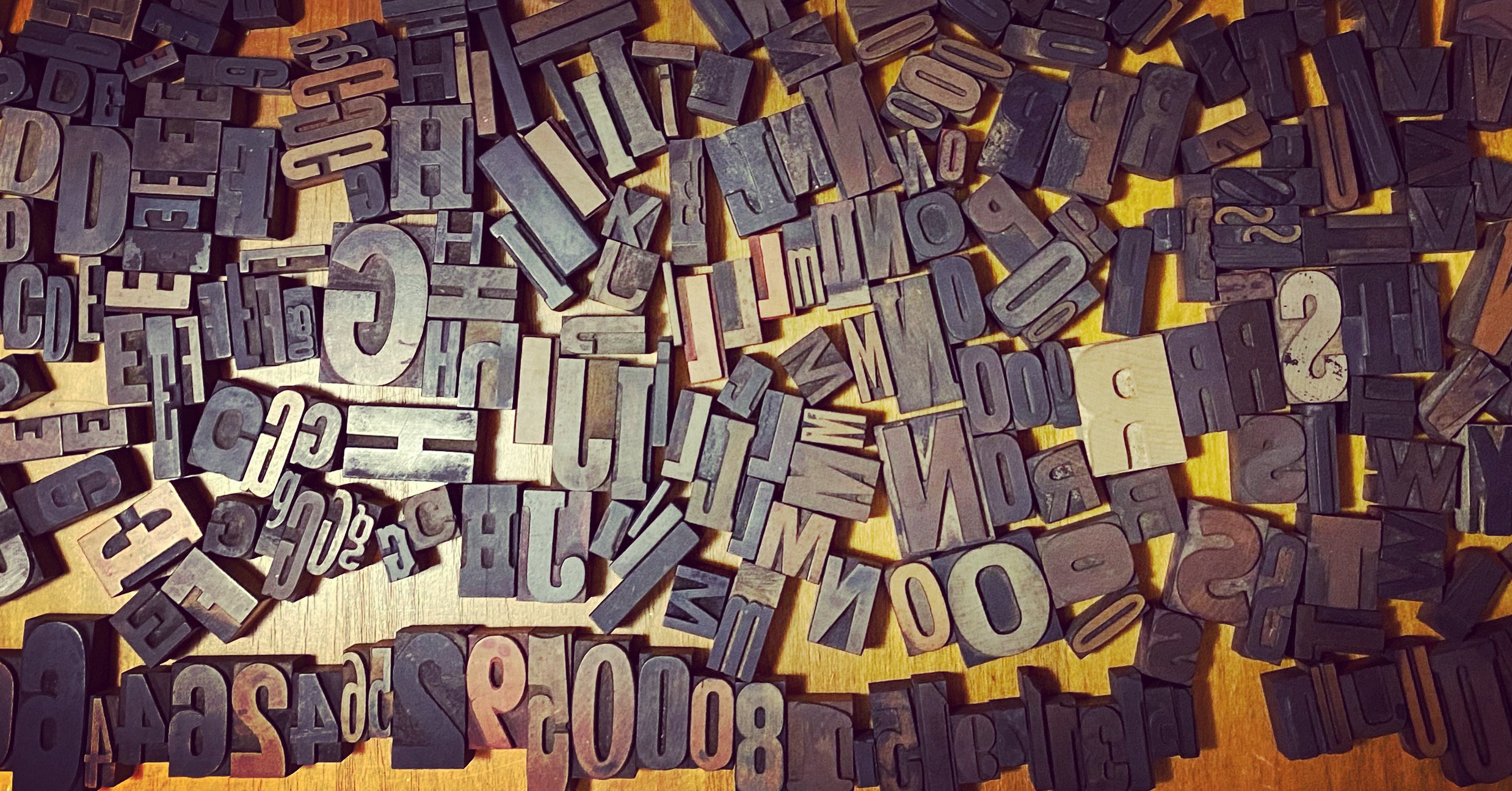
A key aspect of printing history is the development and evolution of wood printing type. It’s a reason why every Tiny Type Museum & Time Capsule will have at least three kinds of wood type included.

Some wood type background

There’s a strong suspicion and good historical evidence that the earliest printing, at least 1,000 years before Gutenberg, involved entire pages carved in wood in China and elsewhere in Asia, and later movable wooden letter blocks.

However, logographic languages like Chinese, Japanese, and Korean had a significant bit of overhead: often at least thousands of unique characters are required for a book of any length. The diversity of logographs in the language overcame the benefits of movable type versus carving entire pages for wood-block printing. Gutenberg may have been a genius, but he had the advantage of requiring roughly 23 characters for Latin and German with some

Quoins, Wood Type, and Phototype

printing history

Quoins, Wood Type, and Phototype

The latest accessions to the Tiny Type Museum & Time Capsule have arrived!

Quoins and Quoin Keys

From the earliest days of printing, certainly in Gutenberg’s studio, type had to be locked up. You first composed it into lines, columns, and pages, and spaced it just right. But then you had to ensure that it stayed solid and level as it was moved from a composing stone—a level surface that assisted in planing type and other material—to the bed of a press. (For newspaper, it would be into a matrix-making machine en route to stereotyping.)

As you may know generally or from previous posts, a page or pages of type are collected into a forme and  locked into a chase. The locking requires furniture or various sized rectangular pieces of metal and wood to fill on empty areas, and then wedges to lock them into place. A