Glog

History

Cartooning

How Comics Got Their Color

A four-page spread I wrote for The Nib is now available on its website! I explained in words and images how newspaper cartoonists marked color up on their comics for engravers in the printing plant to apply color through a very complicated process in the days of metal printing. I’m at work prepping a book that will go into crowdfunding later in the year that will cover that and a lot more about how comics were made for different eras of printing and the production process that got them on to paper.
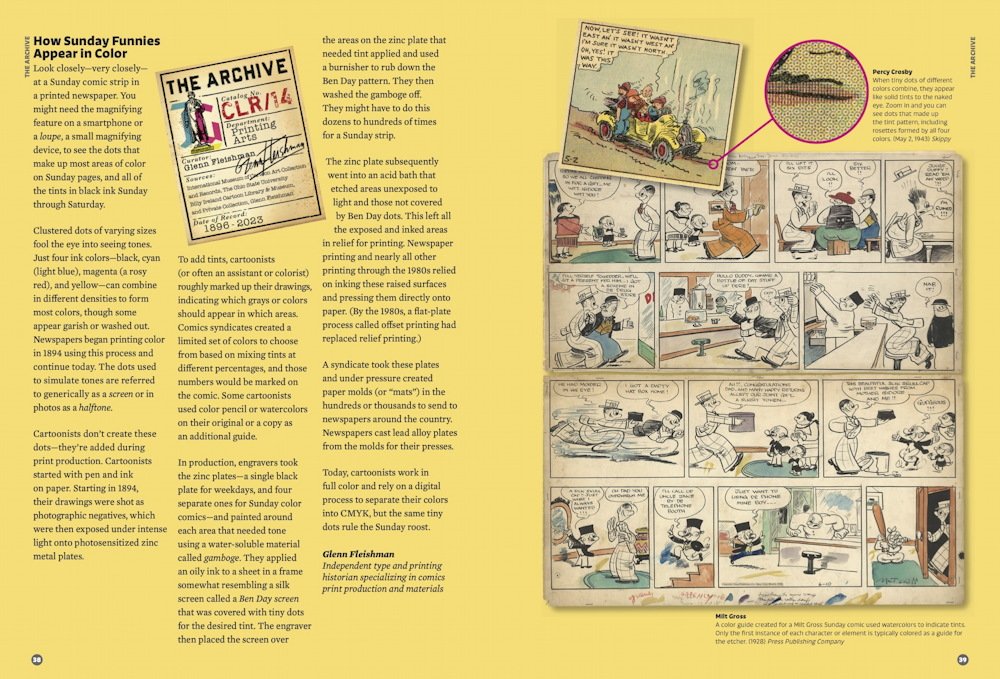
 How the article appeared in print—the first of two two-page spreads
How the article appeared in print—the first of two two-page spreads

Cartooning

Man Saved Comics!

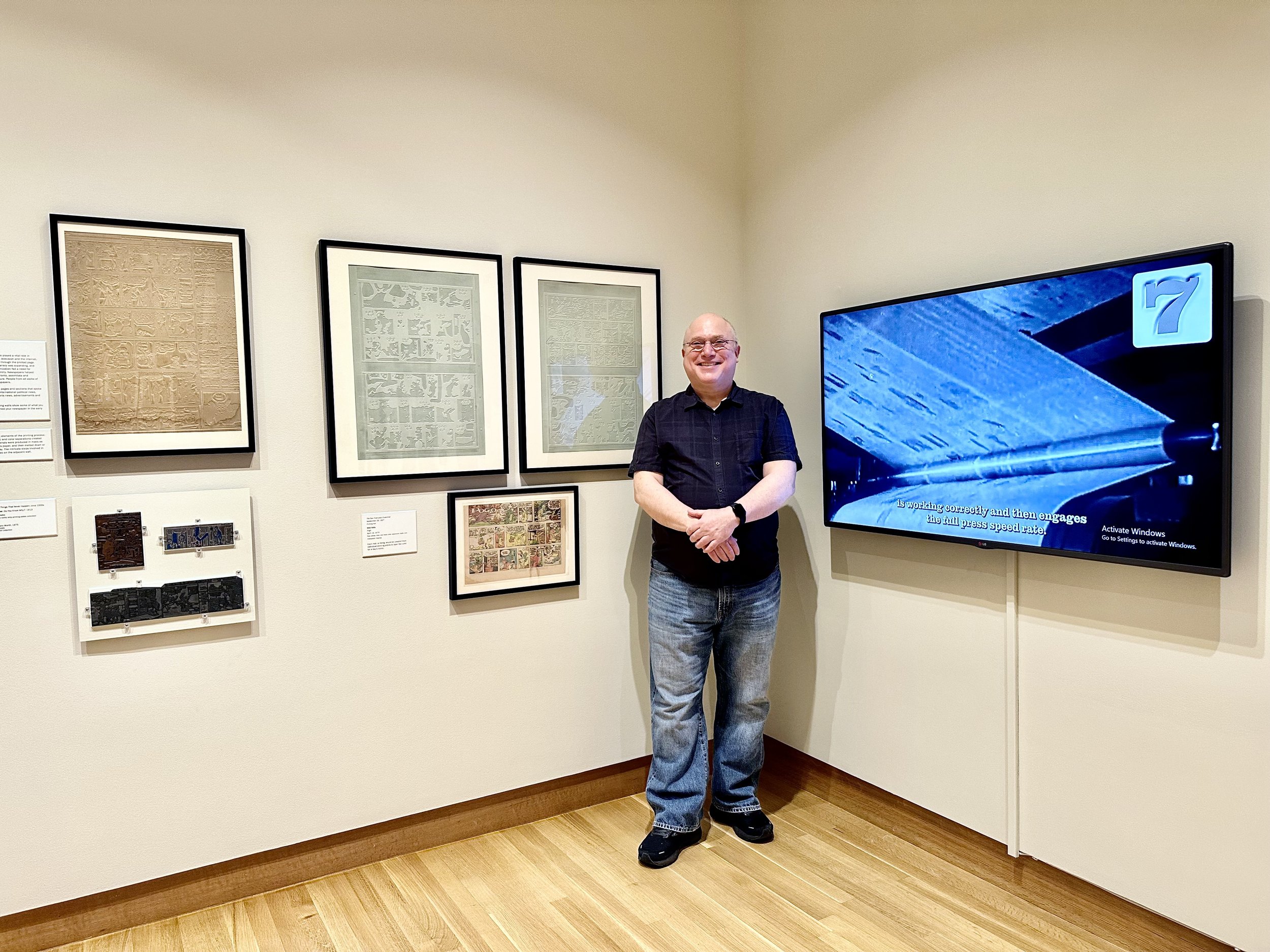
The event last weekend at the Billy Ireland Cartoon Library & Museum went fantastically. First, I was able to visit and get a tour from the co-curators of the “Man Saves Comics!” exhibition, Caitlin McGurk and Ann Lennon. Really tremendous. They packed the museum space with as much material as they could, but with 2.5 million items they could work from, they had to make choices—and they were great ones. I learned a lot from the exhibition, which is available in an archived form online. I posed with my video!

 Man documents comics printing! To my left is the video I created for the exhibition, showing the process of taking a cartoonist’s drawing from board to newspaper during the era of metal printing from the 1910s to 1980s.
Man documents comics printing! To my left is the video I created for the exhibition, showing the process of taking a cartoonist’s drawing from board to newspaper during the era of metal printing from the 1910s to 1980s.

Then, the event! No one took an exact count, but the place was hopping from get-go and across three

Cartooning

Meet me in Columbus, Ohio!

In the slight chance a reader of this blog will be in or near Columbus, Ohio, on 22 April 2023, come to the Ohio State University’s Billy Ireland Cartoon Library & Museum. A free-half-day event, the Printing & Papercraft Day, includes yours truly! The 1:30–4:00 pm event starts with an optional guided tour by the curators of the current “Man Saves Comics!” exhibition, celebrating the 25th anniversary of the acquisition of the San Francisco Academy of Comic Art Collection—Bill Blackbeard’s amazing stash.

The event features letterpress printing, paper craft, and me on hand to show artifacts from the library and my own collection that illustrate the process of moving from an artist’s drawing board through the complex printing process all the way to a newspaper or comic-book page. This draws from now years of research plus the work I put into a video

A Growth Industry: Typewriter Stores

History

A Growth Industry: Typewriter Stores

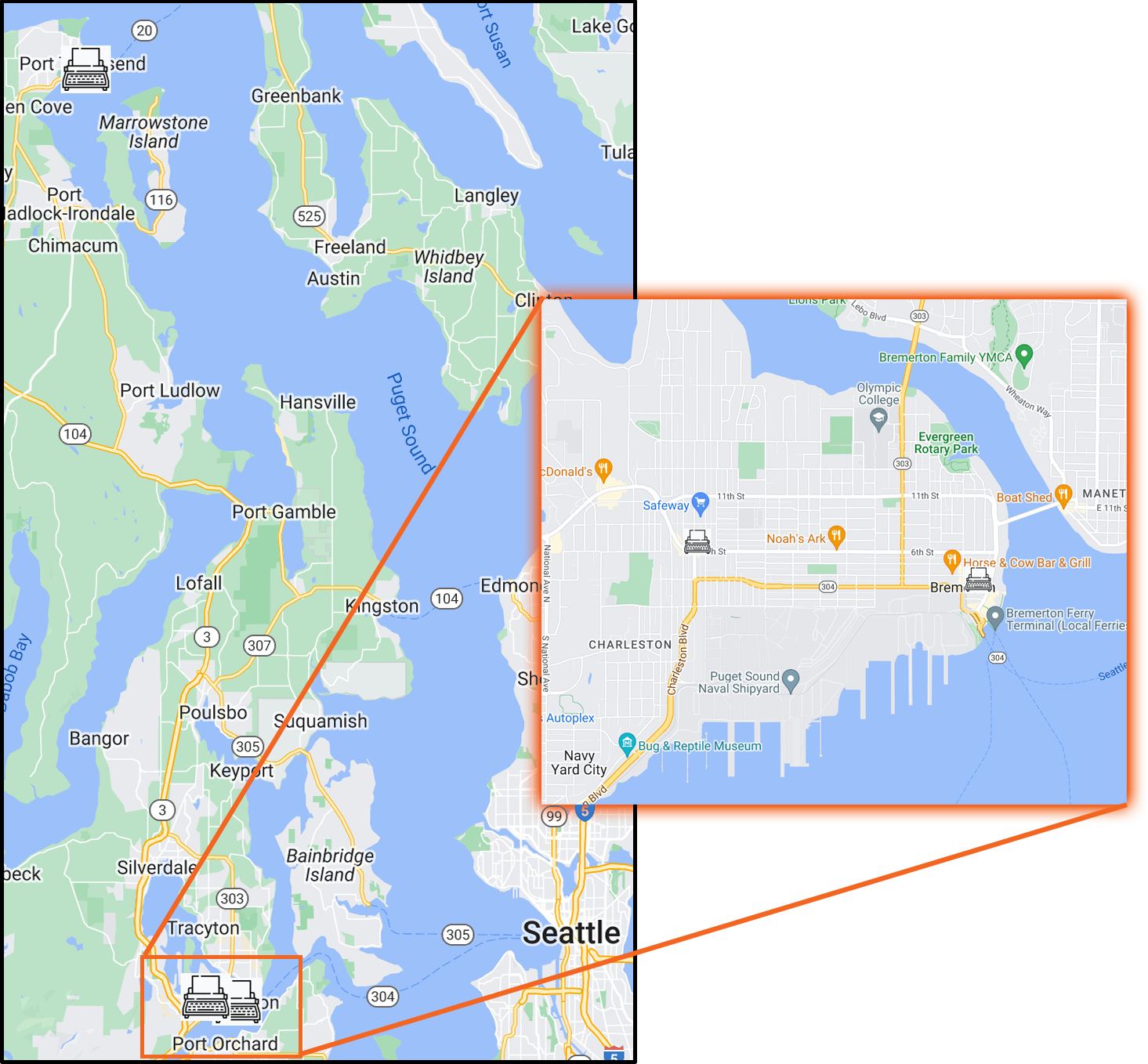
 Three typewriters stores within an hour’s drive of each other
Three typewriters stores within an hour’s drive of each other

In the small city of Bremerton, Washington (pop. 44,000), a ferry ride away from Seattle, the shock is not that a typewriter repair and retail store has kept its doors open. Rather, it’s that there are two in the same city—and that another just opened about an hour’s drive north, in the even tinier tourist town of Port Townsend (10,000).

The Olympic Peninsula is a hotbed of typewriter stores—probably among the densest number in the world—for no particular reason except the preservation of history and the personal interest of the folks running them. We’re not in a typewriter boom, unlike the resurgence of vinyl LPs or craft letterpress printing. However, it’s pretty wonderful to find that something that seems like a relic of the past has found a new audience

Print

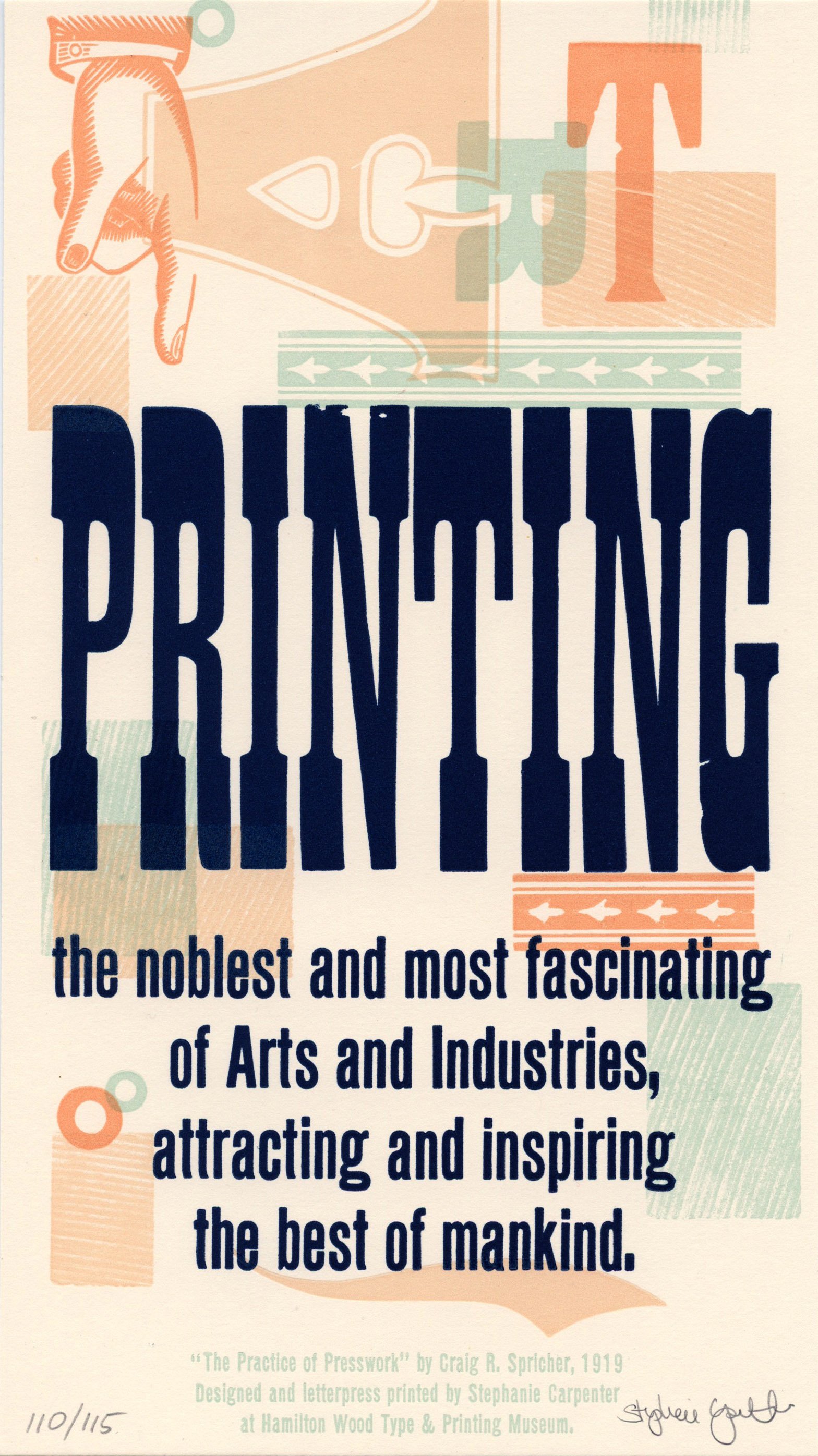
Poster by Stephanie Carpenter from the Tiny Type Museum

With the last Tiny Type Museum & Time Capsule sold in February 2022, I still have a substantial amount of materials and art left from its production. I’ll be making some of this available in the coming months in my online store.

One extraordinary item I have a handful of is a commission. I asked Stephanie Carpenter, an artist, educator, designer, and printer in Wisconsin—and the Assistant Director of the Hamilton Wood Type & Printing Museum—to design and print a small poster that fit within the Tiny Type Museum. Using historic type and presses, Stephanie created the beauty you can see here, a quotation from “The Practice of Presswork.”

You can purchase one of the six remaining prints via this link. Each print is numbered and signed from an edition of 115. № 110 to № 115 remain available. The poster is 9⅜×5¼ inches (237×133mm). Stephanie normally

Bookselling

Selling Out Print Books

Over the last decade, I’ve brought four books to press: one offset, one digital, one letterpress by my own hand, and one letterpress by contract. Three of those are now sold out!

History

Recent Submissions to the Oxford English Dictionary

I sometimes refer to myself as a reporter with “breaking news from the 19th century!” That “joke” is because I have spent my working life as a journalist but am now in the middle of a multi-year-or-longer transition into researching and writing as a historian. I try to bring the same immediacy and excitement about current developments to what I learn—when it’s new or forgotten—from the past.

This exploration led me recently to uncover some earlier citations of several words than those noted in the Oxford English Dictionary. The publication’s founding principle was to solicit “user submissions” of citations, yet the current process is a one-way form: it asks for our information but there’s no place to drop an email address or receive any feedback. This seems unfortunate. I’ve sent the latest entries off via an email address they have, though they promise no

Cartooning

World Premiere of My Exhibition Video on Newspaper Comics

Please enjoy the world premiere of my video “From Artist’s Board to Newspaper Page: How Comics Were Made in the Age of Metal Printing, 1910s–80s,” made for the Billy Ireland Cartoon Museum & Library at the Ohio State University. I produced this video to explain the many, complicated steps between an artist drawing a strip through syndicate production of the materials sent to newspapers and newspapers’ adding those into their own layouts and printing newspapers. It’s elaborate, but shown here in a crisp six minutes using public-domain archival footage and images and video from my own collection.

I was asked to make this video by curators Ann Lennon and Caitlin McGurk for an incredible exhibition opening today, “Man Saves Comics! Bill Blackbeard's Treasure of 20th Century Newspapers,” which opened today! This is the first time I’ve had anything included in a museum exhibition, much less been

Design

Senior Project: A Version of Wolpe’s Albertus

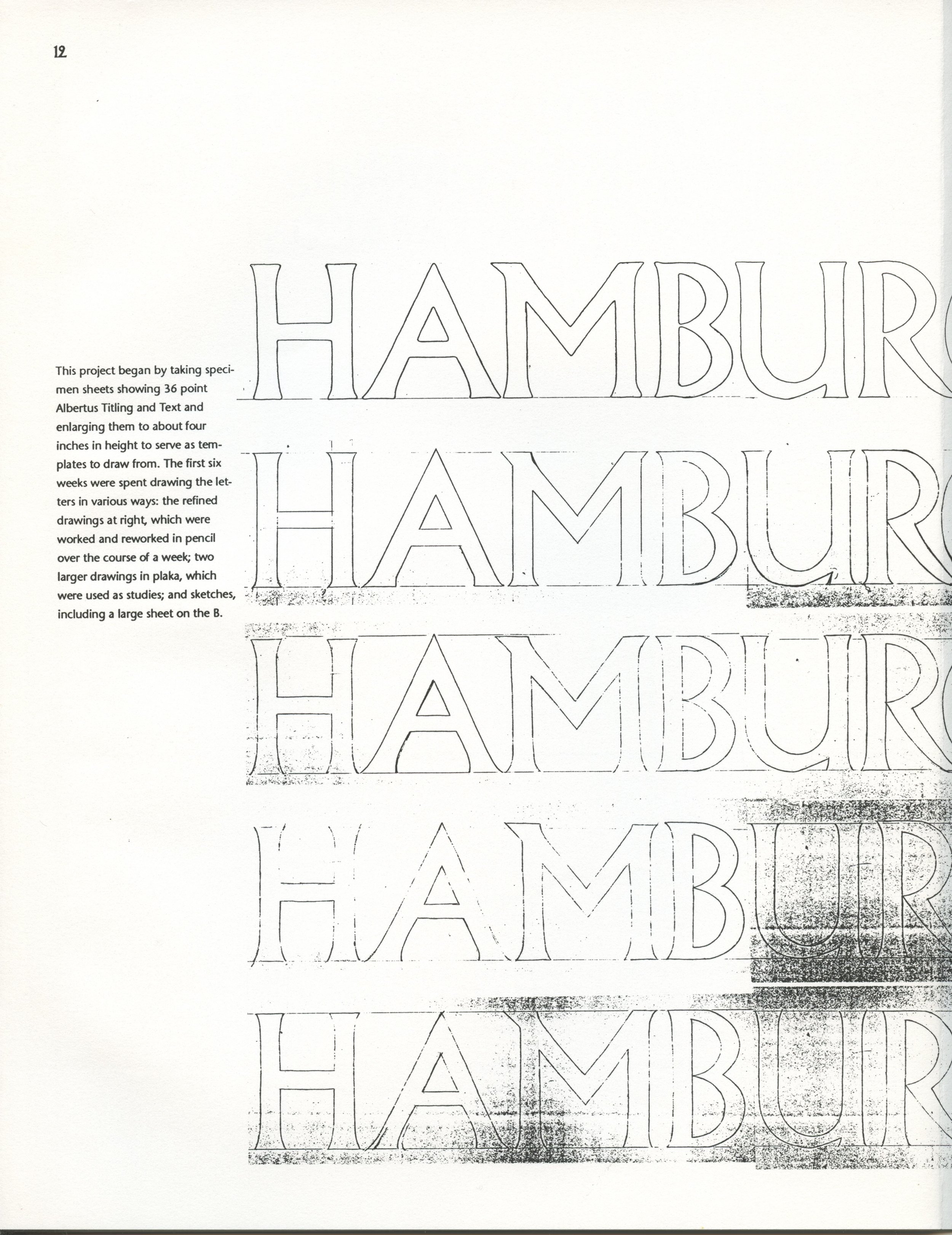
Searching for old photos recently, I uncovered my senior project in graphic design. I majored in Art at Yale with a subject concentration in graphic design, and this work was my part of my graduation requirement for the major. I had a strong interest in type design, and was encouraged by a mentor to produce a high-quality digital version of the typeface Albertus. Albertus had been designed in the 1930s by Berthold Wolpe, and it was one that in the late 1980s wasn’t yet available in a strong digital rendition. I’ve scanned the project for my own posterity and you can download it here. Missing, sadly, are pictures of the large exhibition posters that I created as part of my project.

 A page from my 1990 senior project in which I showed progressive improvements in hand drawing test letters.
A page from my 1990 senior project in which I showed progressive improvements in hand drawing test letters.

You can see the child of the adult in

History

A Sad Day: The Type Archive Distributes

I sadly just heard the news that The Type Archive in London will be moved from its location and its collections put into storage. The announcement by the Science and Museum Group (SMG), a set of quasi-public institutions that operates independently, doesn’t sugarcoat things. The Type Archive preserved the typefounding and wood-type history of the United Kingdom; they overlapped in part with the St Bride Library (or St Bride Printing Library), which has a smaller piece of typefounding history and more generally preserves UK printing history.

 This way to The Type Archive
This way to The Type Archive

The Type Archive was led for decades by Sue Shaw, once an editor at Faber & Faber and other publishers, who became a fierce and relentless advocate for the preservation of Monotype’s manufacturing plant for its hot-metal type production equipment and its archives, as well as pulling in centuries of type foundry history acquired from Stephenson

Publishing

Live Commentary on the Invention of the Linotype?

Tune in this Friday, June 10, at 5 pm PDT to listen to a live commentary on Park Row, a film about newspaper wars that includes the little-known type lice initiation ritual and purports, as a side plot, to show the invention of the Linotype by Ottmar Mergenthaler! I convinced Shelly Brisbin, host of the classic-movie podcast Lions, Towers, & Shields at The Incomparable network to be the home of this event.

You can listen to us live on YouTube and ask questions in real time or download the episode later via the podcast page or any of the links for feeds on the page. Park Row can be watched free on YouTube.